
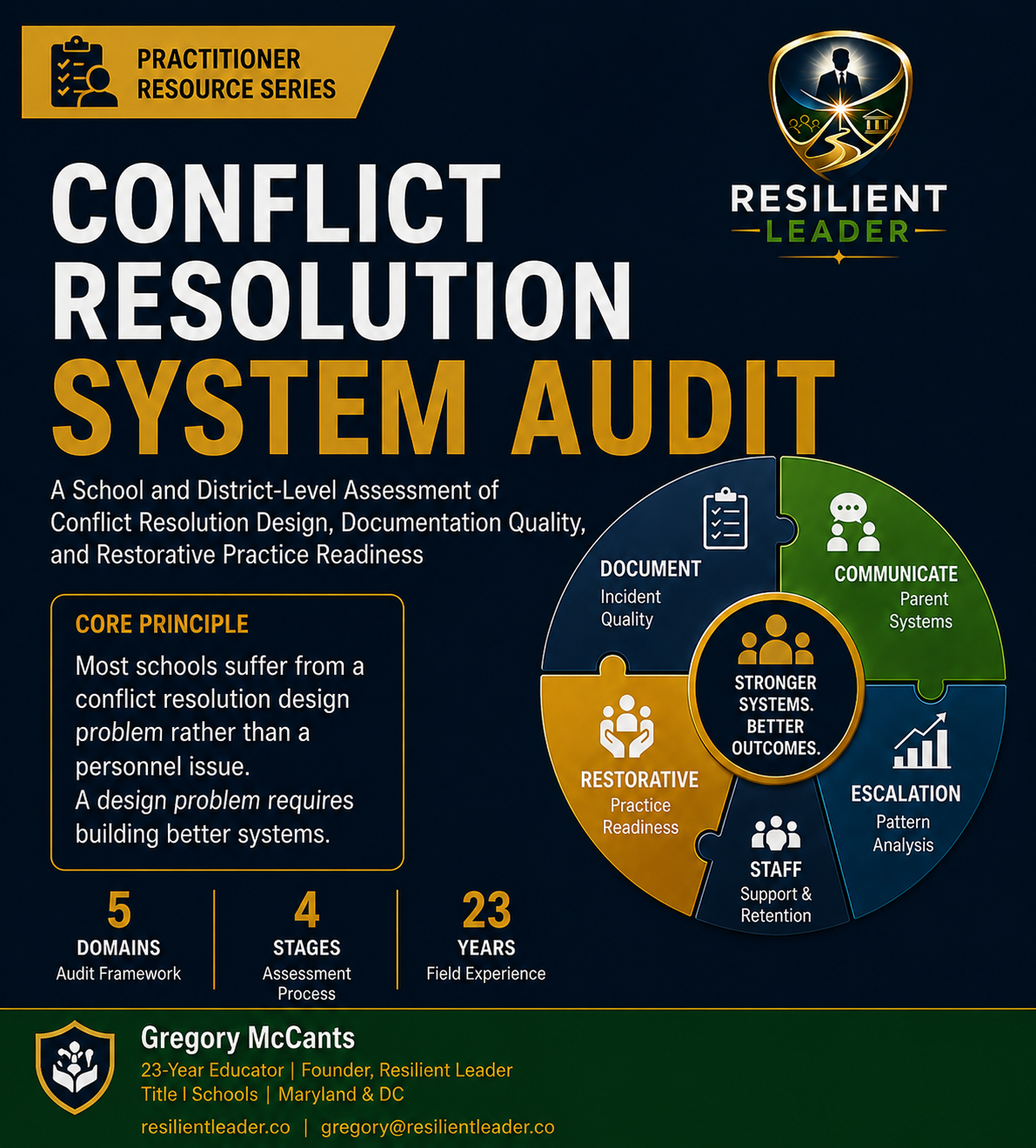


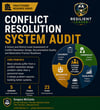



Conflict Resolution System Audit: A School and District-Level Assessment of Conflict Resolution Design, Documentation Quality, and Restorative Practice Readiness
Let's stop blaming teacher attitudes or individual student failures. Most school buildings are suffering from a pure system design flaw, not a personnel problem. When an institutional framework is fundamentally broken, you don't fix it by simply trying to hire better people—you fix it by engineering better process infrastructure.
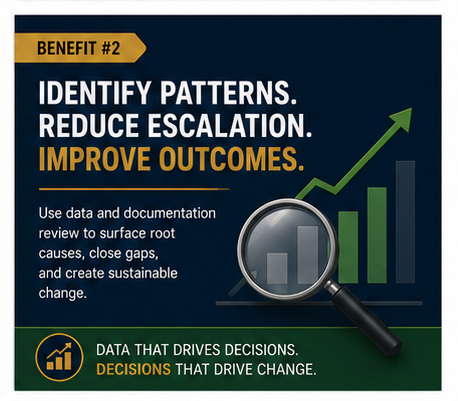
Treating repeat behavioral patterns as isolated infractions is a dangerous trap. It completely skips over the flawed institutional pathways that route minor classroom incidents toward default, high-stakes escalation. Look at the data: post-pandemic student behavior shifts cost the average classroom roughly 2.4 hours of precious instructional time every single week . That means losing three full weeks of teaching over the course of a single school year. Dropping your out-of-school suspension numbers or announcing a generic restorative program means absolutely nothing if you fail to build the actual infrastructure required to handle what stays inside the building after the suspension rate drops .
Your discipline system isn't broken; it's just poorly engineered. The Conflict Resolution System Audit provides a practitioner-led evaluation protocol to map the exact canyon between high-level administrative policy and daily classroom reality. Forged in the crucible of 23 years of Title I building-level experience, this diagnostic framework helps you pinpoint where your building's consistency is missing. It gives you a step-by-step pathway to assemble durable process infrastructure before the next crisis hits your desk. Spot the structural gaps in your design before they cost you another veteran educator.
Who This Is For
- School and District-Level Administrators (Superintendents, Principals, and APs) ready to audit their current behavioral systems, expose hidden equity gaps, and pivot away from exhausting, reactive crisis management.
- Deans of Students & Culture Directors striving to diagnose exactly why specific referral patterns keep recycling or why well-intentioned restorative agreements keep collapsing.
- Grant Writers and District Leaders who require an objective, research-backed evaluation blueprint to secure or fulfill compliance metrics for restorative justice and Title I grants (such as the Maryland Judiciary's MACRO Grant or JAMS Foundation initiatives).
What You Receive
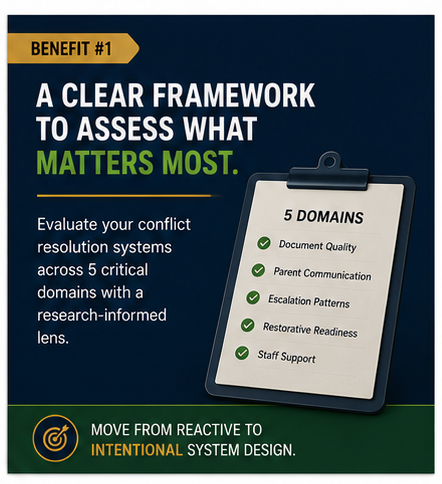
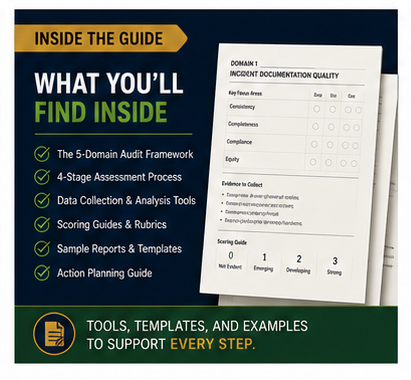
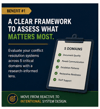
- The 5 Audit Domains Framework: A master evaluative lens built to break down Incident Documentation Quality, Parent Communication Systems, Conflict Escalation Patterns, Restorative Practice Readiness, and Staff Support & Sustainability.
- The 4-Stage Assessment Process Playbook: A complete chronological breakdown to guide you through an audit across a 2-to-3-week timeline, detailing your exact operational moves for Intake, Assessment Conversations, Report Development, and Leadership Debriefs.
- Full Deliverables Blueprint: Definitive success criteria mapping out what the completed audit yields, including a 10–15 page Written Audit Report, a 1–2 page Executive Summary for district presentation, a visual Domain Scorecard, a ranked Prioritized Recommendation List, and a customized Resource Map.
- Audit Intake Form: A ready-to-deploy data document to immediately lock down your school's enrollment figures, demographic context, and specific timeline drivers before launching the assessment.
What It Pairs With
To eliminate institutional friction and establish absolute structural predictability throughout your school building, this audit protocol pairs natively with:
- Who Owns the Arc: For establishing explicit, named individual accountability across the critical 30-day post-conference recovery window.
- The Conference the Nervous System Never Left: For building the necessary polyvagal-informed processing, debrief loops, and biological recovery infrastructure for educators managing high-activation conflict.
- The Audit Nobody Runs: For executing targeted, 5-step institutional diagnostics on pacing guides and curriculum design limitations that cause downstream behavioral dropouts.