


Understand what you bring before deciding what another person needs.
NEXIE Step 1 — Prevention: Parent Foundations is the first learning stage of the PEDICure developmental pathway.
Prevention begins with the person, parent, carer, educator or practitioner who is seeking to understand and support someone else.
Before responding to behaviour, choosing an intervention or changing the environment, this course invites you to pause and explore the patterns, perceptions, relationships and experiences you bring into the situation.
You are not here to be judged as a parent, educator or professional.
You are here to become more aware of your own lens—and to understand how that lens may influence communication, regulation, relationships, expectations and the developmental conditions you create around another person.

The first environment a child experiences is the parent.
Every adult brings a developmental history into their relationships.
This may include:
- qualities and strengths;
- values and emotional needs;
- sensitivities and stress responses;
- communication and regulation patterns;
- learned parenting or teaching approaches;
- past and intergenerational experiences;
- protective patterns;
- expectations and perceptions;
- environmental and epigenetic influences.
Prevention does not mean predicting or eliminating every difficulty.
It means looking upstream before reacting downstream.
It asks:
What patterns are entering this situation?
What am I assuming or interpreting?
What might I be reproducing from my own experience?
What conditions may be contributing to the challenge?
What can be understood or strengthened before the difficulty becomes more entrenched?
Course curriculum
Six connected units. Eighteen guided lessons. One developmental pathway.
NEXIE Step 1 — Prevention: Parent Foundations is organised into six connected learning units.
Each unit includes:
- a learner guide;
- a story presentation;
- a reflective workbook.
Together, the 18 guided lessons move from personal awareness to emotional safety, relational understanding, communication, capability building and practical family-development planning.
Unit 1 — Understanding Your Blueprint
Begin by examining the lens you bring into parenting, education and relationships.
Explore Action, Mind and Relational processing, the six SYMBEB pathways, values, stress defaults, personal patterns and opportunities for integration.
This unit develops self-awareness without completing a formal Blueprint assessment, assigning a colour or providing an individual report.
Unit 2 — Creating Emotional Safety
Explore emotional safety as a foundation for regulation, communication, learning, trust and connection.
Recognise how fear, stress and past experiences can activate protective responses. Develop respectful approaches to listening, validation, empathy, co-regulation, repair and relational safety.
Unit 3 — Social Brain Development Pathways
Meet the six canonical SYMBEB pathways and explore the different ways people may communicate, learn, regulate, respond and engage.
Develop observational awareness of strengths, learning modes, motivational drivers, emotional needs and environmental influences—without reducing the person to a type or fixed identity.
Unit 4 — Communication and Connection
Understand communication as a neurodevelopmental, nervous-system and relational process.
Explore how processing preferences, emotional states, values, timing, tone, pace and communication format affect whether a message can be received. Practise restoring safety and connection before correction or problem-solving.
Unit 5 — Developmental Capacity Building
Move from trying to stop behaviour towards recognising the capacity that may still be developing.
Explore Action, Relational, Reflective, Communication and Organisational capacities. Learn how strengths, compatible support, virtues, practice and supportive environments can create pathways for growth.
Unit 6 — Family Development Planning
Bring the Prevention pathway together in a practical family-development process.
Identify family strengths, priorities, routines, relationship supports, environmental adjustments and realistic capacity-building goals. Create an aligned plan for action, collaboration, observation and review.
CARIE reflective practice
CARIE is woven throughout the course:
Context · Awareness · Reflection · Interpretation · Engagement
It helps you pause beneath visible behaviour, separate observation from assumption and consider what the person, relationship or environment may need before choosing a response.
Your pathway through Prevention
Understand your lens → Create emotional safety → Recognise developmental pathways → Strengthen communication → Build capacity → Develop an aligned family plan
By the end of the course, you will have a stronger foundation for entering Step 2 — Education and exploring the other person’s Blueprint, learning needs and developmental pathway.
Understanding Before Intervention.
-
1Step 1 Prevention
NEXIE Step 1 — Prevention. Understanding Yourself Before Guiding Another. Recognise the patterns. Understand your lens. Create the conditions for development.
-

From reaction to reflective understanding.
Across 18 guided lessons, you will explore the NEXIE foundations that support personal awareness, relational safety and informed decision-making.
You will be introduced to:
- Understanding Before Intervention;
- behaviour as communication;
- emotions as information;
- Brain + Relationships + Environment = Development;
- the parent or adult as part of the developmental environment;
- PEDICure and the role of Prevention;
- URE: Understanding, Relationships and Environments;
- the individual developmental Blueprint;
- the Six Social Brain pathways;
- qualities, values, virtues and emotional needs;
- fears, triggers and protective responses;
- communication and regulation patterns;
- parent–child and adult–learner compatibility;
- intergenerational and epigenetic influences;
- CARIE reflective practice;
- compatible environments for learning and development;
- family vision, advocacy and developmental planning.
The course does not ask you to diagnose yourself or another person. It helps you recognise what may be shaping your lens, relationships and responses.
-

A course for different starting points.
Parents and carers
Understand what you bring into parenting, recognise recurring family patterns and create more compatible relational and developmental conditions.
Educators and support workers
Reflect on how your own Blueprint, expectations, communication and regulation influence the learning environment you create.
Practitioners
Strengthen reflective practice and consider the person, relationships and environment before recommending a response.
Future Neuropreneurs
Begin with self-understanding before progressing into the NEXIE Business Blueprint, Productised Service capability or professional application pathways.
Organisations and learning communities
Develop a shared foundation for relational safety, reflective practice, developmental understanding and environment-informed support.
-

What is included?
The complete course includes:
- 18 structured learning lessons;
- learner guides;
- story and teaching presentations;
- reflection guides and practical activities;
- Parent Blueprint reflections;
- Social Brain and compatibility learning;
- values, emotional-needs and regulation tools;
- relationship and environmental reflections;
- CARIE reflective-practice activities;
- family-development and next-pathway planning.
You can move through the course at your own pace and return to the resources as your understanding develops.
-

What you may understand differently.
By completing Step 1 — Prevention, you may be better able to:
- recognise the lens you bring into relationships;
- notice patterns before automatically reacting;
- separate observation from assumption;
- understand how past experiences influence present responses;
- recognise strengths alongside stress and vulnerability;
- understand differences without turning them into deficits;
- consider behaviour within relational and environmental context;
- communicate with greater awareness and accountability;
- create conditions that support safety, regulation and participation;
- enter the later PEDICure stages with a stronger foundation.
The intended shift is not:
How do I correct this person?
It is:
What do I need to understand about myself, this person, our relationship and the conditions surrounding us?
-
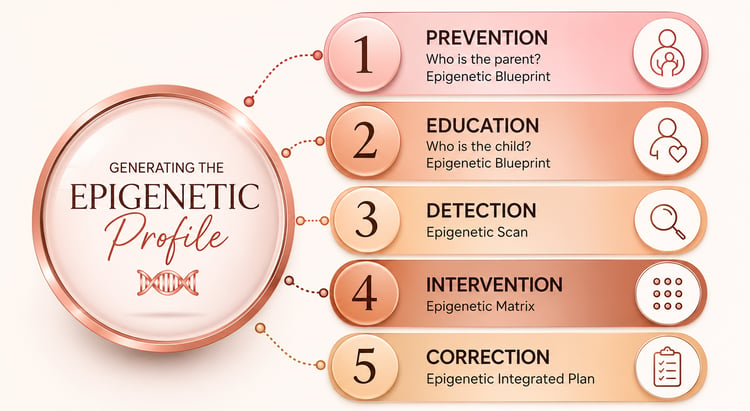
Add Your place in the PEDICure pathway.
Prevention prepares the foundation for the remaining four pillars:
Education develops understanding of the other person’s lens and Blueprint.
Detection investigates what may be influencing the presenting experience.
Intervention uses what has been discovered to strengthen capability and support integration.
Correction brings the learning together in an aligned plan and reviews what needs to change.
Prevention does not replace these later stages. It helps you enter them with greater understanding, awareness and readiness.
Begin with yourself.
You do not need to have every answer before starting.
You only need the willingness to pause, become curious and consider what may be understood before action is taken.
Recognise the patterns. Understand your lens. Strengthen the relationship. Create more compatible conditions for development.
Understanding Before Intervention.
Purpose. Pathway. Possibility.