



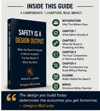
Safety Is a Design Output: What the Room Produces Is Not an Accident: A Blueprint for Structural Predictability in K-12 Buildings
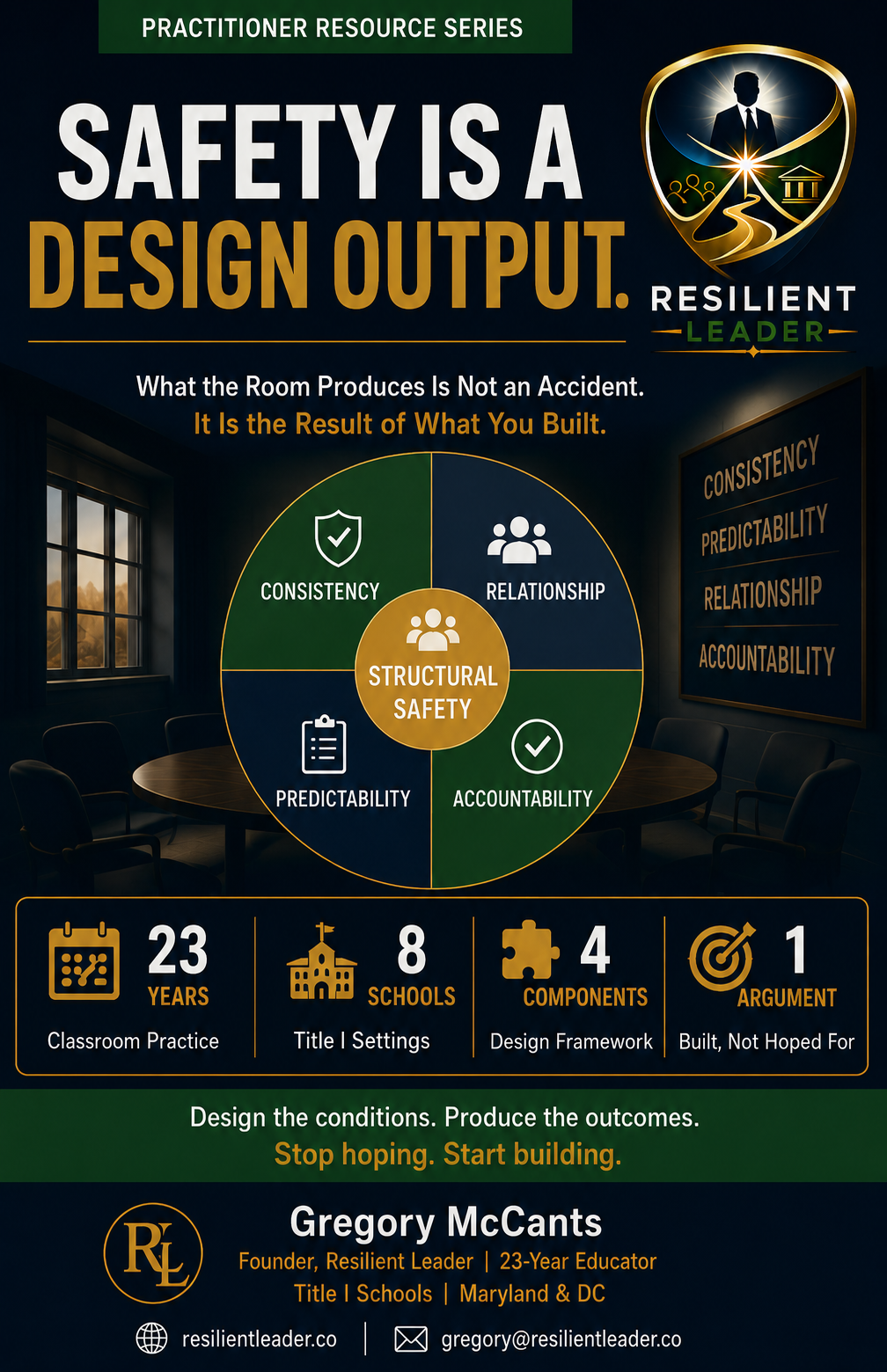
Safety isn't a feeling. It's a design output.
Every school building eventually runs the exact same professional development module. A consultant pulls up a polished slide deck, a staff developer hands out markers, and the faculty learns that "psychological safety" means creating a space where people feel comfortable speaking up without fear of punishment. Everyone nods in full agreement. The principal writes the phrase on a piece of chart paper. The session wraps up, and the school year restarts.
By mid-October, the exact same students are locked into the exact same behavioral loops. The same educators are managing the same crises with erratic, highly inconsistent results. And the teacher who confidently spoke up during that August workshop finds themselves being quietly managed out by November.
The workshop didn’t fail because the ideas were incorrect. It failed because safety is not an abstract concept you can teach or inspire your way into. Safety is what the structural design of the room actually produces.
When a student disrupts a classroom, our default instinct is to ask what is wrong with the child. When an educator burns out, we ask what is wrong with the person. Those are entirely the wrong questions. The right question is: what is the current design producing, and why? The student who continuously tests boundaries is not testing the teacher's patience, they are actively stress-testing the architecture of the room to see what it will do next.
Worse, the most common fallback position in modern schools is the room that functions solely because one exceptional human being figured out an undocumented workaround. The school that runs on its most committed adult is not a strong school at all. It is a school with one adult who simply hasn't broken yet. That isn't safety, it is borrowed time. With 53 percent of teachers reporting chronic burnout while logging 10 hours of uncompensated labor above contract limits every single week, public education can no longer afford to run its operations on human sacrifice.
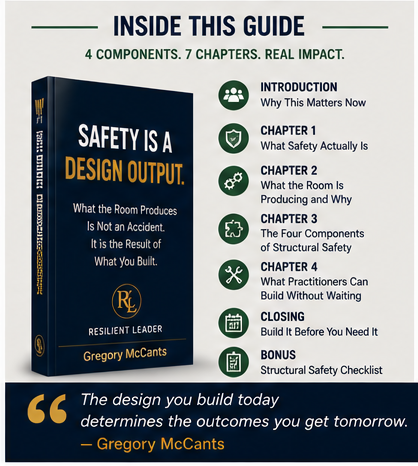
Written by a 23-year Title I teacher, dean, and assistant principal, Safety Is a Design Output strips away the superficial wellness rhetoric to hand you a mechanical engineering framework for school culture. Stop hoping for safety. Stop running workshops. Build the explicit process infrastructure that guarantees predictability across every hallway, setting, and classroom.
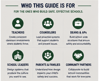
Who This Is For
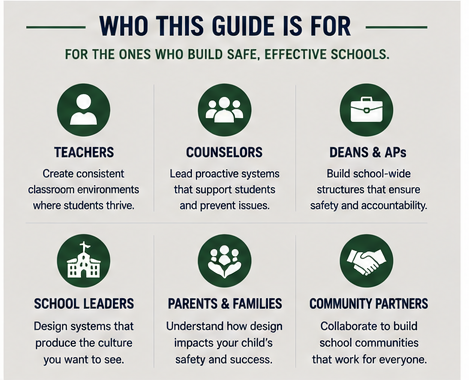
- School Principals & Assistant Principals who want to step back from running vague culture conversations and start executing explicit structural alignment across their administrative and teaching teams.
- Instructional Coaches & Deans looking to install small-scale, high-leverage feedback loops and post-incident resets even when the central office refuses to update district policy.
- Classroom Teachers exhausted by systemic inconsistency who want to translate their personal management styles into automatic, stress-tested protocols that survive a low-energy week.
What You Get
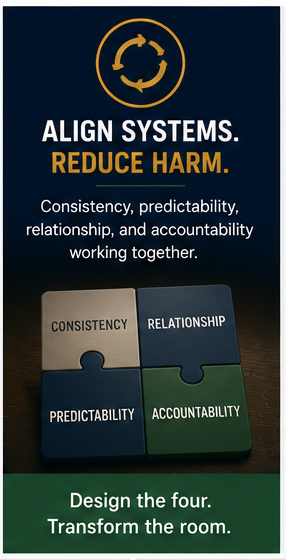
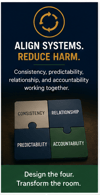
- The 4-Component Structural Safety Blueprint: A rigorous diagnostic template mapping out the exact infrastructure required to establish absolute environmental predictability :
- Component 1: Consistent Behavioral Response Protocol; Methods to define exactly what happens next when a frequent behavior flares up, standardizing escalation across all rooms.
- Component 2: Shared Language Across Adults; A practiced operational vocabulary that forces a uniform interpretive frame across all staff interactions.
- Component 3: Post-Incident Alignment Process; A structural sequence to align teachers and administrators on what was acknowledged before a student crosses back over a classroom threshold.
- Component 4: Lag-Indicator Disruption Loops; Miniature feedback mechanisms engineered to catch architectural drift at the two-week mark rather than the two-month mark.
- The Role-Specific Implementation Matrix: Actionable, non-permission-dependent workflows mapping exactly what classroom teachers, instructional coaches, and campus administrators can construct right now.
- The Classroom Style-to-Protocol Reset: Structural guidelines to separate a teacher's individual persona from their systemic framework, ensuring the room runs smoothly when biological reserves run thin.
- The Mini-Feedback Maintenance Protocol: A short weekly check-in process for coaches to track behavioral anomalies, catch protocol drift early, and isolate adult divergence.
- The Structural Safety Design Signal Checklist (Bonus): A diagnostic quick-reference workspace indexing 8 distinct operational red flags—including student behavior variations across rooms and hidden staff reluctance to report building errors.
What It Pairs With
To completely remove reactive administration and forge a legally defensible, systemwide behavioral pipeline, this guide links natively with:
- Adult Alignment as a Conflict Variable: For standardizing upstream behavioral expectations and synchronizing adult boundaries schoolwide before students enter the building.
- Nobody Built the Mirror: For deploying active, non-evaluative annual knowledge records to harvest and protect elite practitioner insights before they exit to the parking lot.
- Veteran AP Field Manual: For accessing concrete language swap indices, text automation blueprints, and legally bulletproof disciplinary filing templates.