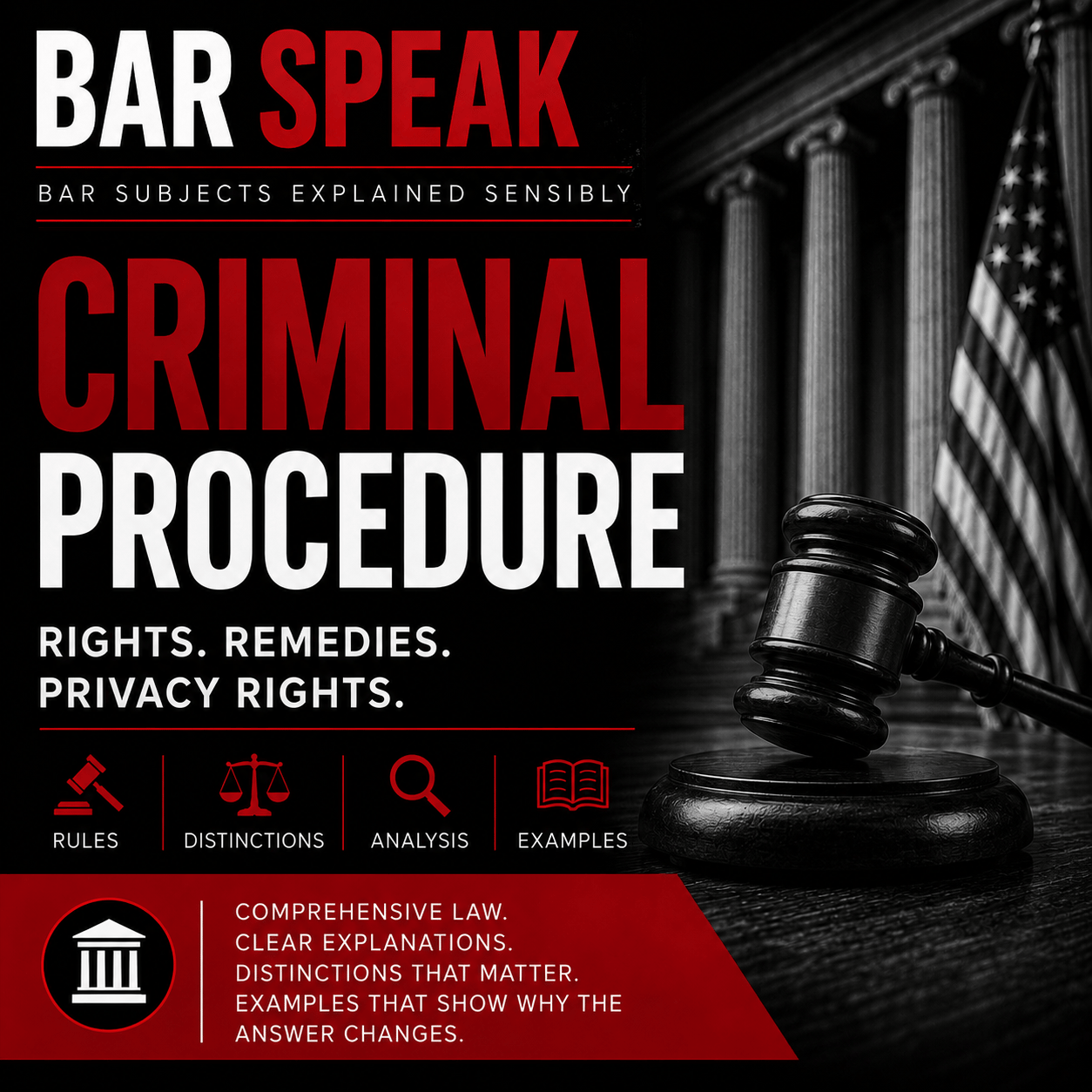
CRIMINAL PROCEDURE
49 pages. Click the "Preview" link above to download a glimpse of the material before purchasing!
BAR SPEAK: Criminal Procedure is a comprehensive bar-prep guide designed to make criminal procedure easier to understand, organize, and apply. Instead of reducing the subject to disconnected constitutional rules and memorization lists, BAR SPEAK explains how the rules fit together, highlights the distinctions that change the answer, and uses examples to show how constitutional protections operate throughout a criminal case.
The guide covers the criminal procedure topics tested on the bar, including Fourth Amendment searches and seizures, government action, standing, reasonable expectations of privacy, probable cause, reasonable suspicion, arrests, Terry stops, search warrants, warrant exceptions, consent, exigent circumstances, searches incident to arrest, automobile searches, protective sweeps, inventory searches, the exclusionary rule, fruit of the poisonous tree, Miranda, custodial interrogation, invocation and waiver of rights, grand juries, immunity, the privilege against self-incrimination, Sixth Amendment rights, speedy trial, jury trial, right to counsel, ineffective assistance of counsel, identification procedures, plea bargaining, prosecutorial duties, sentencing, double jeopardy, the Eighth Amendment, and habeas corpus.
Throughout the guide, closely related constitutional doctrines are separated and compared so students can see exactly which protection applies, when it attaches, and what remedy follows from a violation. Particular attention is given to distinctions such as probable cause versus reasonable suspicion, Fifth Amendment versus Sixth Amendment counsel rights, Miranda violations versus actual constitutional violations, pre-charge versus post-charge procedures, and evidence that is excluded versus evidence that remains admissible.
What makes BAR SPEAK different:
- Clear rules followed by plain-English explanations
- Constitutional doctrines organized by when and how they apply
- Closely related Fourth, Fifth, and Sixth Amendment protections compared side by side
- Examples that show why one procedural fact can change the constitutional analysis
- Emphasis on attachment, custody, interrogation, warrants, exceptions, suppression, waiver, and other distinctions that frequently determine the answer
- Comprehensive coverage without burying the reader in unnecessary material
- Built for understanding first, memorization second
This is not a stripped-down attack outline or a collection of isolated constitutional rules. It is a stand-alone criminal procedure guide for students who want to understand which constitutional protection applies, when it applies, whether it was violated, and what consequence follows before they are expected to memorize and apply the rules.
BAR SPEAK
Bar Subjects Explained Sensibly