
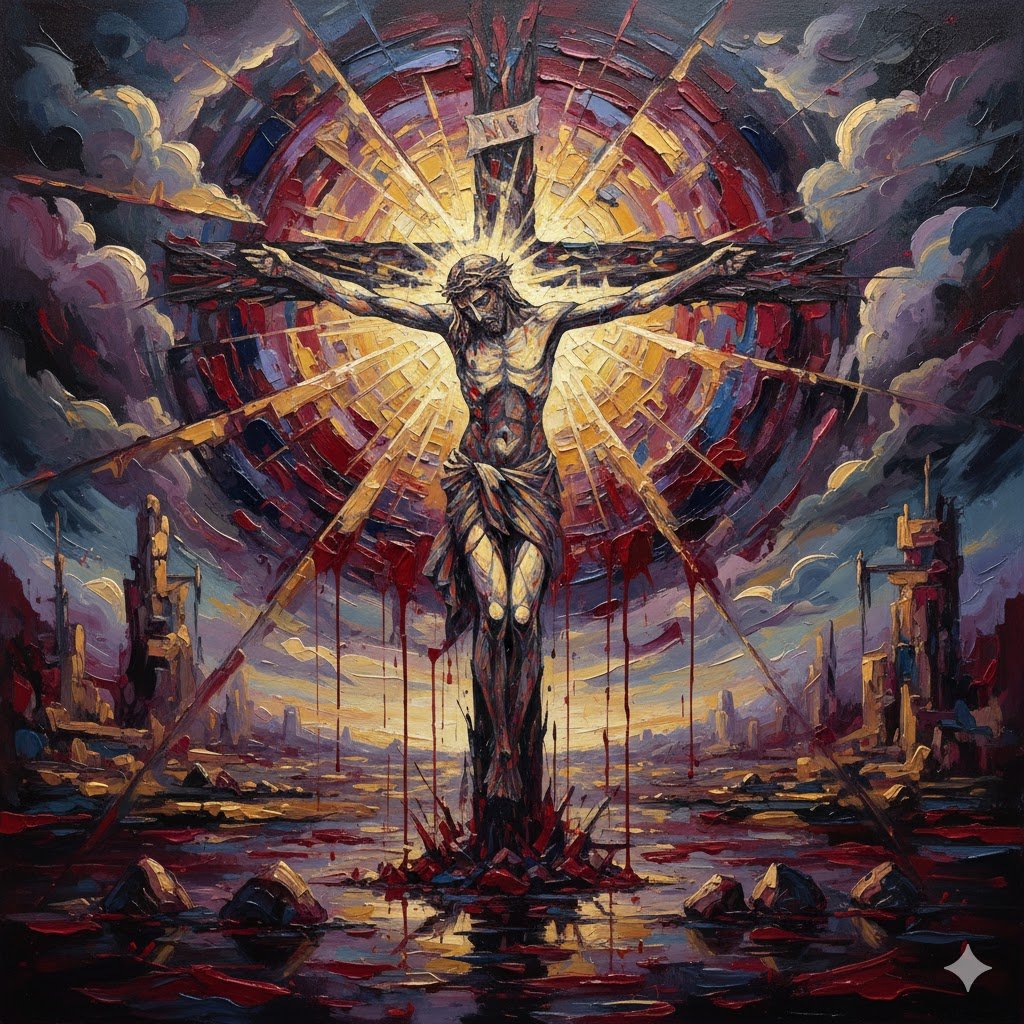
Crucifixion In a Blended World: Evaluating How Paul's Cognitive Environment Impacted His Atonement Theology (MA Dissertation)
15,000 word theology master's dissertation by Joel Turton as part of the MA Applied Theology degree at Regents Theological College.
© 2026 Joel Turton. This work is licensed under a Creative Commons Attribution-NonCommercial-NoDerivatives 4.0 International License.
Abstract:
The aim of this study is to directly challenge interpretations of atonement theology that have been pervasive in Christian circles, specifically that of Penal Substitutionary Atonement (PSA), whereby the nature of God is depicted as bloodthirsty, retributive and wrathful towards humanity. The process will be to analyse the works of Paul using socio-historical/cultural methods and cognitive linguistics, specifically looking at the blended ideas of ANE, ancient Israelite, Persian, and Greco-Roman culture as influences on this literature. This paper argues that single, narrow metaphors of atonement are inadequate, especially those that emphasise violence. Rather, the proposal is made that a Christo-centric interpretation develops understanding of the atoning nature of God regarding the crucifixion. The phrase “Active Relational Atonement” is put forward for consideration, suggesting that atonement is found in the active participation from relationship rather than for relationship, enacting a sacrificial life as demonstrated and made possible by Jesus.
Dedication:
To Jesus, “the reflection of God’s glory and the exact imprint of God’s very being.” (Hebrews 1:3 NRSVUE)