



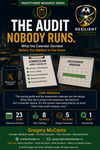





The Audit Nobody Runs: Exposing the Gap Between the Pacing Guide, the Assessment Calendar, and Real Student Understanding
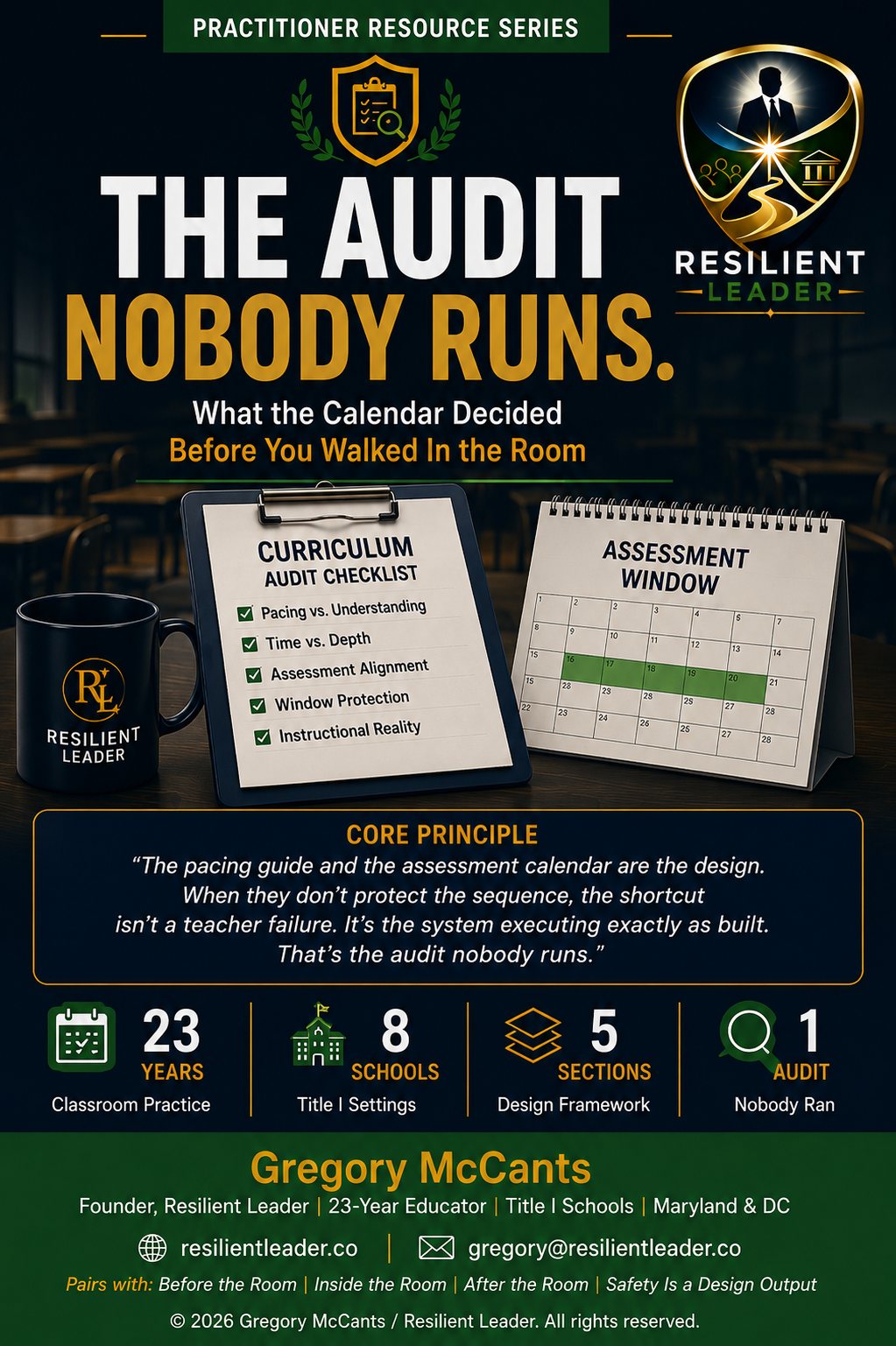
The pacing guide and the assessment calendar are the design. When they don't protect the sequence, the shortcut isn't a teacher failure. It's the system executing exactly as built. That's the audit nobody runs.
There is a single document in your school building that carries more raw instructional authority than your official curriculum guide, your textbook's scope and sequence, and every professional development initiative your district has ever funded.
It is the pacing guide.
Think about the invisible trap that closes around teachers every October. The district curriculum document proudly demands deep "conceptual understanding" from students. But the rigid, line-item pacing guide only schedules a single, lightning-fast week for procedural mechanics before the next benchmark testing window slams shut. Teachers consistently report feeling hopelessly behind the calendar weeks before a unit even ends.
Then, when the common assessment scores drop and show that the same error patterns are appearing on the exact same standards across multiple testing cycles, the institution acts surprised. The system instantly points the finger downward, questioning teacher lesson execution or student motivation.
Those are the wrong diagnostics. The calendar already decided the outcome back in August.
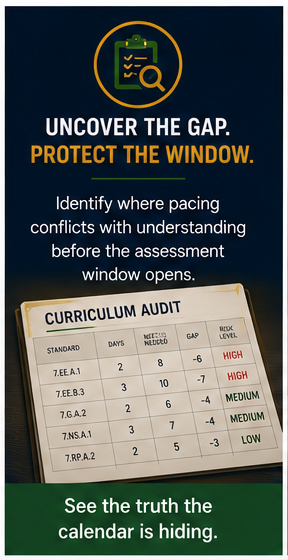
When an environment mandates that an educator must push forward to Module 5 while sixty percent of the classroom has completely missed the prerequisite skills in Module 4, instructional shortcuts are no longer personal choices, they are structural obligations. The system is executing exactly as it was built to run: prioritizing chronological coverage over actual content mastery. The subsequent remediation sessions end up vaguely addressing the broad unit topic rather than targeting the highly specific error patterns locked in the data.
Written by a 23-year Title I math teacher, dean, and assistant principal across eight schools, The Audit Nobody Runs introduces an essential operational framework to stop the compliance coverage treadmill. This manual strips away high-level academic theory to hand you a strict protocol to evaluate the hidden flaws in your building's instructional schedule. Stop internalizing a broken timeline design as a personal teaching failure. Expose the structural gaps, reclaim your instructional sequence, and build an environment where real student understanding is actually mathematically protected.
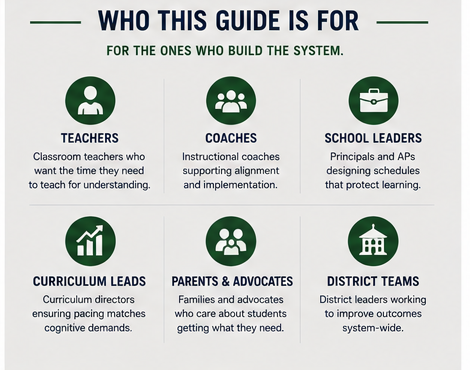
Who This Is For
- Classroom Teachers who are completely exhausted by the constant, low-grade panic of trying to balance deep student learning with a rigid, unrealistic district testing calendar.
- Instructional Coaches & Department Heads looking for an objective, non-evaluative framework to audit why identical student misconception patterns and test distractor choices keep recycling year after year.
- Principals & Assistant Principals ready to look past superficial walkthrough lists to analyze the structural systemic constraints forcing their top-tier teaching talent to choose between coverage compliance and genuine mastery.
What You Receive
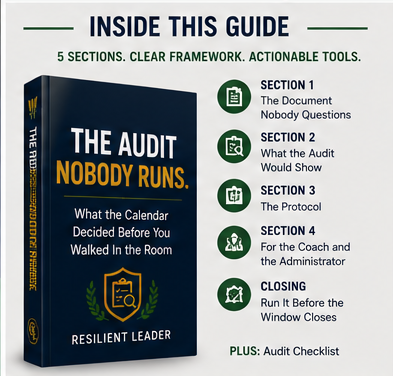
- The 5-Section Institutional Audit Manual: A systematic operational blueprint mapping out the authority of pacing guides, curriculum gaps, and structural culture design.
- The Coverage vs. Understanding Diagnostic: A tactical lens analyzing the core contradictions built directly into line-item school timelines that prioritize dates over learning milestones.
- The Sequence Protection Protocol: Clear, actionable guidelines to execute targeted adjustments to your instructional timeline before the testing window closes.
- The Coach & Administrator Alignment Framework: Direct strategies for building leaders to support, protect, and guide instructional teams through systemic pacing friction.
- The Assessment Distractor Analysis Matrix: Methods to identify and track identical, repeating error patterns across multiple benchmark assessment cycles.
- The Audit Quick Reference Checklist (Bonus): A working, device-ready reference workspace packed with diagnostic tracking metrics for immediate school site application.
What It Pairs With
To construct a perfectly synchronized, data-driven framework that protects your instructional time and energy, this book links natively as part of a practitioner design trilogy with:
- The Item Analysis Practitioner's Guide: For taking the structural pacing insights of this text and anchoring them to a highly disciplined, rapid student error-tracking loop.
- Adult Alignment as a Conflict Variable: For standardizing upstream behavioral and academic expectations across an entire building staff before structural drift occurs.
- The Invisible Load: For running an honest evaluation on your uncompensated labor habits and systematically dropping non-essential administrative obligations.