
Unlocking-Maximum-Machine-Efficiency-with-TPM - Level 2
Unlocking Maximum Machine Efficiency with TPM – Level 2 (Summary)
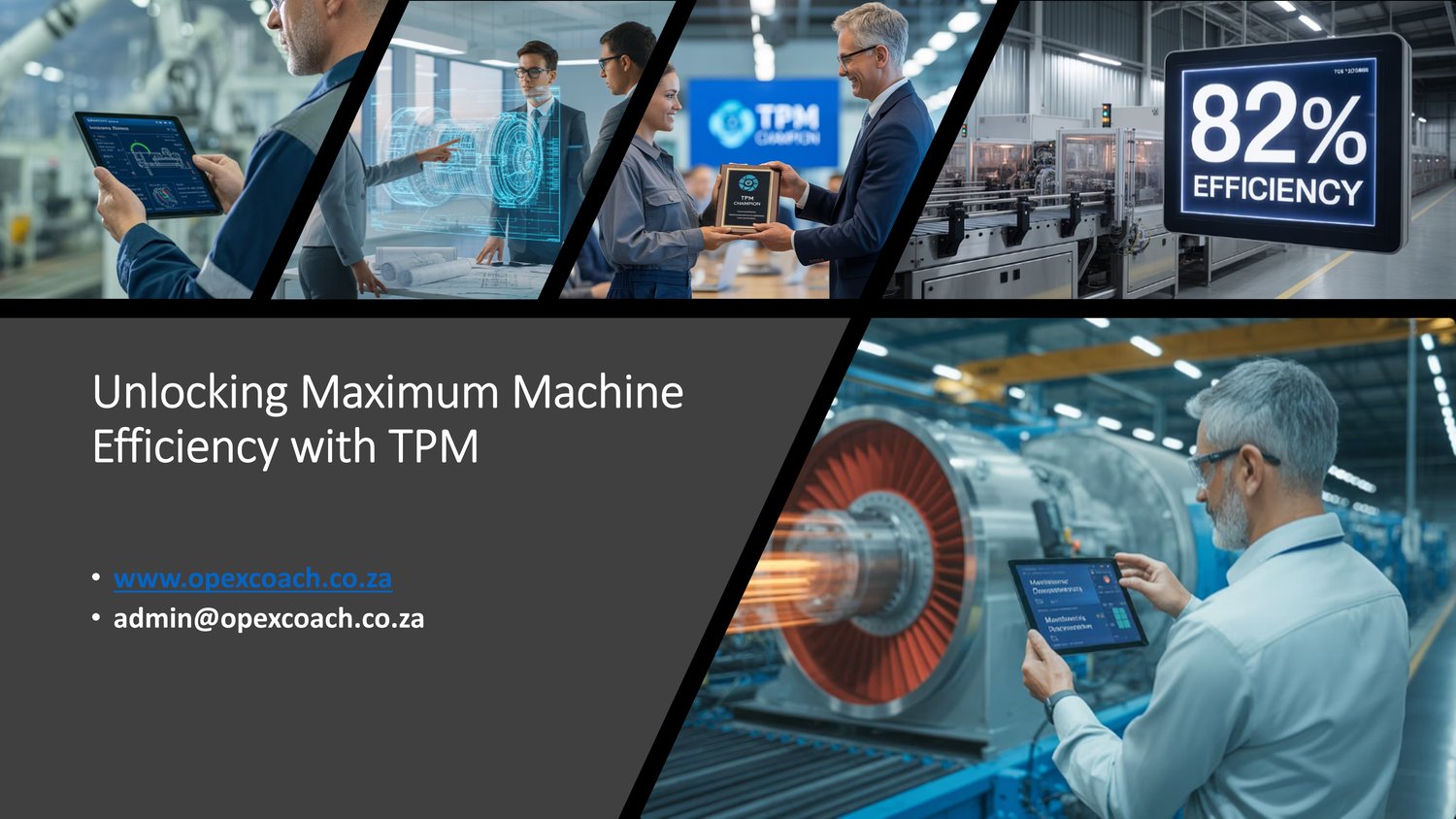
This presentation provides a comprehensive guide to Total Productive Maintenance (TPM), a proactive system that maximizes equipment reliability, productivity, and safety while reducing costs and waste. Developed in Japan in 1971, TPM extends Total Quality Management principles to maintenance, engaging operators directly in equipment care and shifting from reactive repairs to preventive and predictive practices.
TPM’s core goals are zero unplanned downtime, zero defects, and zero accidents, achieved through operator ownership, cross-functional teamwork, and continuous improvement. Success is measured by Overall Equipment Effectiveness (OEE), with world-class benchmarks above 85%.
The methodology is built on Eight Pillars:
Benefits include:
- 30–50% OEE improvement, 200–300% MTBF increase, and 40–80% downtime reduction.
- 15–25% lower maintenance costs, 60–75% fewer emergency repairs, and reduced spare part inventories.
- 50–70% defect reduction, FPY above 99%, and higher customer satisfaction.
- Safer workplaces with 50–70% fewer incidents and stronger workforce engagement.
Case studies (e.g., Wauseon Machine) show rapid ROI within 6–12 months, with millions saved through reduced breakdowns, higher throughput, and improved quality.
The playbook outlines step-by-step implementation: leadership buy-in, baseline measurement, workforce engagement, autonomous & planned maintenance rollout, focused improvement, and training programs. With structured phases, TPM transforms maintenance into a strategic driver of operational excellence and competitive advantage.
In essence: TPM Level 2 equips organizations with a detailed, practical framework to achieve world-class machine efficiency through proactive maintenance, employee ownership, and continuous improvement.