
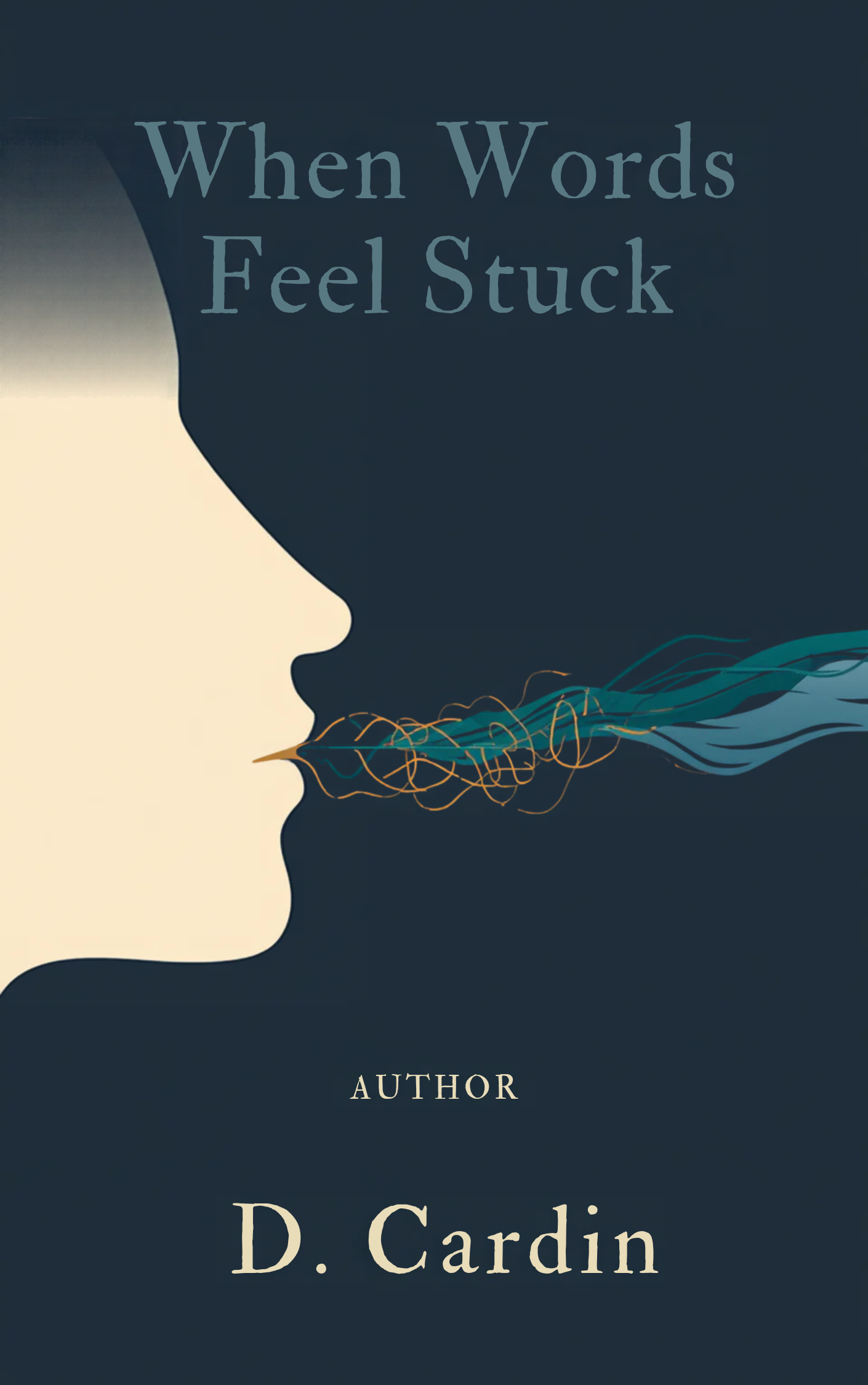
When Words Feel Stuck
Imagine knowing exactly what you want to say but discovering that, at the moment you need your voice, the words will not come.
For people living with selective mutism, silence is often misunderstood. Others may assume they are shy, stubborn, rude, defiant, uninterested, or simply choosing not to speak. Yet selective mutism is recognized as an anxiety disorder. A person may speak comfortably in one environment and find speech extraordinarily difficult or impossible in another.
When Words Feel Stuck is a compassionate, practical guide for people experiencing selective mutism and for the parents, caregivers, teachers, partners, relatives, friends, clinicians, and other supporters walking beside them.
This book explains:
- what selective mutism is and what it is not;
- why speech can change dramatically across situations;
- how anxiety and avoidance can reinforce each other;
- how selective mutism is evaluated;
- how it can differ from ordinary shyness;
- how communication difficulties, autism, language differences, and other conditions may overlap with or require differentiation from selective mutism;
- why pressure, punishment, repeated prompting, and public attention can backfire;
- how gradual exposure and behavioral approaches can build confidence;
- how families can support communication without constantly rescuing;
- how schools can create safer opportunities for participation;
- what teenagers and adults with selective mutism may experience;
- how to build an individualized communication ladder;
- how to recognize progress that goes far beyond simply counting spoken words;
- and how to respond to setbacks without turning them into defeats.
Research supports behavioral and psychological interventions for selective mutism, although the evidence base remains smaller than for many more common conditions. A 2025 meta-analysis involving 472 participants found significant improvements in selective-mutism symptoms following behavioral treatment, while earlier randomized-trial research also found psychological interventions beneficial.
This is not a book about forcing a voice out of someone.
It is about creating conditions in which communication can become safer, freer, and increasingly possible.
Silence is something a person may experience. It is not the measure of that person's intelligence, personality, courage, kindness, or potential.