
Foundations of Canadian Law — NCA Complete Notes Bundle
NCA FOUNDATIONS OF CANADIAN LAW — COMPLETE EXAM BUNDLE BASED ON JULY 2025 SYLLABUS
Rebuilt for the syllabus. New core text, new cases, new articles.
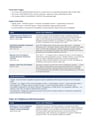
The NCA did not tweak the Foundations syllabus. It rebuilt it.
The prescribed casebook changed. Two leading authorities moved up to the Supreme Court. Eight cases were added, fourteen articles were added, and ten articles were dropped. If you are studying from notes written against the old syllabus, you are learning a reading list that no longer exists and citing two cases at the wrong court level.
This bundle has been rewritten from the primary sources against the current syllabus.
WHAT CHANGED, AND WHY IT MATTERS
The core text. The prescribed casebook is now Bryden, Kennedy et al, Public Law: Cases, Commentary, and Analysis, 5th ed (Emond Montgomery, 2025). Forcese and Dodek edited the 4th edition and are not editors of the 5th. Every chapter cross-reference in this bundle has been remapped.
Two citation traps. Restoule is now Ontario (AG) v Restoule, 2024 SCC 27 — not the 2021 Court of Appeal decision. The Indigenous child and family services Reference is now 2024 SCC 5, and the Supreme Court reversed the Quebec Court of Appeal on the two key provisions. Citing the lower courts as authority is now an error, and on the Reference it means stating the holding backwards.
Eight new required cases, each with a full entry: R v Pamajewon, the FNIM Children Reference, Restoule, Canada v Power, Ontario (AG) v Ontario (IPC), Mathur v Ontario, La Presse inc v Quebec, and Telus v Federation of Canadian Municipalities — decided April 2025 and the most recent case on the syllabus. Auer v Auer is covered in full as well.
Fourteen new required articles, every one summarised from the article itself, not from an abstract: thesis, numbered arguments, the author's own qualifications, and a ready-to-use template line.
Ten dropped articles and four dropped cases are clearly labelled as supplementary, so you know exactly what not to spend your printing and tabbing budget on.
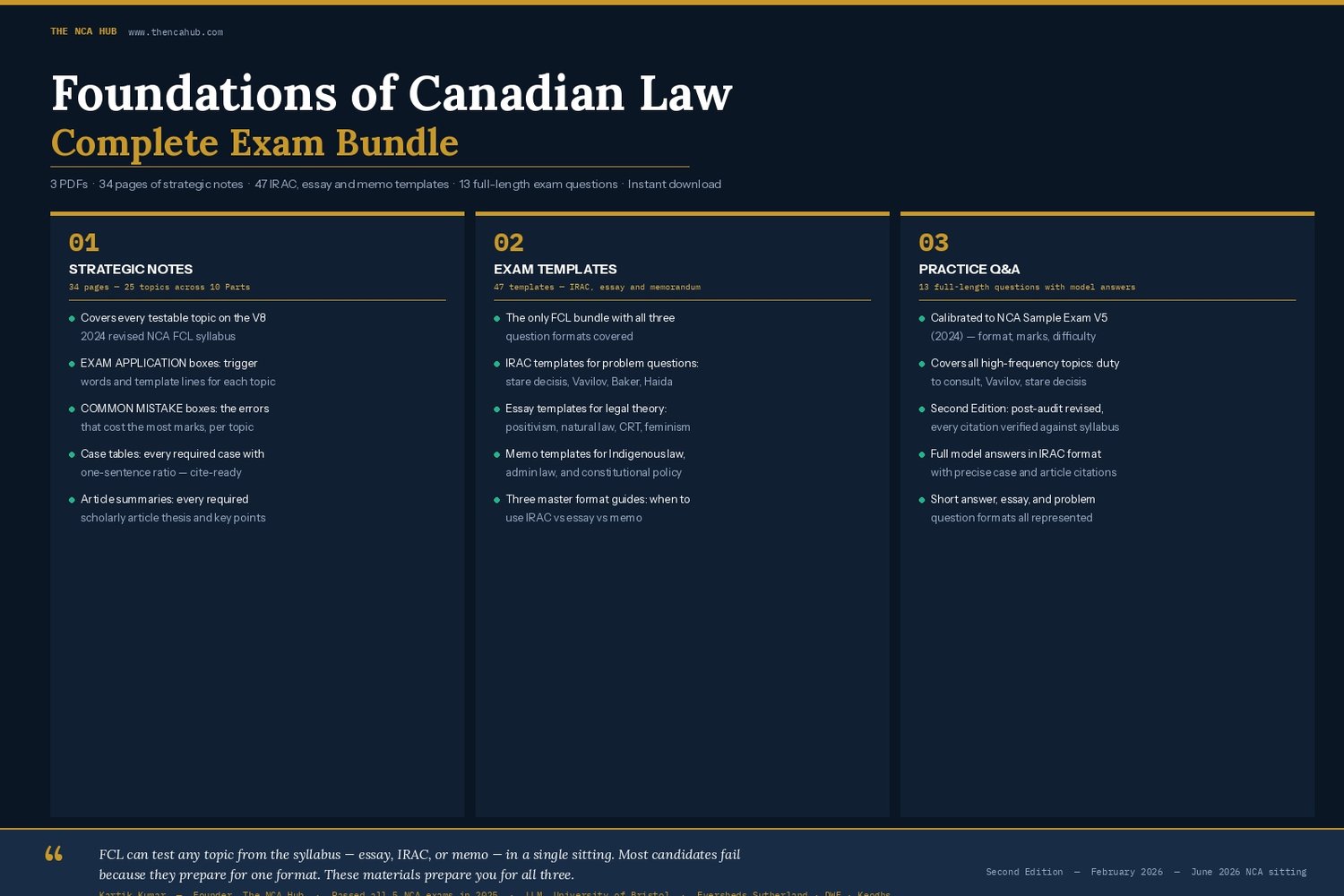
WHAT IS IN THE BUNDLE
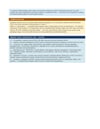
3 PDFs. Instant download after purchase.
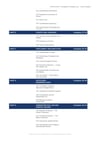
STRATEGIC NOTES — 32 topics across 10 Parts
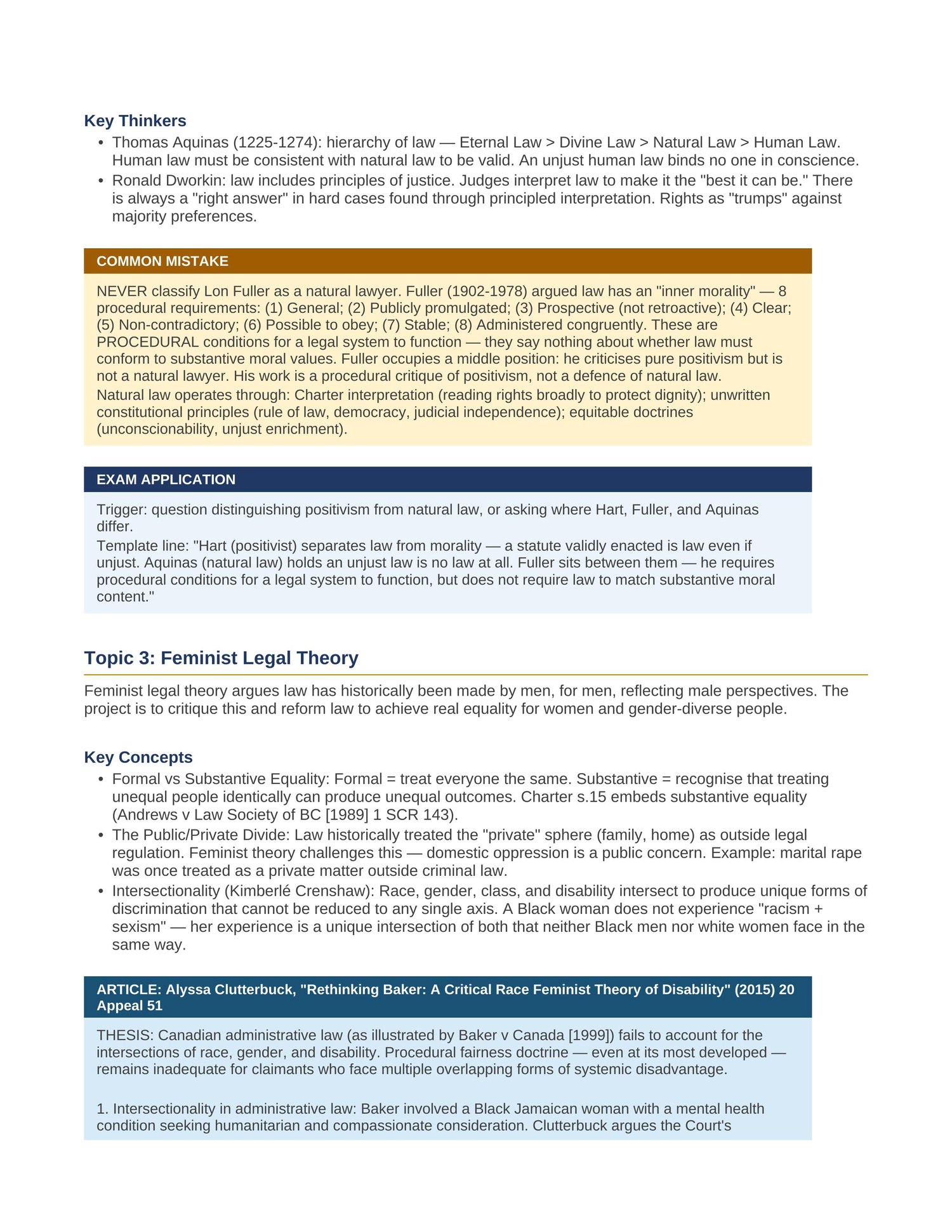
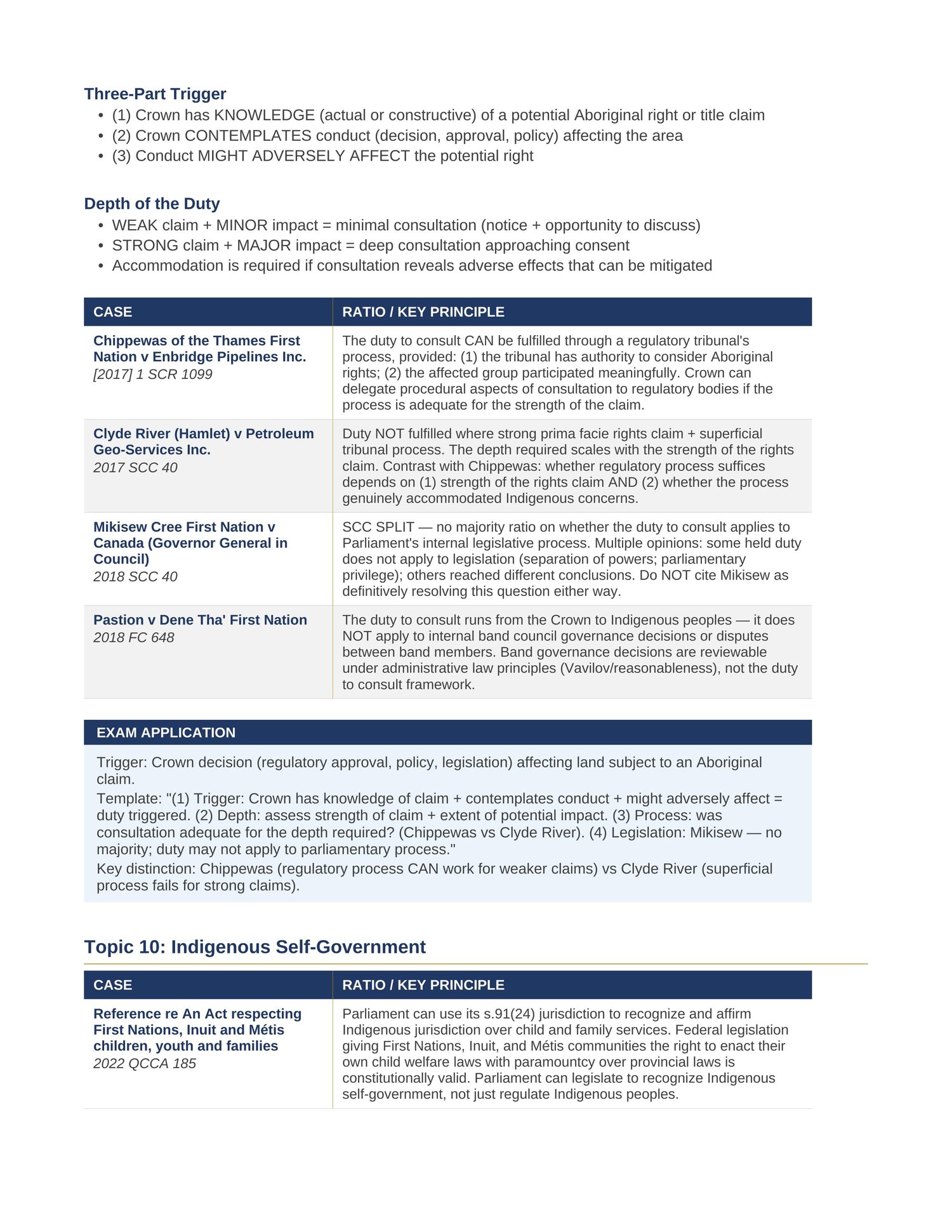
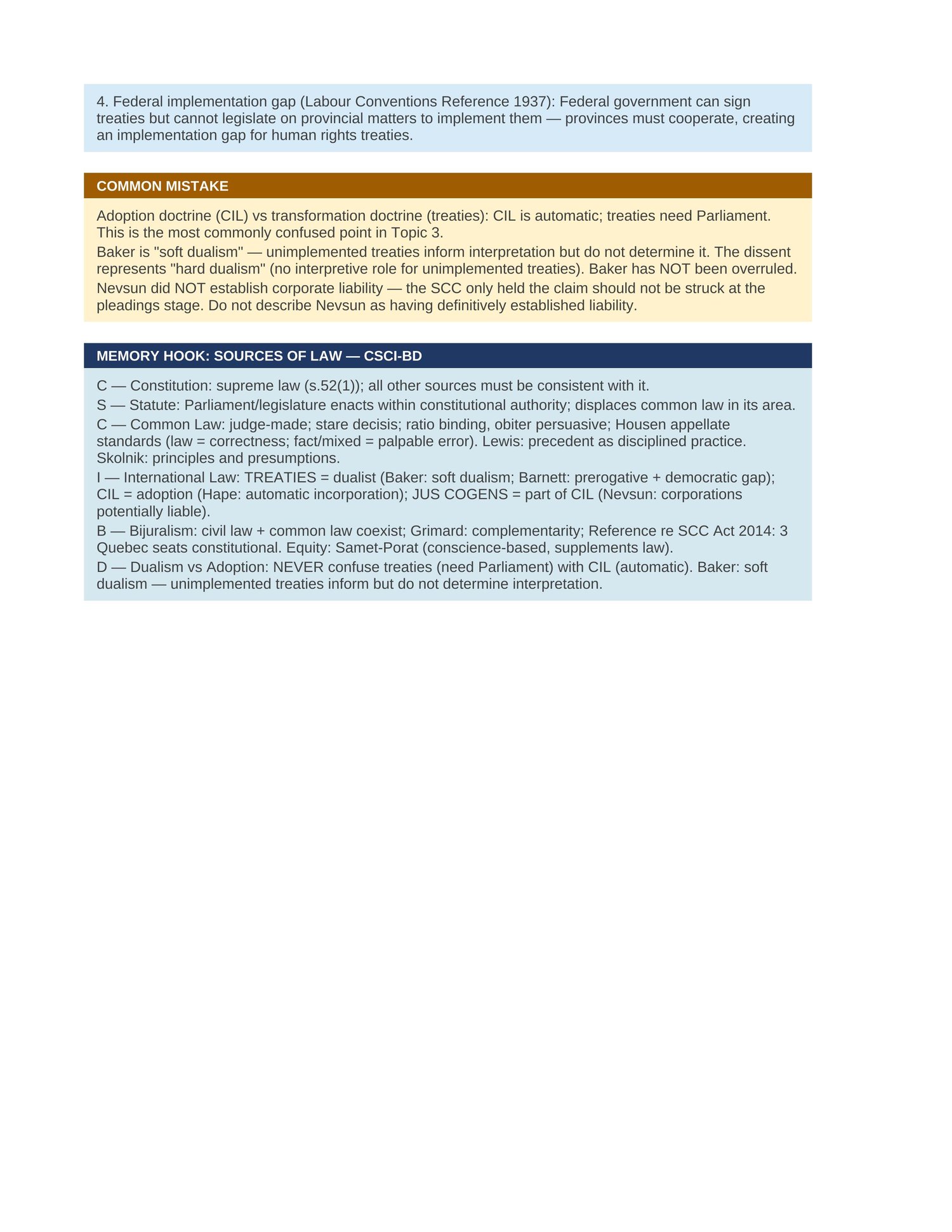
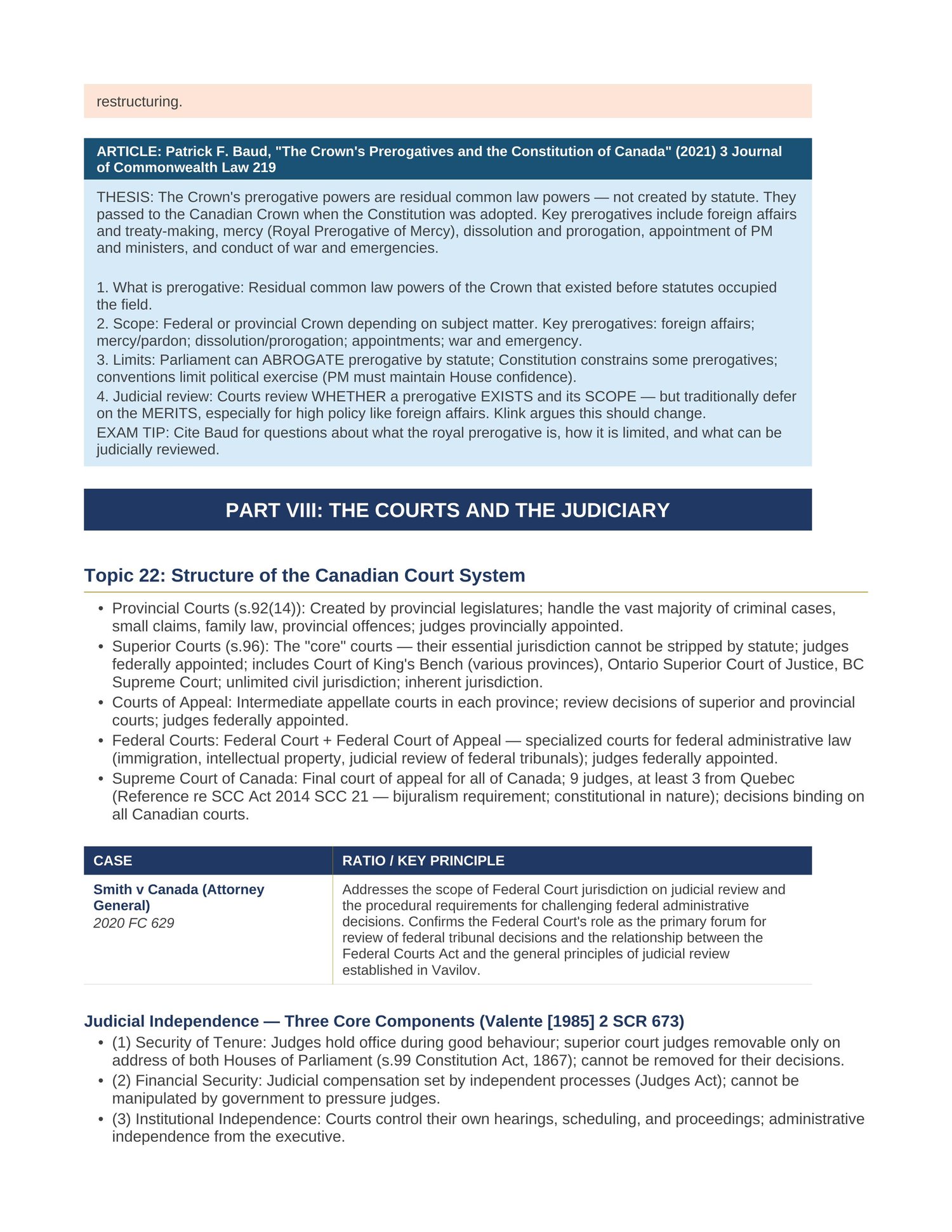
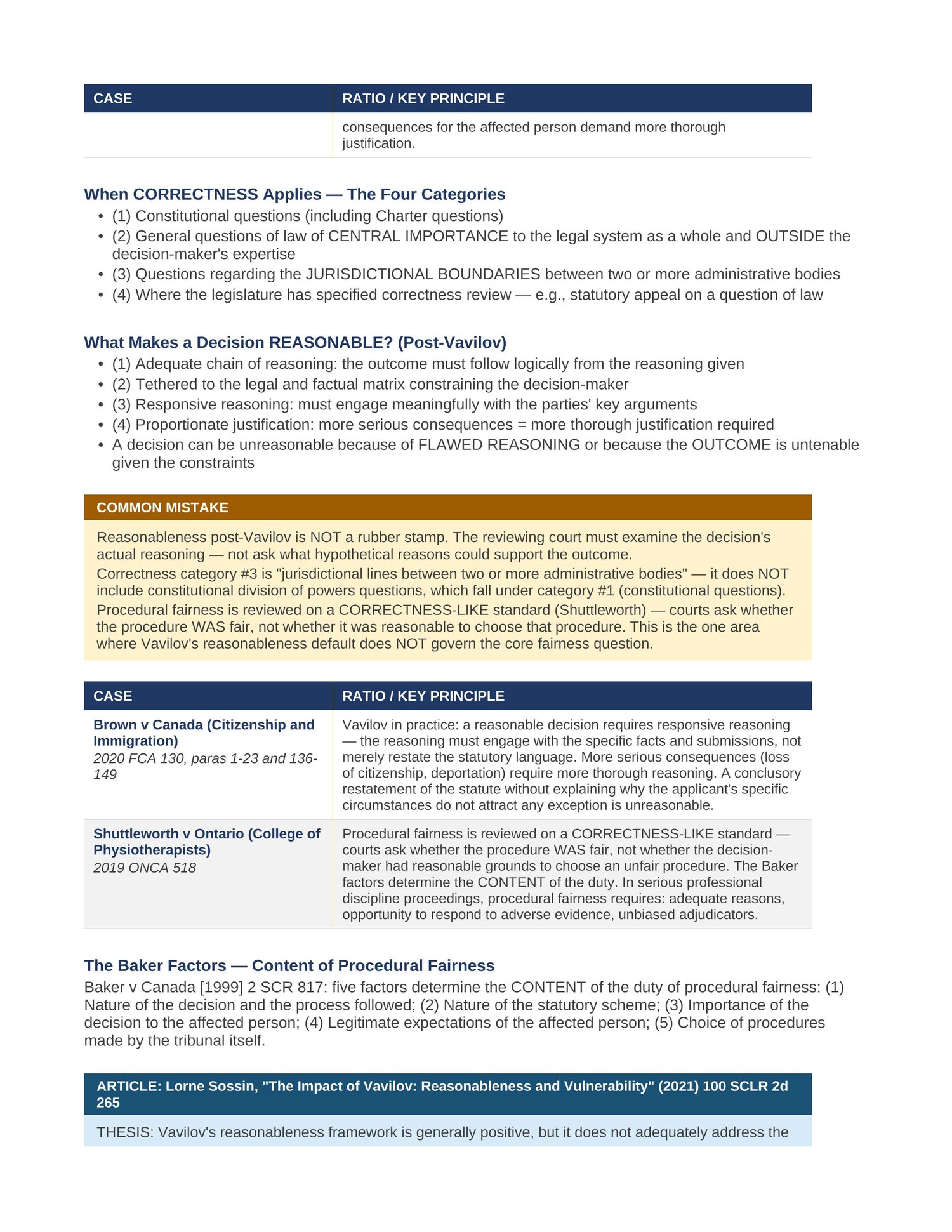
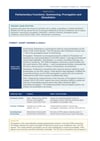
Every topic carries an EXAM APPLICATION box with trigger words and a template line you can lift, a COMMON MISTAKE box naming the specific errors that cost marks on that topic, a case table with every required case and a cite-ready ratio, and a full summary of every assigned article.
Six topics that most bundles skip entirely, because they appear in the syllabus as sub-headings rather than headline topics: constitutional amendment and the five Part V procedures; judicial appointments and judicial discipline; the reception of European law; key actors and the passage of a bill; executive institutions and the political executive; and judicial review in a democratic society, which is the legitimacy question every Component 10 essay presupposes.
Also covered: legal theory including positivism, natural law, feminist jurisprudence, critical legal studies, law and economics and critical race theory. Indigenous law: Aboriginal title including title over private land, the duty to consult, self-government, treaties, the TRC and UNDRIP. Sources of law: common law, civil law, bijuralism, stare decisis, international law and the treaty-making process. Constitutional principles: the rule of law, constitutional supremacy, parliamentary sovereignty, federalism, separation of powers and judicial independence. Parliament and its functions, including prorogation and parliamentary privilege. The executive and the Crown prerogative. Statutory interpretation: the modern approach, the Driedger formula, and the dynamic interpretation question. Administrative law: Vavilov, procedural fairness and the Baker factors, the vires of subordinate legislation after Auer, and automated decision-making.
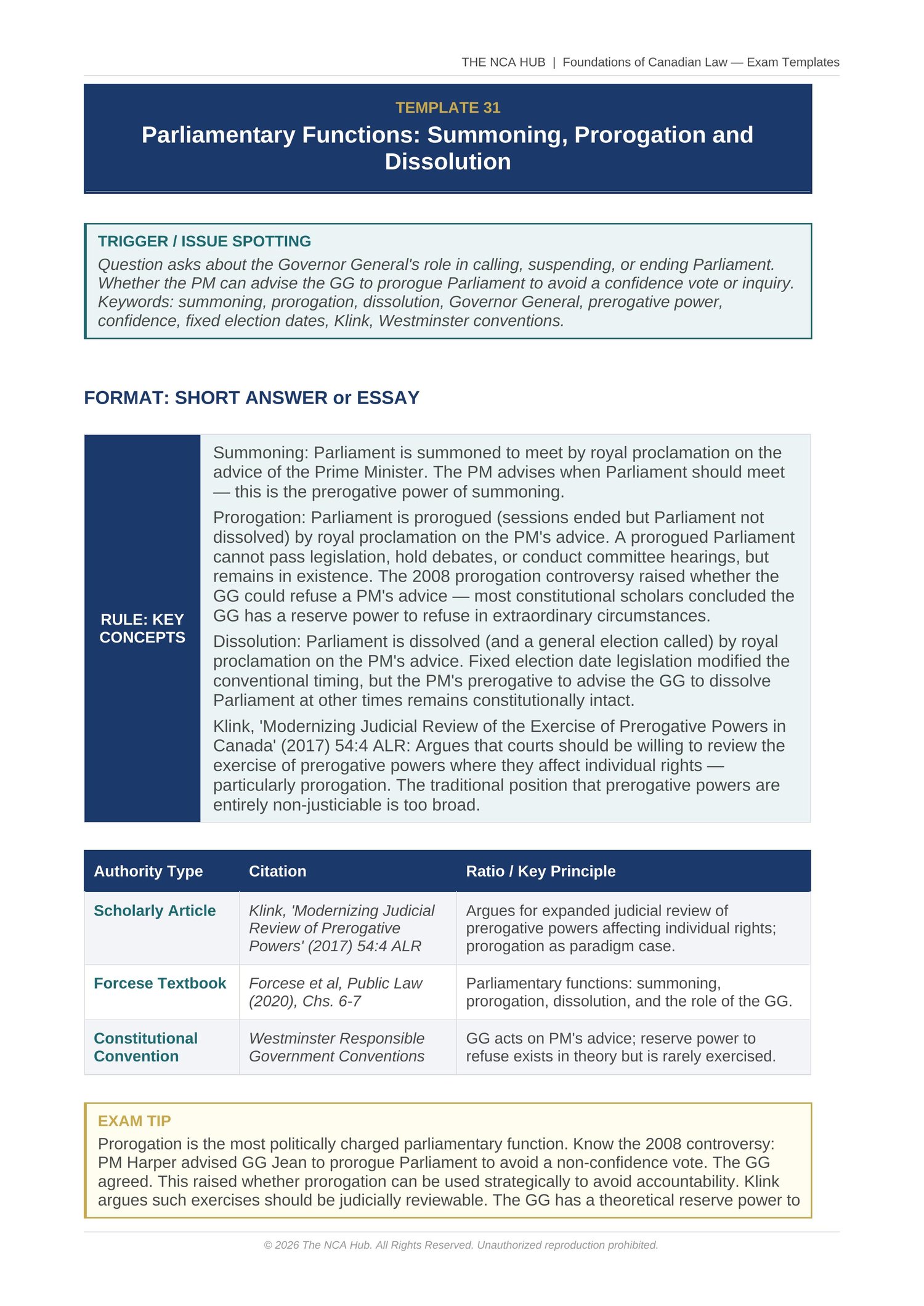
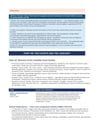
EXAM TEMPLATES — 50 templates
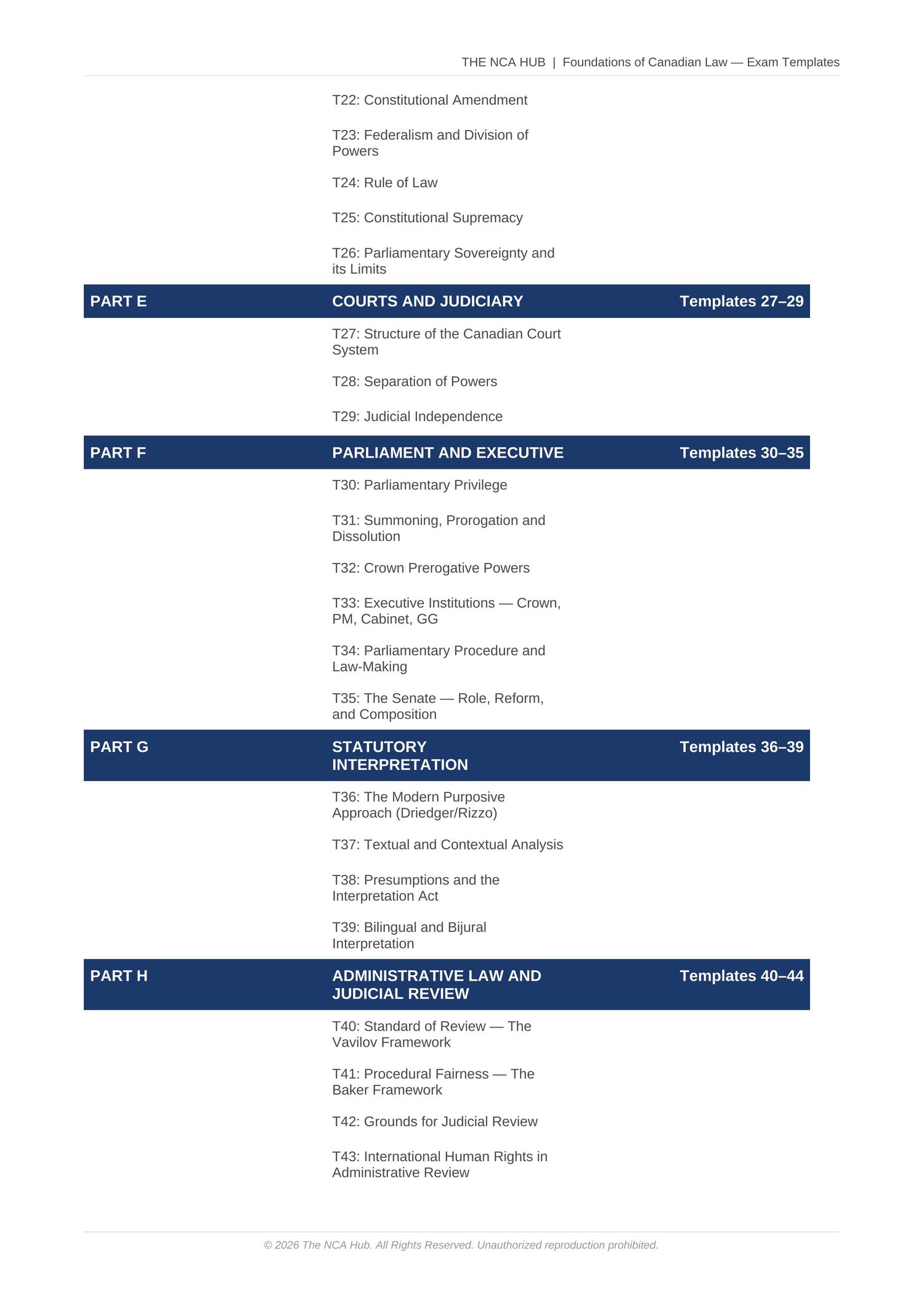
IRAC, essay and memorandum templates covering every testable topic. Still the only Foundations bundle covering all three answer formats.
Three new templates for the syllabus topics added above: the Part V amending procedures with a five-step application sequence; judicial appointments, discipline and the Canadian Judicial Council; and judicial review in a democratic society.
Affected templates now carry a V9 UPDATE panel setting out exactly what changed and how to use the new authority, so you can see what is new at a glance rather than re-reading the whole document.
Three master format guides tell you how to structure an essay, a memorandum and an IRAC answer — what to write first, how to deploy authority, and what markers are looking for in each.
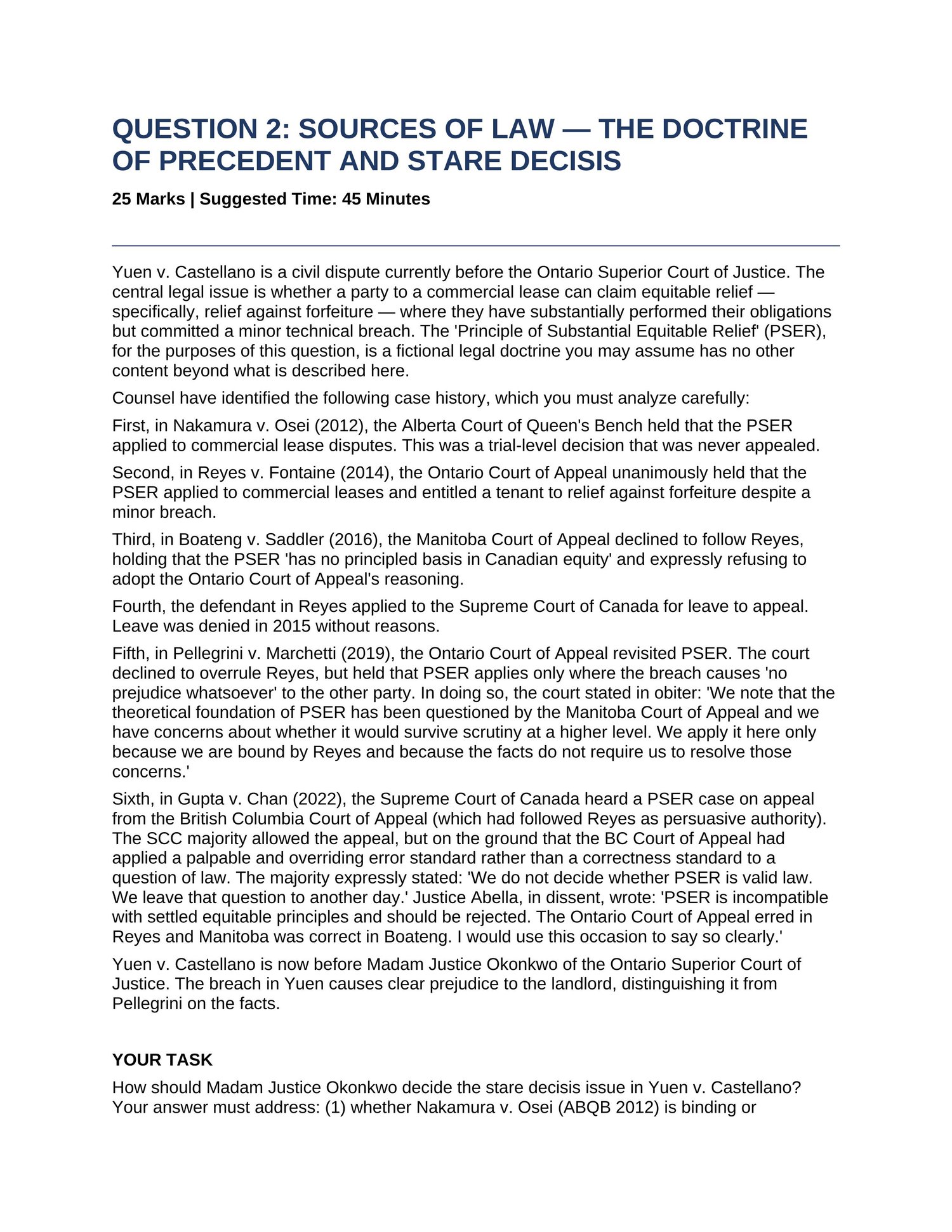
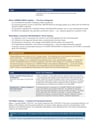
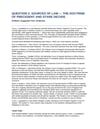
PRACTICE Q&A — 16 full-length questions
Three new questions written for the new material: constitutional amendment as a four-clause characterisation problem; judicial independence, appointments and the CJC; and parliamentary privilege, turning on the federal and provincial split that most candidates get wrong.
Existing questions have been revised against the current authorities, with corrected model answers and updated academic citations throughout.
Covering Indigenous law and the duty to consult, precedent and stare decisis, the Vavilov framework, legal theory, statutory interpretation, the rule of law and parliamentary sovereignty, international law in domestic courts, parliamentary privilege, the Crown prerogative, Aboriginal title, judicial independence, Senate reform, and feminist and critical legal theory. Short answer, essay and problem formats all represented, with full model answers and precise citations.
WHY THIS BUNDLE
The Foundations exam is the most structurally unpredictable NCA paper. In one three-hour sitting you can face a legal theory essay, an IRAC problem on judicial review, and a memorandum on Indigenous law — three formats, three bodies of law, one clock.
Most candidates prepare for one format. The exam tests all three.
It is also the most article-driven NCA subject. Examiners reward engagement with named academic arguments, and a summary that misstates an author's thesis is worse than no summary at all. Every article summary in this bundle was written from the source, with a link so you can read it yourself.
ABOUT THE AUTHOR
Completed all five NCA subjects and passed the Law Society of Ontario Barrister examination. LLM in International Commercial Law, University of Bristol. BA LLB (Hons), National Law University Odisha. Litigation experience at Eversheds Sutherland, DWF and Keoghs in the United Kingdom.
These notes were built for my own exam and rebuilt for yours.
EDITION
Third Edition. Prepared against the NCA Foundations of Canadian Law syllabus, V9 (Revised for July 2025).
Candidates are responsible for obtaining the most current syllabus. Please confirm the version in force for your sitting before you rely on any preparation material, including this one.
YOUR COPY IS PROTECTED
Every page is stamped with your email address. Single-user licence only. Please purchase a separate copy for study partners.
Questions before buying? Email thencahub@gmail.com — replied to within a few hours.