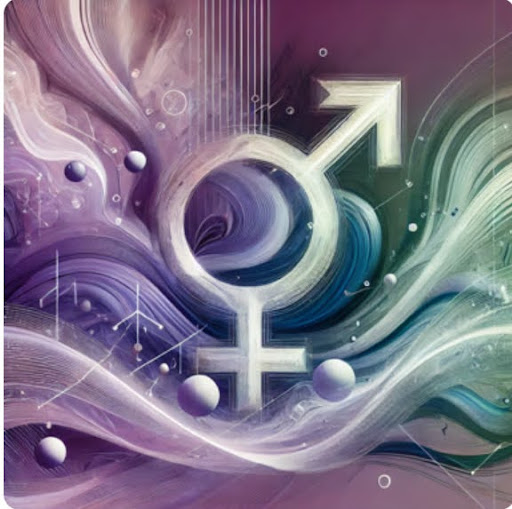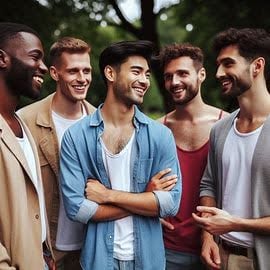


Reimagining Masculinity: Navigating Prosocial Identities in a Gender-Fluid Society
Reimagining Masculinity: Navigating Prosocial Identities in a Gender-Fluid Society
REIMAGINING MASCULINITY: Navigating Prosocial Identities in a Gender-Fluid Society
A thought-provoking exploration of masculinity, identity, social transformation, and the power of consciously chosen strength.
By Lynn Borenius Brown, EdD, LPC
Licensed Professional Counselor | Certified Life, Spiritual, and Meditation Coach | Educator | Author
A New Conversation About Masculinity
What does it mean to be a man in a world where traditional gender expectations are rapidly changing?
For generations, masculinity has been associated with strength, independence, courage, protection, provision, authority, and emotional restraint. These qualities have helped shape families, communities, institutions, and individual identities. Yet the same expectations, when imposed rigidly, can limit emotional development, restrict relationships, and make masculine worth dependent upon constant performance.
Today, changing social structures, greater gender diversity, evolving family roles, and new understandings of emotional well-being are challenging conventional definitions of manhood.
Are traditional masculine qualities becoming obsolete? Must men abandon masculinity to participate in an inclusive society? Or is there an opportunity to preserve the strengths of masculine identity while releasing the restrictions that have too often accompanied them? In Reimagining Masculinity: Navigating Prosocial Identities in a Gender-Fluid Society, Lynn Borenius Brown offers a thoughtful and constructive response.
Rather than framing masculinity as something to defend or reject, Brown invites readers to examine what masculinity has been, what it has become, and what it might yet offer. Her central message is both accessible and transformative:
Masculinity does not need to disappear. It needs the freedom to evolve.
Introducing a Distinctive Vision of Prosocial Masculinity
At the heart of this work is Brown's distinctive exploration of prosocial masculinity—an approach that encourages men to direct traditionally valued masculine capacities toward constructive, compassionate, responsible, and socially beneficial purposes.
In Brown's framework, masculinity is not measured by domination, superiority, emotional invulnerability, or the need to prove manhood.
Instead, it is understood through the ethical use of strength, power, courage, responsibility, competence, and leadership.
Strength becomes service.
Leadership becomes stewardship.
Protection becomes respect for dignity and autonomy.
Independence becomes balanced with meaningful connection.
Competition becomes an opportunity for excellence without humiliation.
Courage includes the ability to acknowledge vulnerability, confront injustice, accept responsibility, and choose peace when conflict serves only the ego.
Brown develops this framework as a constructive alternative to both rigid traditional expectations and the wholesale rejection of masculine identity.
Her guiding principle is:
Preserve the virtue while releasing the restriction.
This original treatment of prosocial masculinity is a defining contribution of the book, connecting psychological insight, family sociology, personal development, gender diversity, and social responsibility.
Why This Book Matters Now
The contemporary conversation about masculinity is often polarized.
Some advocate a return to traditional masculine roles. Others emphasize the harm caused by rigid gender expectations. Meanwhile, many men and boys are attempting to navigate contradictory cultural messages about strength, vulnerability, success, responsibility, identity, and belonging.
Brown moves beyond these competing narratives.
She proposes that the future of masculinity need not be understood as a struggle between tradition and progress.
Instead, it can become an opportunity to create more flexible, psychologically healthy, inclusive, and prosocial identities.
Her work considers the implications of this transformation for personal identity, emotional well-being, intimate relationships, fatherhood, education, leadership, workplaces, community life, and social institutions.
Importantly, Brown distinguishes a gender-fluid society from a genderless society.
Her vision does not require people to abandon traditional gender identities. It recognizes that meaningful identity and individual freedom can coexist—and that genuine inclusion should expand possibilities rather than impose a new form of conformity.
What Readers Will Discover
Through historical reflection, psychological insight, sociological analysis, and practical consideration, Reimagining Masculinity examines:
- The historical construction of masculinity: How masculine expectations developed and became embedded in social institutions and individual identity.
- The benefits and burdens of traditional masculine norms: How courage, strength, provision, and responsibility can become restrictive when treated as compulsory.
- The psychological costs of rigid gender expectations: The effects of shame, emotional suppression, isolation, performance pressure, and the constant need to prove masculine worth.
- The promise of prosocial masculinity: How empathy, compassion, cooperation, accountability, and ethical leadership can strengthen rather than diminish masculine identity.
- The diversity of masculine experience: How culture, race, class, sexuality, disability, age, and other circumstances influence the meaning of manhood.
- The evolution of families and relationships: How greater freedom from prescribed roles creates opportunities for authentic partnership, involved fatherhood, and shared responsibility.
- The redistribution of social power: How gender-inclusive structures can encourage leadership based on competence, contribution, and responsible authority.
- The future of masculinity: How boys, men, families, educators, institutions, and communities can participate consciously in shaping healthier masculine identities.
Throughout the book, Brown challenges readers to move beyond the question, “What must I do to prove that I am a man?”
She invites them to consider a more empowering question:
“What kind of human being do I choose to become, and how can the masculinity I value contribute to that becoming?”
About the Author
Lynn Borenius Brown, EdD, LPC
Lynn Borenius Brown brings a distinctive interdisciplinary perspective to the evolving conversation about masculinity, identity, relationships, and social change.
She is a Licensed Professional Counselor, certified Life Coach, certified Spiritual Coach, certified Meditation Coach, and experienced educator. She holds a Doctorate in Education (EdD), with a major in Sociology of the Family.
Her professional background provides a foundation for examining the relationships among individual psychological development, family systems, cultural expectations, gender roles, social structures, and human behavior.
As a counselor, Brown understands the importance of identity, emotional awareness, self-acceptance, relationships, and psychological well-being.
As an educator, she recognizes the influence of learning, socialization, and cultural expectations on the development of personal values and beliefs.
Her doctoral specialization in the Sociology of the Family provides a particularly relevant perspective on the historical and contemporary relationships among masculinity, family roles, gender expectations, authority, and social transformation.
Her work as a life, spiritual, and meditation coach further reflects her commitment to intentional living, self-awareness, compassion, personal responsibility, and conscious growth.
Drawing upon these complementary disciplines, Brown approaches masculinity not simply as a gender issue but as a question of human development.
In Reimagining Masculinity, she brings these perspectives together in an ambitious examination of how masculine identities can evolve toward greater psychological integration, social responsibility, and human flourishing.
A Significant Contribution to the Conversation
Reimagining Masculinity is conceived as a foundational work presenting Brown's integrated approach to prosocial masculine identity.
Its significance lies in its refusal to reduce masculinity to either an idealized tradition or a collection of harmful behaviors.
Instead, Brown explores masculinity as an evolving identity shaped by historical circumstances, cultural expectations, personal choices, and social relationships.
Her framework encourages readers to recognize that qualities traditionally associated with masculinity need not be abandoned to support inclusion, equality, and gender diversity.
They can be consciously redirected.
The book's larger contribution is a vision of masculinity grounded in freedom and responsibility: freedom to develop beyond restrictive expectations, and responsibility for how one's choices and capacities affect others.
Who Should Read This Book?
Reimagining Masculinity is written for a broad audience, including men seeking greater understanding of their identities; parents raising boys; educators and counselors working with young people; life coaches and mental health professionals; students of sociology, psychology, gender studies, and family studies; organizational and community leaders; and readers interested in gender equality, personal development, and social transformation.
Its accessible, reflective approach makes it appropriate for individual reading, professional discussion, educational settings, book clubs, and community conversations.
An Invitation to Reimagine the Future
The future of masculinity is not simply a question of what men will stop doing.
It is a question of what men can become.
Can strength coexist with tenderness?
Can leadership coexist with humility?
Can independence coexist with connection?
Can courage include vulnerability?
Can tradition coexist with change?
Can masculinity remain meaningful without becoming restrictive?
Brown believes these possibilities deserve serious exploration.
Her work invites readers to imagine a society in which masculine identity no longer depends upon superiority, compulsory toughness, emotional isolation, or prescribed roles.
Instead, masculinity can become an intentional expression of character, purpose, responsibility, relationship, and contribution.
The future does not need less masculine strength. It needs strength that serves a larger human purpose.
The Invitation
Reimagining Masculinity: Navigating Prosocial Identities in a Gender-Fluid Society is more than an examination of changing gender expectations.
It is an invitation to reconsider what we admire, what we teach, what we reward, and what we pass from one generation to the next.
It encourages men to embrace strength without domination, independence without isolation, courage without cruelty, and confidence without superiority.
And it challenges society to create a future in which masculinity is not something a man must continually prove, but something he can consciously and responsibly express.
Reimagine strength. Redefine possibility. Create a more prosocial future.
Reimagining Masculinity: Navigating Prosocial Identities in a Gender-Fluid Society
420 pages.