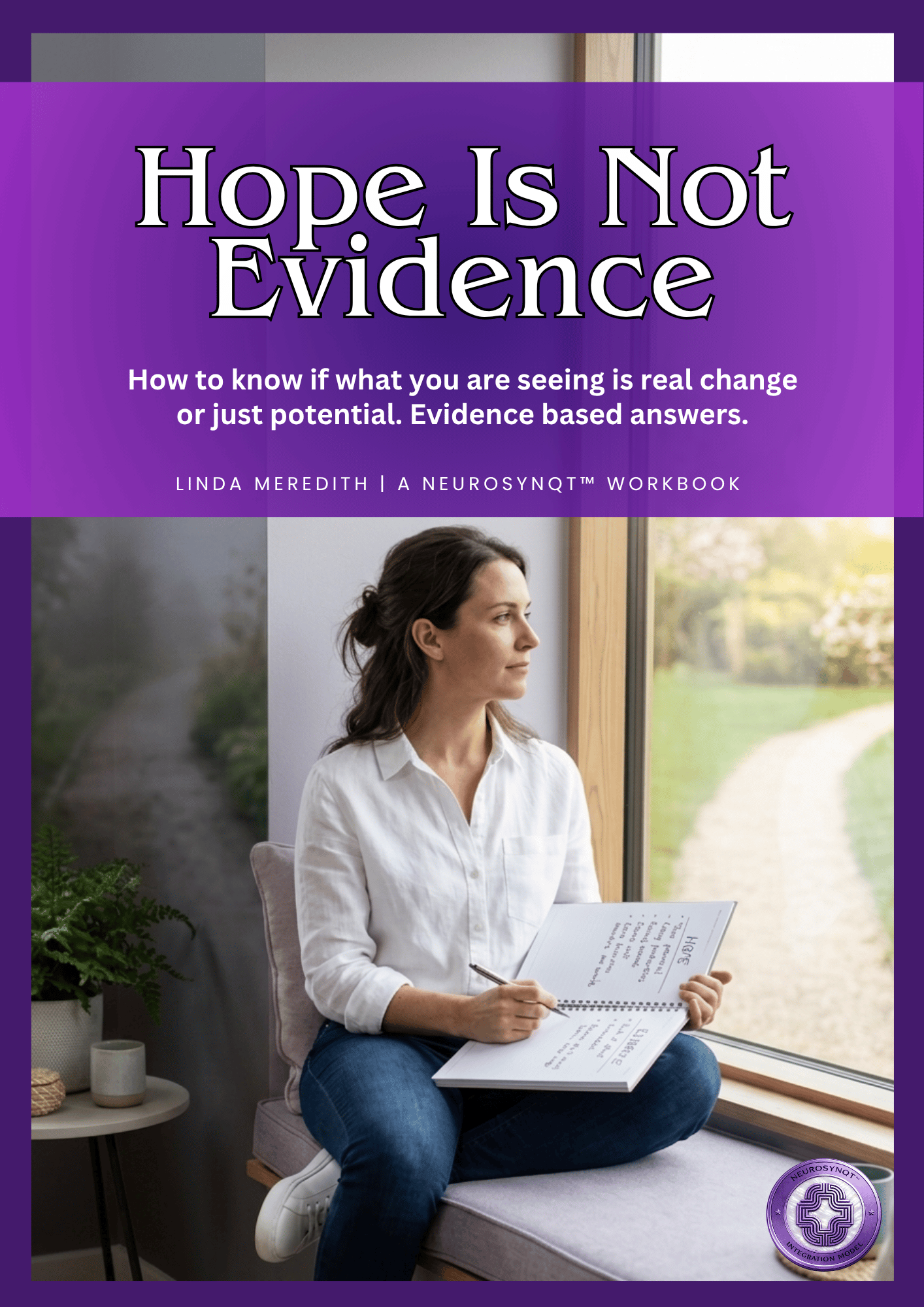
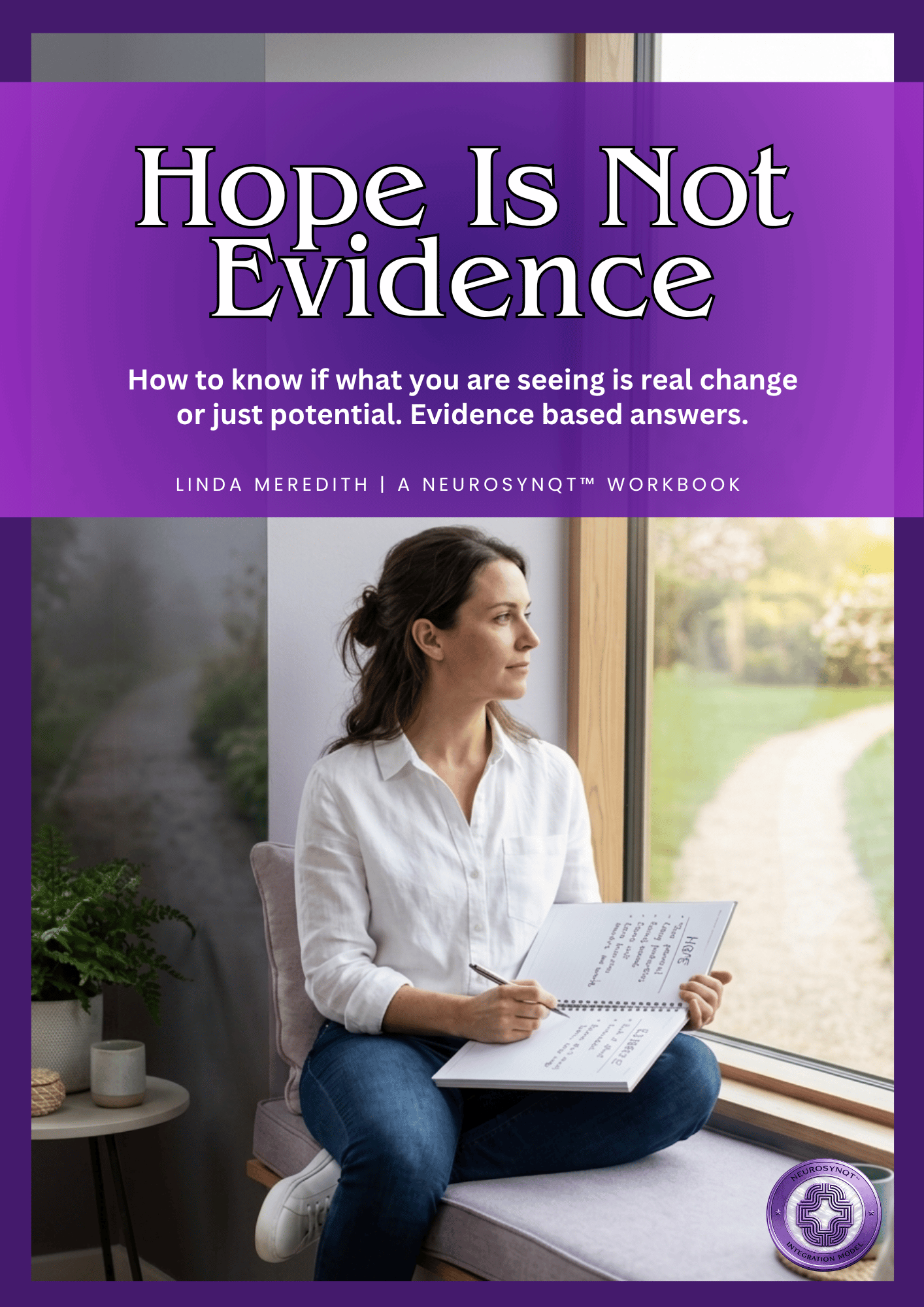
The deep need for Hope Is Not Evidence came from three places.
From walking beside close girlfriends through the “do I stay, do I go, do I wait and see” question. Watching the pain of being caught in that loop, believing in potential and not being able to step out of it, even when the cost increased the longer they remained.
From clients who needed real answers. Not affirmations. Not someone telling them what to do. They needed a way to find their own answers, in their own time, because one of the quiet truths of being an adult with CPtsd is that many of us never had a solid foundation for making the decisions that shape our health, our finances, our children and our relationships over time.
From my own life. Years of giving everything I had to relationships and still being left with questions. Why was giving everything not enough? Why did I kept choosing the same kind of man, and sometimes a harder version than the one before?
I have watched too many women, with or without recognised CPtsd, lose months and sometimes years inside this exact loop. I have watched health decline critically. I have watched finances, investment properties, families and friendships fall apart and have to be rebuilt from the ground up.
I have been through it myself. The endless hoping. Watching. Analysing. Questioning. The what ifs.
When your brain has an integration injury, the difference between hope and evidence does not sit cleanly. The part of you that sees the pattern and the part of you that wants to believe the apology are often working from different timelines, with different access to the present moment.
This is not a personality flaw. It is how an integration injured brain holds a relationship it cares about. You do not need more insight. You need a structure that lets you see what is actually in front of you without losing yourself in the process.
That is what this course gives you.
Linda Meredith CPtsd Educator and Counsellor
NeuroSynqt™ Developer | Registered Training Provider