




French Verbs in past tenses
On Sale
$4.50
$4.50
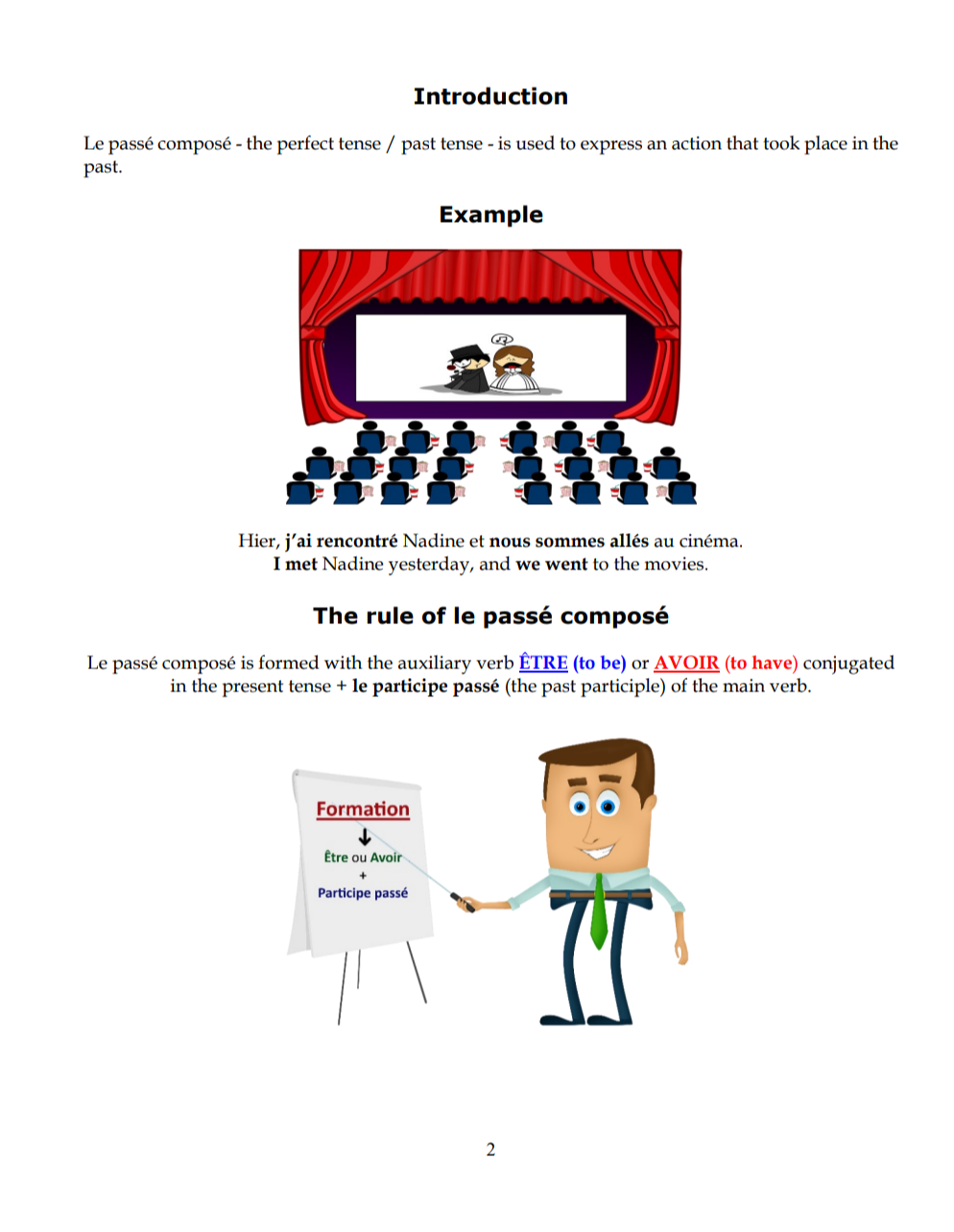
Would you like to master the past tenses in French and know how to use them when you describe an event in the past? If so, as a teacher myself I made the explanation as easy as possible. So, you might want to consider having this product.
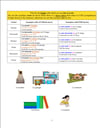
This product contains the full lesson about how to use le passé composé, l'imparfait et le plus-que-parfait in French as described in the following:
- What is le passé composé (the perfect tense)?
- The form of le passé composé (être or avoir + past participle)
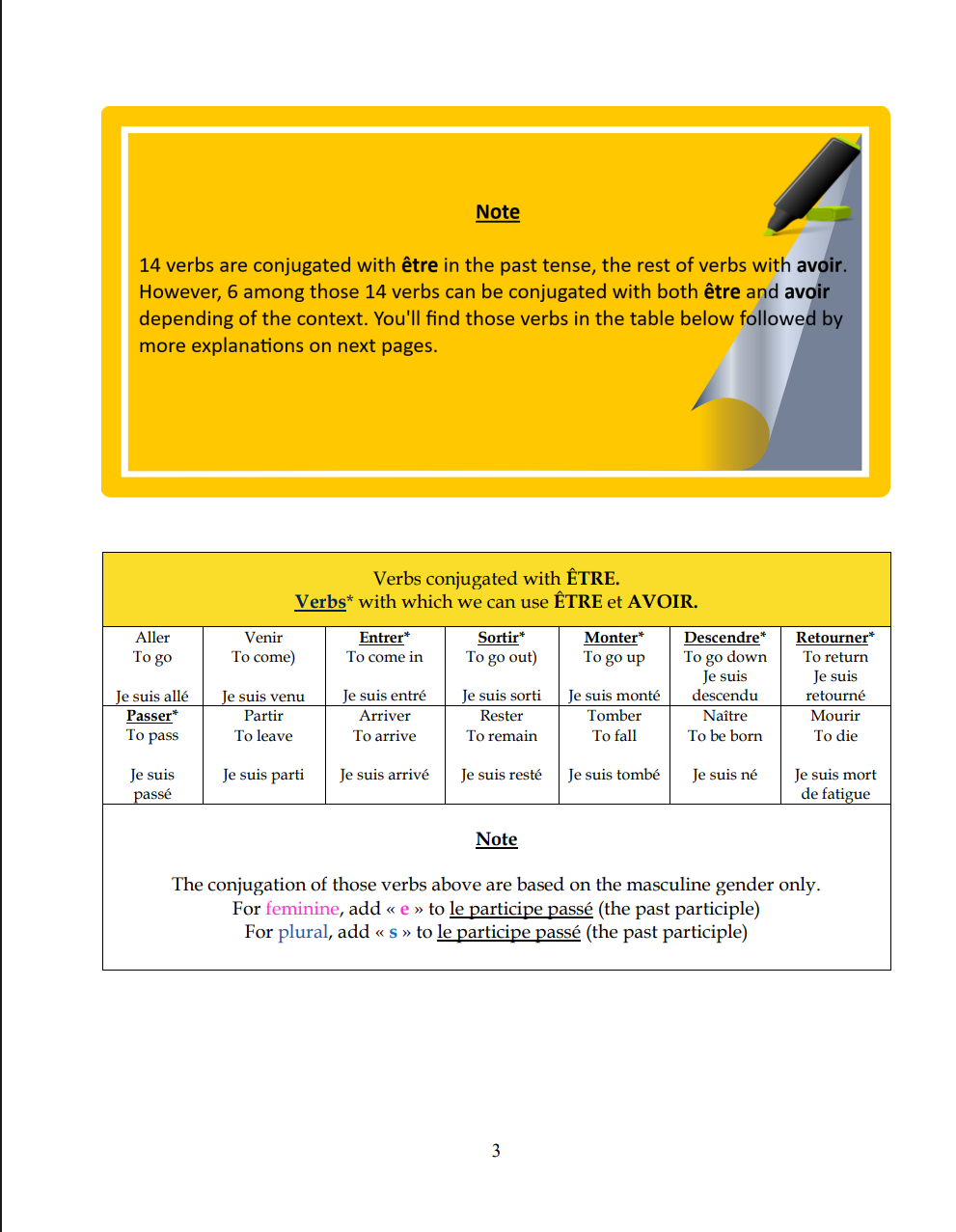
- The verbs conjugated with être (to be)
- The verbs conjugated with avoir (to have)
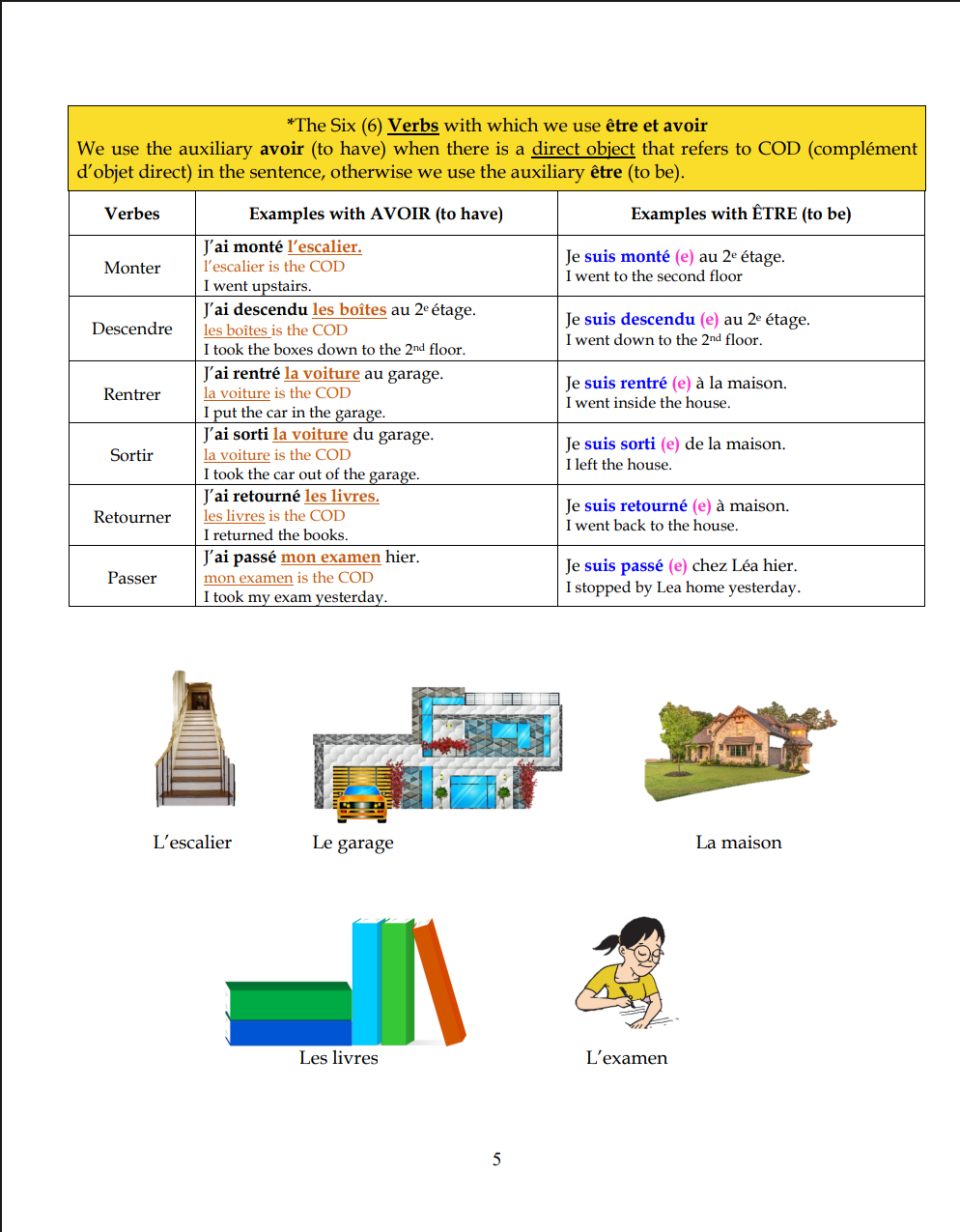
- When do you use être (to be) and when do you use avoir (to have)?
- The 6 verbs with which we can use être (to be) & avoir (to have)
- The ending of past participle with être (to be) & avoir (to have)
- The endings of all irregular past participle with avoir (to have)
- What is the direct object and how do you know if there is a direct object in a sentence?
- The Agreement with the past participle used with être (to be) & avoir (to have)
- Other cases in which we use être (to be)
- The reflexive verbs (always conjugated with être)
- The past participle of the reflexive verbs. Agreement or not?
- The explanation about the indirect object (There is NO agreement with the Indirect object: Parler à, téléphoner à…)
- The other past tenses (l'imparfait = the imperfect- et le plus-que-parfait = the pluperfect)
- The difference between the perfect tense and the imperfect
- The imperfect tense (l'imparfait) and its form
- The plusperfect tense (le plus-que-parfait) and its form
- Examples for each case mentioned above for better understanding
- Additional material.
PDF: 19 pages