

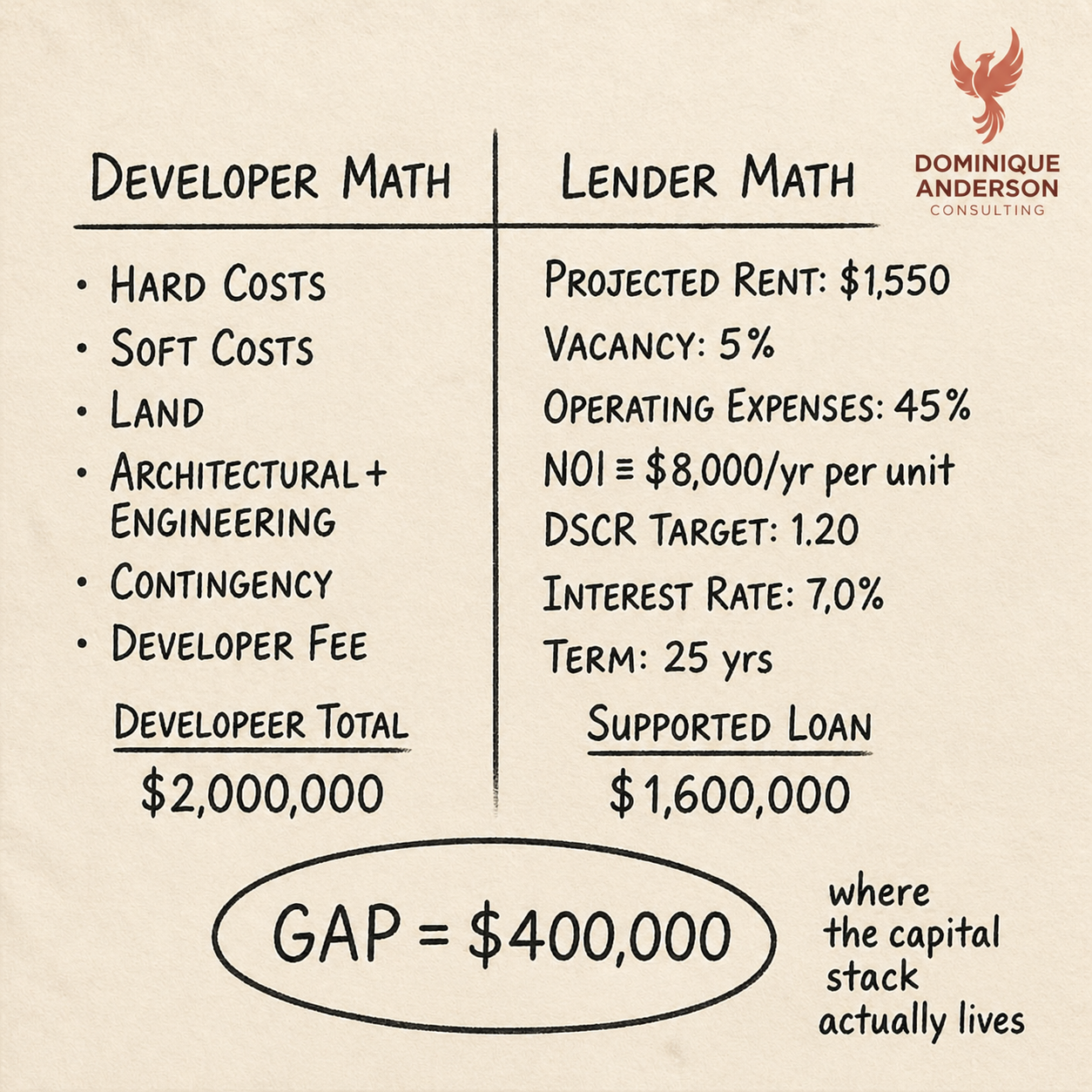
Developer Math vs. Lender Math (Where Deals Actually Break)
On Sale
$7.00
$7.00
What This Is Showing
- The fundamental disconnect between what it costs to build and what a deal can actually support
- How developers focus on total project cost, while lenders underwrite income and risk
- Why the same deal can look “complete” to a developer but incomplete to a lender
- Where the capital gap is created—not discovered
Why It Matters
- Most deals don’t fail because they’re bad—they fail because the math doesn’t align
- Lenders don’t fund costs—they fund cash flow and risk-adjusted returns
- The gap ($400K in this example) is where real capital strategy is required
- If you don’t design for this gap early, you’re forced into last-minute scrambling
Where Deals Go Wrong
- Building a project budget without testing what the deal can actually support
- Assuming the lender will “figure it out” instead of structuring toward their constraints
- Treating the capital stack as an afterthought instead of a design tool
- Ignoring DSCR, expenses, and rent assumptions until it’s too late
- Trying to close the gap reactively instead of engineering it upfront
Use This When…
- You’re explaining to a developer why their deal isn’t fully fundable yet
- You need to show where the capital gap actually comes from
- You’re preparing for conversations with lenders about loan sizing
- You’re structuring deals that require subsidy, layered capital, or creative financing
- You want to shift a conversation from “cost” to “supportable capital”