


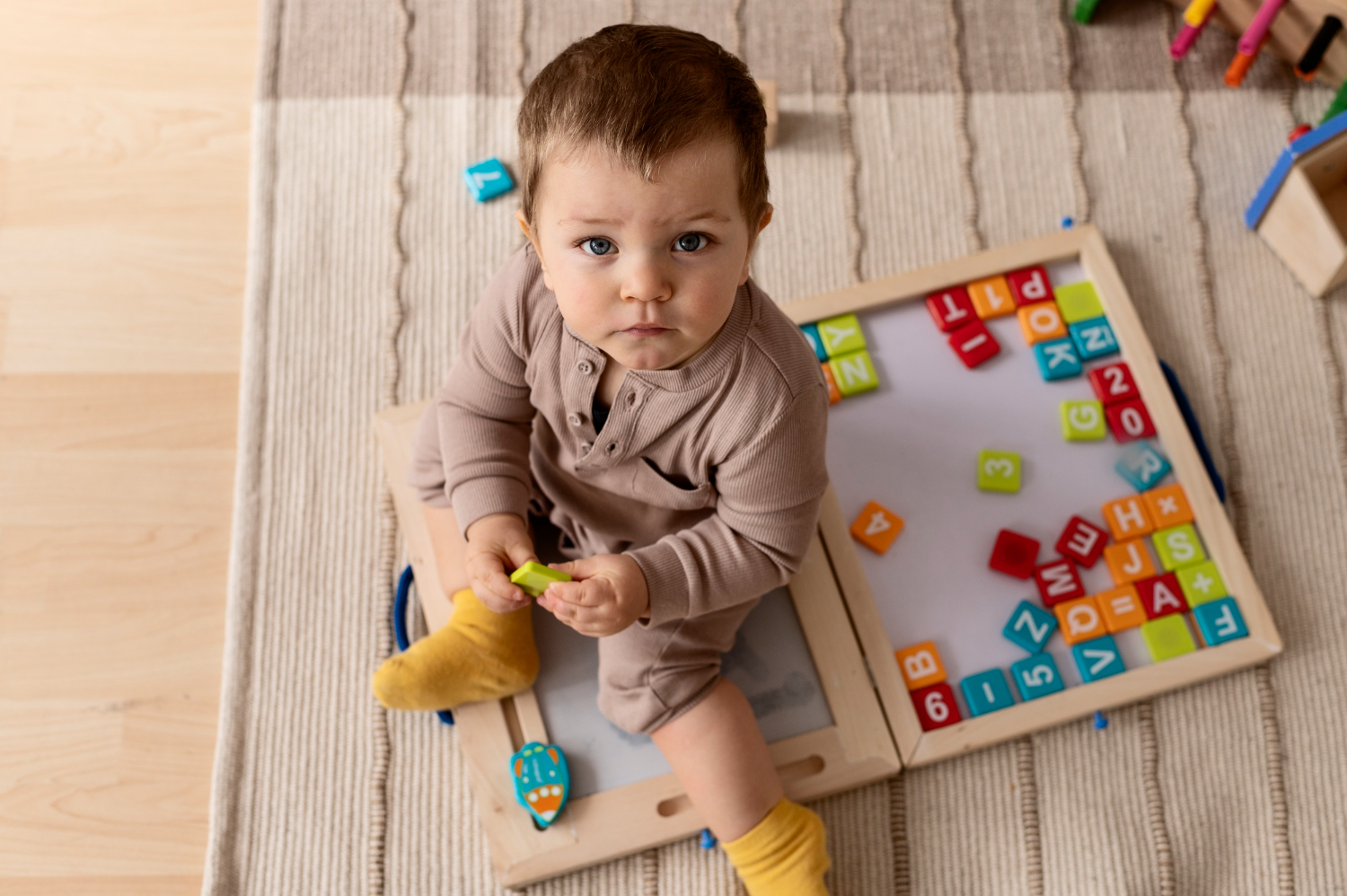
Your baby might be tiny, but their brain is growing at lightning speed. In fact, during the first year, your baby’s brain doubles in size and forms more than 1 million neural connections every second. That means every smile, cuddle, and interaction matters.
So, how can you help your baby grow up smart, confident, and curious? Don’t worry, it doesn’t involve expensive toys or fancy gadgets. It starts with love, presence, and a few powerful habits.
1. Talk, Sing & Make Eye Contact
Your voice is your baby’s favorite sound. Narrate your day, sing lullabies, and mimic your baby’s coos and babbles. These little chats help build language skills and emotional bonding.
Try this: During diaper changes or feeding, talk about what you're doing: "Now we’re putting on a fresh diaper... nice and clean!"
2. Use High-Contrast Visuals
Newborns can only see high-contrast images in the early weeks. Black-and-white flashcards, shapes, or books help strengthen their vision and boost brain engagement.
Download this: Printable Visual Development Cards from DigiBuckets are made specifically for this stage to improve focus and attention.
3. Tummy Time Is Brain Time
Tummy time isn’t just for motor development – it also enhances sensory and spatial awareness. Start with just a few minutes a day and build up as your baby gets stronger.
Pro Tip: Place a high-contrast visual card or safe mirror in front of your baby during tummy time to keep things interesting.
4. Keep a Calm, Stimulating Environment
Your baby doesn’t need overstimulation. A calm, soothing space with gentle music, soft textures, and loving touch supports emotional regulation and sensory processing.
Bonus: Skin-to-skin contact is shown to improve brain oxygenation and bonding.
5. Play With Sound & Movement
Rattles, music, soft bells, and movement games help stimulate auditory and physical senses. Try rocking, gentle dancing, or simple games like peekaboo to make learning fun.
Idea: Create a "sensory time" once a day with music, gentle touch, and movement.
6. Read, Even If They Don’t Understand
It may feel silly, but reading from day one introduces rhythm, vocabulary, and pattern recognition. Choose baby books with bold images and repeat favorite stories.
Start with: Soft fabric books, board books with mirrors, or any picture books you love.
7. Follow Baby’s Lead
Every baby is different. Pay attention to your little one’s cues—when they look away, yawn, or squirm, it might be time for a break. Following their lead teaches emotional intelligence and builds trust.
Final Thoughts
Helping your baby’s brain grow doesn’t require perfection—just intentional moments of connection. The best thing you can do is be present, engage gently, and respond with love.
Want to give your baby a developmental head start? Explore our Early Learning Visual Cards and other printables designed to support your parenting journey from day one.
You’ve got this, parent. And we’re cheering you on every step of the way. :)