
When I was 15, I became pescatarian and eventually vegetarian, after a discussion in school about Buddhist beliefs and their diet. Later on, I also read about why some are vegan, to align with their non-harmful values. I was vegan for around 8 years, and in that time I adopted a vegan lifestyle too. I didn't wear leather, only used cruelty-free beauty products, and never bought yarn containing animal fibres. For a time in my early 20s, I really did live consciously and as ethical as possible. The eldest daughter and pre-frontal lobe development perhaps.
My choice to not use animal fibres was a personal one. So, instead I exclusively used acrylic, cotton or other synthetic materials. When I first began crocheting, my source of yarn was my local saver store, where yarn was 99p for 100g of DK. At the time, it was also all I could afford, since it was peak pandemic and I was unemployed. This cheap yarn was probably the smartest choice to begin with, since it was easily accessible and purely for practice. I didn't feel like I was wasting money, in fact once I began selling some projects, I was making profit. Acrylic yarn can have bad press online. The argument being that it's contributing to plastic consumption, the quality being inferior to animal fibres, and what I would say is a general snobbery. What I will say, is every yarn has it's purpose. No matter what weight or material, yarn is made for a particular purpose or project. Of course, you can use free will and go against the 'rules' of crochet. I once made a lounge set using chenille yarn. Even though I'd only seen this fluffy yarn used for amigurumi, I wanted to test what it would be like for clothing. At the time, it was cute. But after a short while, I didn't wear what I'd made and eventually donated it. Maybe I should've frogged the whole thing and re-used the yarn, but if you've ever attempted to unravel chenille yarn, then you'll know how much that stuff sheds.
In the past, my yarn habits were tactical, again since money was tight. I definitely had a good habit of only buying what I needed, which is a habit I carry to this day. The only difference now, is that I rarely buy acrylic yarn. But why? As a disclaimer, I'm no longer vegan. I became a vegetarian again a few years ago, and today I'm a pescatarian. My choices were due to to lifestyle circumstances and listening to my body, but still balancing that with my past values. Today, I'm also less strict with money, which combined has led me to begin buying more animal fibres. It's only been this past year that I've purchased my first skeins of wool, mohair and alpaca yarn. As I've said, I only consume what I need, and I plan my projects quite precisely. As for projects, I'm less driven by productivity. By that, I don't mean I've become super lazy, but my crochet business has definitely changed. I began creating physical products to sell, so buying yarn and constantly producing something was the norm. Then I took a break for a different career path, and came back to my crochet business at a different angle. I'm now focused on pattern writing, and with that I've found joy in crochet again, and returning back to true, slow fashion.
As you grow, so do your values and priorities. For me, I now value quality over quantity and prioritise my happiness. Without sounding too much like a self-help book. Animal fibres are known for typically being high quality, as they're made to last longer than acrylic, retain warmth and feel better. So when I start a project now, I'm thinking about the wearability and longevity, because I respect the yarn I'm using and where it comes from. This way of thinking has appeared recently as I'm approaching *cough* 30 *cough*, as well as my personal style changing and wanting to curate pieces that will stay with me. On my desk right now is a single box of yarn. It has a mix of fibres, acrylic included, but all with their intended purposes.
Now, just a quick mention for cotton yarn. It's a good mediator in my opinion, as it's vegan-friendly, but also long lasting and pretty durable if you look after it. Cotton yarn is ideal for warmer climates, since it's more breathable and lighter weight. Plus, it can be blended with acrylic if you're looking for a softer texture. I don't think I've heard a bad argument for cotton yarn, but please correct me if I'm wrong. The only reason I don't use cotton all the time is because I think of it as seasonal, and some of my projects wouldn't benefit from it.
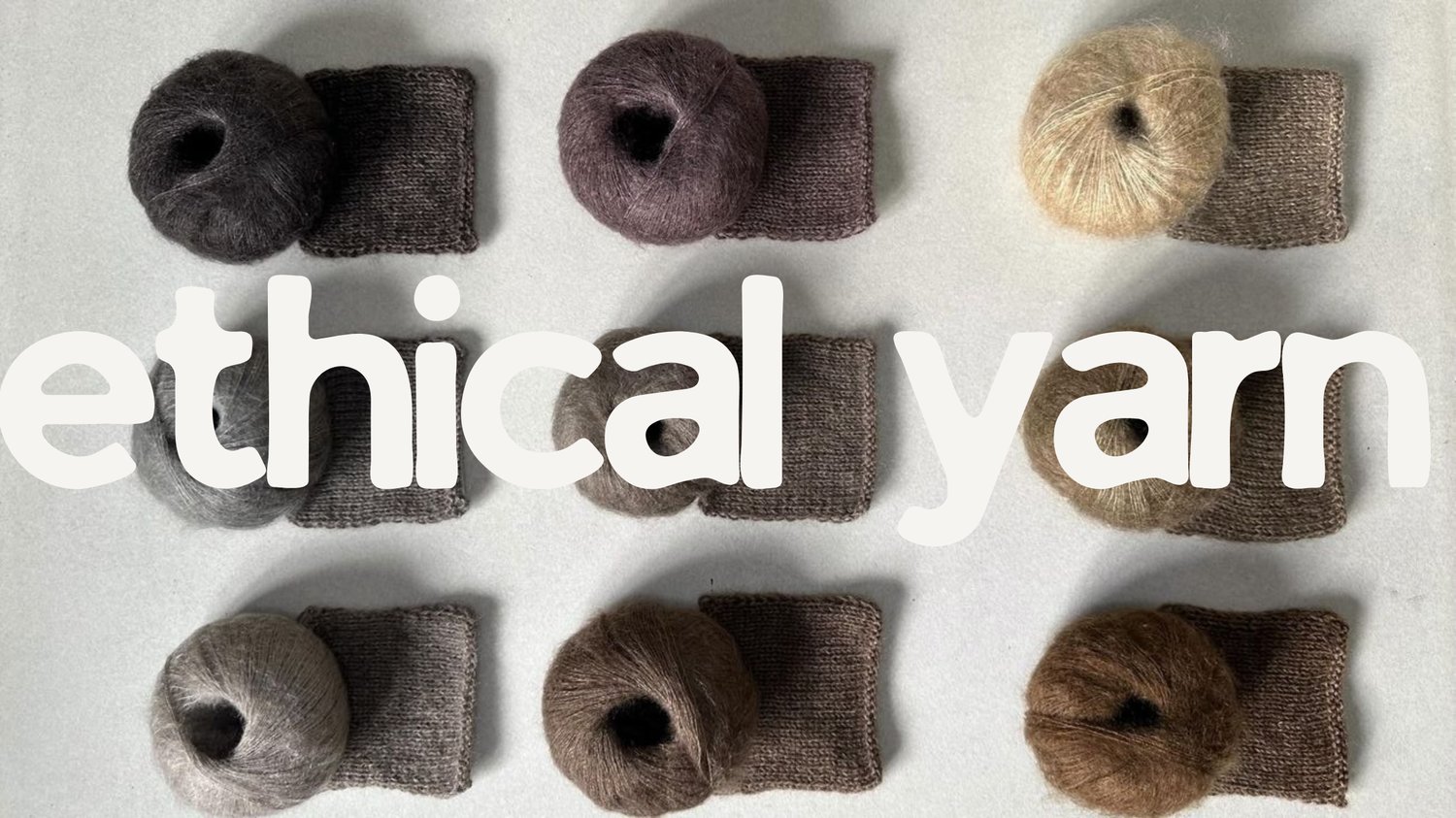
So, what is the most ethical yarn choice? It's a debate many have had, and still continue to have. I've experienced both sides of the argument, plus I'm a big empath, so I can justify both. With non-animal fibres, it's cheaper, accessible, there's no animal involvement, and for some it avoids allergies. However, there's environmental issues, poorer insulation and other quality issues. Animal fibres are durable, plastic-free and good insulators. But as a consumer, it can become expensive and there can be issues with animal welfare, not knowing where it's sourced from. Here I'm trying to show that there's pros and cons to each argument. For some, the choice is clear dependent on their values and mindset. For me, I'm not strictly denying either side. It's obvious right now I'm leaning towards animal fibres, but that doesn't mean I haven't used acrylic yarn this year. The choice I make now is dependent on my project. What yarn would benefit the most? Do I love the colour? Is the yarn weight suitable? There's a lot to consider, as well as the material it's made from. My yarn choices have become more considerate, and I'd like to think I'm wiser in my thinking behind every purchase. In my opinion, using animal fibres is okay, as I'm using it thoughtfully and not over consuming.
Whatever you're choices are, they should have that in mind. Remember, crochet is a great tool to learn, and part of the attraction for many is slow fashion - Or the idea of creating clothing and accessories for themselves, with the knowledge of where it's come from. At the forefront, let's be kinder to each other, whichever yarn we choose. But let's have intention when we do choose, and respect the material we use.
Comments ()