


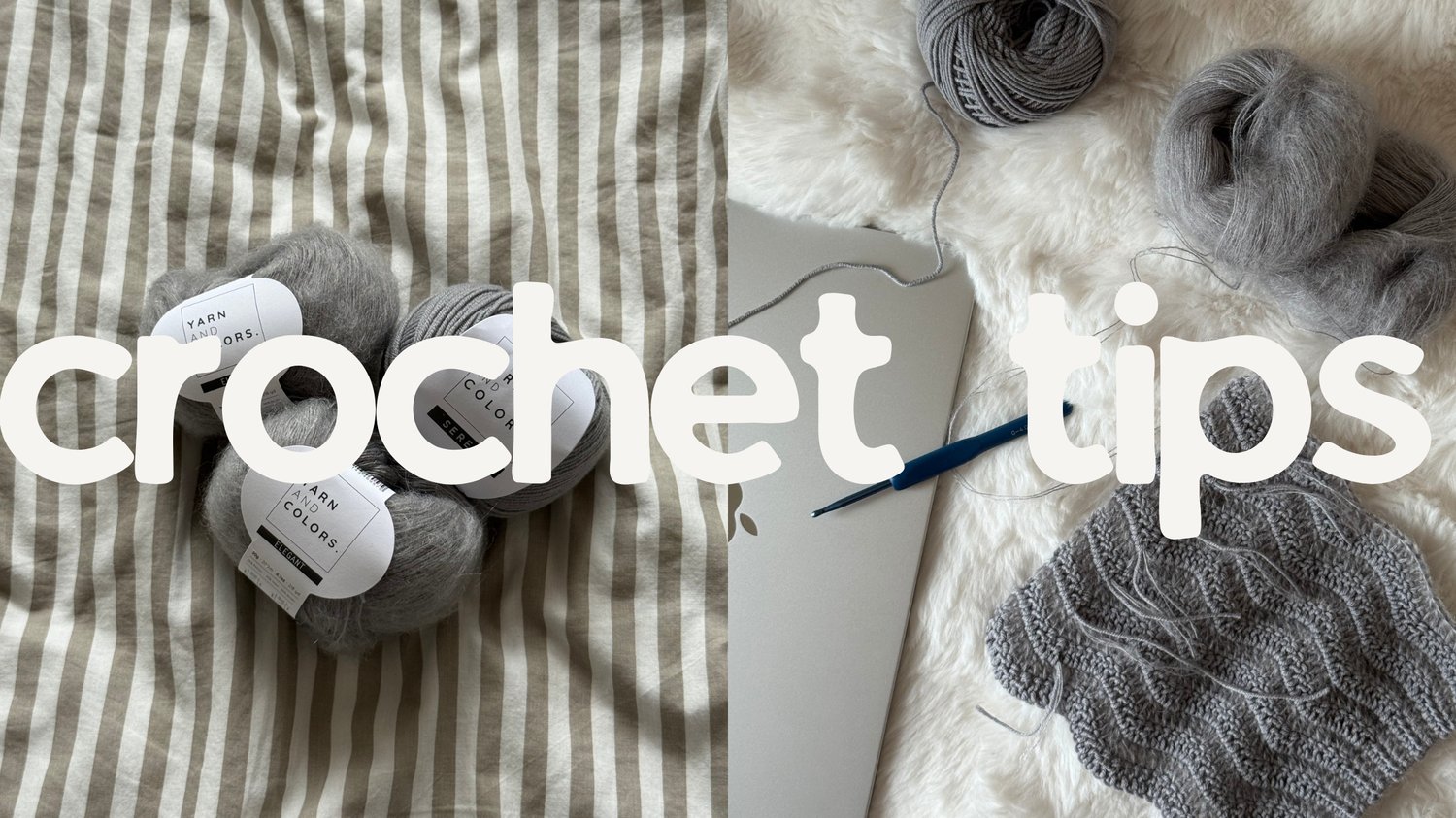
Since I've been crocheting for a few years, I've learnt from my mistakes and hopefully I'm able to offer a few tips for beginners now. I'm probably going to include these in a new YouTube video, along with some new business advice for those that applies to.
The first tip would be to start with a cheap ball of yarn. I'm talking to those who are literally starting with nothing. Get yourself to a saver store and buy a ball of acrylic DK yarn for 99p, and a 5mm crochet hook, preferably with an ergonomic handle if you can. This is what I did, and I'm so glad. I made a post recently about ethical yarn choices, and in it I spoke about my preference of yarn fibres. Nowadays, I favour wool as opposed to acrylic, but that's given my circumstances. In terms of what I can afford and what I have access to. My first ball of yarn was acrylic, and I learned the basic stitches, and created my first basic project. It did the job. Of course, there are disadvantages to acrylic yarn, for example the squeakiness that can occur when you've been working with it for too long. But, if you're learning a chain stitch, this will give you a decent start without much commitment.
After you've learnt those basic stitches, and perhaps made your first project, please learn how to tie off yarn correctly and sew the yarn ends. When I first began crochet, I would tie a knot and cut the yarn ends off. And guess what, eventually those ends unravelled and I had to patch up or unravel my work. I've seen people online burn yarn ends too, and as someone who is majorly clumsy, this definitely isn't something I'd try. The easiest way I've found to tie off yarn, is to make a chain stitch after the final stitch. Then cut the yarn you're working with, and pull the yarn end through the chain stitch. Once you've tied off correctly, sew the yarn end. I know, trust me, this was something I didn't do for a long time. It might have been laziness, since I would always leave my yarn ends and wanted the quickest solution to finish my project. But sometimes, the quickest solution isn't the most effective, or long-lasting. My best advice for sewing is to use the correct needle size, and go under each stitch at the base. And it you have the tendency to be lazy with yarn ends, sew as you go.
Once you've made your first project, which hopefully is small, you may want to commit to something bigger next time. Whatever project you do choose, make sure you're using the correct yarn type for it. I stick by what I said about acrylic, it will do the job if you're practicing. But when you do decide to upgrade your yarn, it's important to be mindful about you intend to do with it. Every yarn has a purpose, whether it be the yarn weight i.e. the thickness of the yarn strand, or what it's made of. For example, for amigurumi toys, the most popular yarn is soft, squishy chenille. This is because it resembles a plushie and suits the cuddly nature of the project. I've attempted breaking the rules, by using chenille yarn for clothing, but it appeared too thick and bulky in my opinion. The yarn weight is just as important as yarn material. Light-weight yarns are better for spring and summer projects, or when you want a generally thinner feel. Whereas anything that's DK or above has a heavier weight, and therefore suited to autumn and winter projects. As for material, cotton will be most breathable, meaning that it's favourited for warmer weather. Whereas for wool, acrylic and fluffy fibres like mohair, they are favourited for colder weather.
A popular crochet skill is learning how to make granny squares, and as someone who's made a lifetime supply, I think I can offer some advice. First of all, don't be intimidated like I was. Granny squares are just clusters of double crochet, with spaces in between made from chain stitches. If you need to join the squares, to make a blanket for instance, then learn a join as you go method. The best tutorial for this is on YouTube here. This exact video is all I needed to join my granny squares without sewing. In my opinion, the seams are much more professional and lay flatter. Another tip for granny squares is to learn the magic circle. Some people also call this the magic ring or loop. It's a method used at the beginning of a granny square, or any project that is worked in the round. Just like granny squares, this shouldn't intimidate you. In fact, this reminds me that I need to share my magic circle method, so follow me on socials (@doodiescrochet) and keep an eye out. There are also alternatives for beginners, where chain stitches create a loop to crochet inside of.
My final piece of advice for beginners, would be to write down the patterns you like and what you learn from crochet. Whether that be a note on your phone, a document on your laptop, or a physical notebook like me. My notebooks are filled with scribbles, designs, notes and numbers, of projects that I've created myself or found online. To this day, I still use them as reference for new designs. And having a record of my crochet feels meaningful.
Comments ()