
The quest for understanding has always been deeply feminine, rooted in the cyclical nature of learning, unlearning, and rebirth. A book on knowledge, particularly one grounded in women's spirituality, serves as more than mere information-it becomes a portal to ancestral wisdom, a map for personal sovereignty, and a catalyst for transformation. When we seek knowledge through the lens of the Divine Feminine, we're not simply accumulating facts; we're reclaiming what has been systematically suppressed, honouring what scholar Marija Gimbutas called the "language of the Goddess," and weaving ourselves back into the sacred tapestry of knowing that predates patriarchal structures.
The Sacred Nature of Feminine Knowledge
Knowledge has never been gender-neutral. Throughout history, women's ways of knowing-intuitive, embodied, cyclical-have been dismissed, demonised, or erased altogether. The concept of knowledge as understood through traditional Western philosophy often privileges linear, rational thought whilst devaluing the somatic, ancestral, and mystical wisdom that women have carried for millennia.
A book on knowledge that centres the feminine experience challenges these hierarchies. It recognises that understanding flows through our bodies, our dreams, our connection to earth cycles, and our ancestral memories. This is the knowledge that Carole P. Christ spoke of when she explored women's spiritual awakening-a knowing that cannot be separated from lived experience, from relationship, from the sacred act of simply being female in this world.
Embodied Wisdom Versus Abstract Theory
Traditional epistemology asks questions about justified true belief and the conditions under which we can claim to "know" something. But for women reclaiming their spiritual heritage, knowledge lives in different territory altogether.
Feminine ways of knowing include:
- Somatic intelligence: wisdom held in the body, accessed through breathwork, movement, and sensation
- Cyclical awareness: understanding that mirrors lunar phases, menstrual rhythms, and seasonal transitions
- Relational knowledge: learning through connection, community, and the web of kinship
- Dream wisdom: guidance received through the liminal spaces of sleep and vision
- Ancestral memory: inherited knowing passed through bloodlines and collective unconscious
These modalities don't appear in standard philosophical texts, yet they constitute the foundation of women's spiritual practice across cultures and centuries.
Archaeological Evidence of Women's Knowledge Systems
Marija Gimbutas's groundbreaking archaeological work revealed sophisticated goddess-centred cultures in Old Europe that thrived for thousands of years before Indo-European invasions. Her research demonstrated that matrifocal societies possessed complex symbolic systems, artistic traditions, and spiritual practices centred on female deities.
Gimbutas's Key Findings:
Goddess figurines across Europe
Symbolic language systems
Ritual objects and sacred spaces
Non-hierarchical settlement patterns
Implications for Modern Seekers:
Evidence of widespread feminine divinity worship
Models for egalitarian spiritual community
Lost alphabets of sacred feminine communication
Templates for contemporary ceremony and practice
A book on knowledge that draws from this archaeological record offers more than historical interest. It provides proof that women's spiritual leadership, feminine divine worship, and matrifocal social structures represent our human heritage, not aberrations.
The Suppression and Survival of Women's Wisdom
Max Dashu's extensive documentation of women's indigenous spiritual traditions across continents reveals both the systematic suppression of feminine knowledge and its remarkable persistence. From the burning times in Europe to the colonisation of indigenous peoples worldwide, patriarchal forces have targeted women's spiritual authority with particular violence.
Yet the knowledge survived. Encoded in fairy tales. Whispered through generations. Preserved in folk practices. Carried in the muscle memory of women's bodies. A book on knowledge that honours this history becomes an act of resistance and reclamation.
Forms of suppressed feminine knowledge:
- Herbalism and plant medicine traditions
- Midwifery and women's healing practices
- Trance, ecstatic dance, and altered states
- Moon lodges and menstrual rituals
- Goddess worship and female deity systems
- Matrilineal inheritance of spiritual roles
Contemporary Applications of Ancient Feminine Wisdom
For the modern seeker, a book on knowledge grounded in ancient women's spirituality isn't about recreating the past. It's about extracting timeless principles and adapting them to contemporary life challenges.
The sacred feminine offers frameworks for navigating everything from creative blocks to relationship patterns, from career transitions to deep grief. When we understand knowledge as transformative rather than merely informative, we shift from passive reading to active initiation.
Creating Your Personal Knowledge Practice
Engaging with a book on knowledge as spiritual technology requires different reading practices than conventional learning. This isn't about highlighting key points or memorising facts. It's about allowing the material to work on you, to rearrange your inner landscape, to activate dormant capacities.
Ritual reading practices include:
- Setting sacred space before opening the text
- Lighting a candle to honour the ancestors whose wisdom you're accessing
- Reading aloud to engage your voice and breath
- Journaling immediate responses and body sensations
- Allowing dreams to continue the teaching whilst you sleep
- Returning to passages during specific moon phases or life transitions
These practices transform consumption into ceremony, making the act of reading itself a spiritual practice.
 The Role of Books in Spiritual Sovereignty
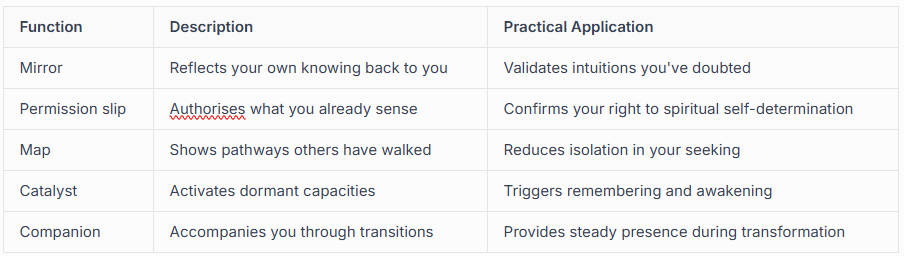
Sovereignty-the reclamation of your inherent authority over your own spiritual life-requires knowledge. Not the knowledge that others give you permission to hold, but the understanding of knowledge itself as something you can claim directly through your own experience and wisdom lineage.
A book on knowledge serves multiple functions in this sovereignty journey:
Building Your Sacred Library
Not every book on knowledge will resonate with your particular path. The feminine approach to learning emphasises discernment-choosing texts that speak to your soul's specific curriculum at this moment in your evolution.
When selecting spiritual books, notice what activates your body's yes. Do you feel expansion in your chest? A quickening in your belly? A tingling in your hands? These somatic responses indicate alignment between the material and your current growth edge.
Equally important is recognising what to release. Books that feel heavy, obligatory, or shrouded in shame don't serve your sovereignty, regardless of how "important" others deem them.
Integrating Knowledge with Practice
Carole P. Christ emphasised that women's spiritual awakening cannot be separated from embodied experience. A book on knowledge becomes truly transformative only when its insights move from intellectual understanding into lived practice.
This integration happens through ritual, ceremony, and consistent spiritual disciplines that honour feminine rhythms rather than masculine productivity models.
Integration pathways:
- Monthly ritual aligned with lunar phases
- Seasonal ceremonies marking equinoxes and solstices
- Daily practices adapted to your energy and capacity
- Creative expression through art, movement, or writing
- Community sharing circles where wisdom is spoken aloud
- Offerings to the earth, ancestors, or deities mentioned in your reading
The philosophy of knowledge shifts dramatically when we understand it as inseparable from practice. Knowing becomes being becomes doing becomes becoming.
The Spiral Path of Learning
Feminine knowledge traditions recognise that learning isn't linear. We don't master one level and move permanently forward. Instead, we spiral-returning to familiar themes at deeper levels, revisiting old wounds with new capacity, circling back to integrate what we couldn't hold before.
A book on knowledge that you read at twenty-five will reveal entirely different teachings when you return to it at forty-two. This isn't because the words changed, but because you did. The spiral honours this reality, inviting us to release the patriarchal pressure for constant forward progress.
 Reclaiming the Sacred Feminine Through Study
When we engage a book on knowledge centred on women's spirituality, we participate in a profound act of cultural healing. Every woman who studies goddess traditions, explores matrifocal history, or practices feminine ritual contributes to the collective reweaving of what was torn.
This isn't about romanticising the past or claiming some mythical matriarchal utopia. It's about recovering the full spectrum of human spiritual expression, including the voices, practices, and deities that have been silenced.
From Knowledge to Gnosis
The distinction between knowledge (intellectual understanding) and gnosis (direct mystical experience) becomes particularly relevant in feminine spirituality. A book on knowledge can point towards gnosis, can prepare the ground for it, can offer language for what you encounter-but the direct experience itself transcends what any text can capture.
This is why the most powerful spiritual books leave space for mystery. They don't claim to provide all answers but rather ignite questions that only your own journey can address. They honour what cannot be spoken, what must be experienced directly, what lives beyond language.
Characteristics of gnosis-supporting texts:
- Use of poetry, metaphor, and symbolic language
- Invitations to direct experience rather than passive belief
- Acknowledgement of multiple valid paths
- Emphasis on personal revelation over dogma
- Integration of shadow and light
- Celebration of embodiment and sensuality
- Connection to earth-based spirituality
The Transformative Power of Women's Wisdom Texts
The impact of encountering a book on knowledge that truly speaks to your feminine soul cannot be overstated. For many women, it's the first time they see their own spiritual experiences reflected back without pathologisation. The first time their intuitive knowing receives validation. The first time they encounter a tradition that honours rather than fears feminine power.
These texts become initiatory experiences, marking clear before-and-after moments in a woman's spiritual journey. They often arrive at threshold times-during Saturn returns, dark nights of the soul, major life transitions, or moments of awakening when the old stories no longer fit.
Building Relationship with Your Teachers
Whether ancient or contemporary, the authors of transformative spiritual books become teachers across time and space. Developing relationship with these teachers-through study, meditation, dreams, and ritual-enriches your engagement with their work.
You might create an altar honouring the lineage of women whose wisdom shaped your path. You might write letters to deceased authors, thanking them for their courage in preserving and sharing feminine knowledge. You might invoke their presence before beginning study sessions, asking their spirits to guide your understanding.
Knowledge as Initiation and Ongoing Revelation
The study of epistemology in traditional philosophy often treats knowledge as something to be acquired and possessed. But in feminine spiritual traditions, a book on knowledge functions more like an initiation-opening doors that cannot be closed, awakening capacities that will continue to unfold, setting in motion processes that have their own timing.
This understanding invites patience with our spiritual learning. Some teachings take years to metabolise. Some insights need to be lived through multiple cycles before their full meaning becomes clear. Some wisdom waits dormant until we have the life experience to contextualise it.
The most valuable knowledge isn't what we can immediately grasp and apply. It's what remains alive within us, germinating in darkness, preparing to emerge when the conditions are right.
Stages of knowledge integration in feminine spirituality:
- Initial encounter and recognition
- Intellectual understanding and study
- Embodied practice and experimentation
- Crisis, resistance, or dark night
- Breakthrough and direct experience
- Teaching and sharing with others
- Return to deeper study at new levels
When you explore offerings like those available through Goddess Knowledge, you engage with more than information transfer. You enter into relationship with a living tradition of women's wisdom, activating your own capacity for sacred knowing and spiritual sovereignty.
A book on knowledge grounded in feminine spirituality offers far more than facts to memorise-it provides keys to unlock your own inherent wisdom and connection to the Divine Feminine. Through engagement with ancient teachings, archaeological evidence, and embodied practices, you reclaim your spiritual sovereignty whilst honouring the ancestors who preserved this knowledge through centuries of suppression. Goddess Knowledge creates a sanctuary for this reclamation journey, offering transformative eBooks and rituals that ground ancient women's wisdom in contemporary practice, supporting your evolution as you release your Divine Feminine energy and craft your own path of sacred knowing.