Starting a vintage reselling journey can feel exciting—but also overwhelming. Between sourcing, pricing, photographing, and listing, it’s easy to get stuck in “research mode” and never actually begin. The truth is, you don’t need a perfect plan to get started. You just need to take the first step!
Here are some beginner-friendly tips to help you start selling vintage without the stress:
1. Start Small
You don’t need a huge collection to launch your shop. Begin with just a handful of items you truly love! Even 5–10 pieces is enough to get started. Focusing on a small selection helps you learn the selling process step by step, from photographing and listing to packaging and shipping. It also prevents feeling overwhelmed by inventory management, so you can enjoy the experience and gain confidence as you go. Plus, starting small lets you test what types of items resonate most with your audience before investing in larger collections.
2. Choose One Platform
Don’t spread yourself too thin in the beginning. Pick one selling platform, like Etsy, Instagram, or EBay and focus on learning its features, audience, and tools. Each platform has its own listing system, fees, and marketing strategies, so mastering one first will save you time and frustration. Once you feel confident, you can expand to other platforms and grow your audience. Remember, it’s better to be consistent and intentional on one platform than to struggle to keep up with several at once.
3. Focus on Quality, Not Quantity
It’s better to list a few items with clear, well-lit photos and thoughtful, honest descriptions than to upload dozens of rushed listings. Take the time to style your items, write accurate measurements, and highlight unique details. High-quality listings help buyers trust your shop and make them more likely to purchase. Over time, your shop will gain a reputation for being reliable and professional, which encourages repeat customers and word-of-mouth referrals.
4. Learn as You Go
You’ll never know everything upfront, and that’s okay! The best way to figure out shipping methods, pricing, and photography is by diving in and doing it. Mistakes are part of the learning process and will help you improve. Don’t wait until everything feels “perfect”. Starting now gives you the opportunity to experiment, adjust, and grow your skills gradually. Keep notes on what works, what doesn’t, and refine your approach over time.
5. Have Fun With It
Selling vintage should be enjoyable, not stressful! Choose pieces that excite you, share your finds with friends or your audience, and celebrate small wins along the way. Your enthusiasm shows in your listings, photos, and social media, which helps build a genuine connection with buyers. Think of your shop as both a creative outlet and a business — when you enjoy the process, it’s much easier to stay motivated and continue learning.
Tip: Don’t wait for everything to be perfect—start with what you have, take one small step today, and learn as you go. Consistency and curiosity are the keys to building a successful vintage shop.
Ready to start your vintage journey?
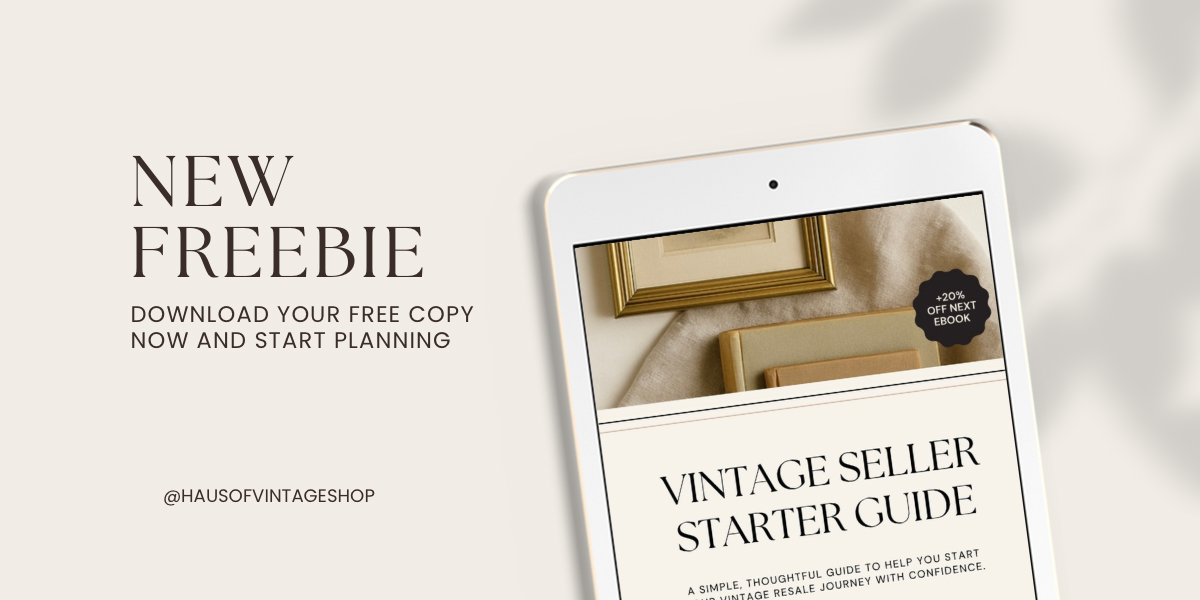
Download my FREE Vintage Reseller Starter Guide for tips on planning drops, writing captions that sell, and growing your shop with intention. Get your guide: Download Here