
For most of modern publishing history, writers had very little control over how their books reached readers. A manuscript was written, submitted to publishers, and then placed into a system that determined whether the book would ever be printed, distributed, or promoted. Many good manuscripts never left the writer’s desk.
Today, the publishing world looks very different. Technology has given writers tools that did not exist even twenty years ago. Independent authors can now publish their work directly, connect with readers around the world, and build spaces where their books live together in one place. One of the most interesting developments in this new landscape is the rise of the independent author online bookstore.
More and more writers are creating their own digital bookstores where readers can explore their work directly. This shift is not simply about selling books. It is about reclaiming ownership of the relationship between writers and readers.
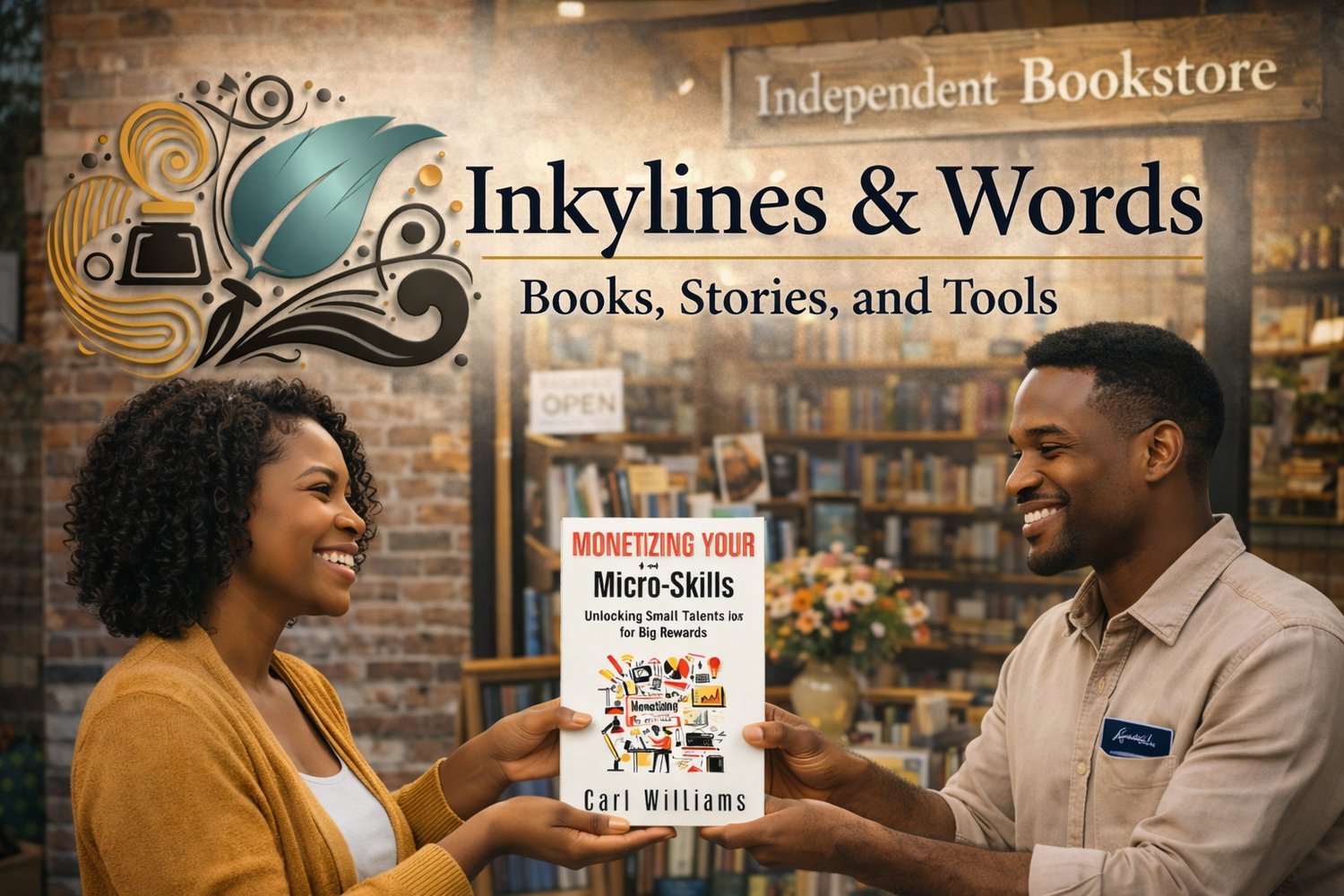
Welcome to Inkylines & Words, the independent online bookstore created by author Carl Williams.
Large online retailers have changed how books are sold, making it easier than ever for readers to access millions of titles. But this convenience also comes with a tradeoff. When a reader searches for a book on a massive retail platform, that book is placed among millions of other titles competing for attention. Algorithms determine which books appear first. Advertising budgets influence visibility. Even strong books can quickly disappear in the noise of enormous catalogs.
For independent authors, this often creates a frustrating reality. A writer can publish a thoughtful and useful book and still struggle to help readers discover it. Many writers have begun asking a simple question. What if authors built their own bookstores instead?
An independent author bookstore is exactly what it sounds like. Instead of relying entirely on large retail platforms, authors create their own online space where readers can browse their work, discover new titles, and explore ideas connected to the books. This approach gives authors several important advantages.
First, it creates a direct connection between writer and reader. When readers visit an author’s bookstore, they are not navigating a crowded retail platform. They are entering a curated space built around the author’s ideas and voice.
Second, it allows authors to present their books together rather than having them scattered across different platforms.
Third, it allows writers to build something traditional publishing rarely offers: a living catalog. Instead of one book appearing and disappearing in a sea of titles, readers can explore a growing collection of books, essays, tools, and resources connected to the author’s work.
As an independent writer, I experienced many of these challenges firsthand. Like many authors, I published my books through major retailers. Those platforms are useful for distribution, but I realized something important. Readers who discover one of my books often want to explore more than just a single title. They want to understand the larger ideas behind the work. They want to see the connections between books. They want a place where everything lives together.
That realization led me to build Inkylines & Words, my own online bookstore. The goal was simple. Create a space where readers could discover my books, explore ideas, and engage with writing that encourages independence, creativity, and practical knowledge.
One of the books available in the bookstore is Monetizing Your Micro-Skills: Unlocking Small Talents for Big Rewards. The book explores a simple but powerful idea. Most people are not lacking ability. They are overlooking the skills they already use every day.
Editing, organizing information, teaching concepts, solving technical problems, writing clearly, and helping others understand complex ideas are all examples of micro-skills that can become meaningful income streams. When these abilities are recognized, packaged, and offered to the right audience, they can create opportunities many people never realized were possible.
Books like this are part of a larger mission behind the bookstore. The goal is not simply to publish books but to share ideas that help readers think differently about work, creativity, independence, and opportunity.
When readers visit a traditional retailer, they usually arrive searching for a specific book. When readers visit an independent bookstore, the experience can be very different. They browse. They explore. They discover connections between ideas. This is the experience I wanted to create with Inkylines & Words.
Instead of a single title appearing on a crowded digital shelf, the bookstore allows readers to move through a growing collection of books and ideas that speak to one another. For writers, educators, and independent thinkers, this kind of space can become something more than a store. It becomes a place of discovery.
Readers who enjoy thoughtful books about independence, creativity, and practical knowledge often explore several titles once they discover a writer they connect with. Inside the Inkylines & Words bookstore, you will find books that focus on practical ways to build income and independence, ideas about creativity and personal growth, and tools designed for writers, educators, and lifelong learners.
Each book contributes to a larger conversation about building meaningful work and living with greater freedom.
The rise of the independent author bookstore reflects a broader shift in publishing. Writers are no longer limited to waiting for traditional systems to decide which stories reach readers. They are building their own platforms. They are creating their own spaces. And they are connecting directly with readers who care about their work.
This does not replace traditional publishing or large retailers. Those platforms still play an important role in the book ecosystem. But the ability for authors to create their own bookstores introduces something powerful that did not exist before. Choice.
Writers can choose how their work is shared. Readers can choose where they discover books. And new literary communities can grow around ideas rather than algorithms.
Inkylines & Words is one small example of what that future can look like.
If you enjoy thoughtful books that explore independence, creativity, and practical knowledge, you are welcome to explore the bookstore and discover the collection.
Visit the Inkylines & Words bookstore
Comments ()