

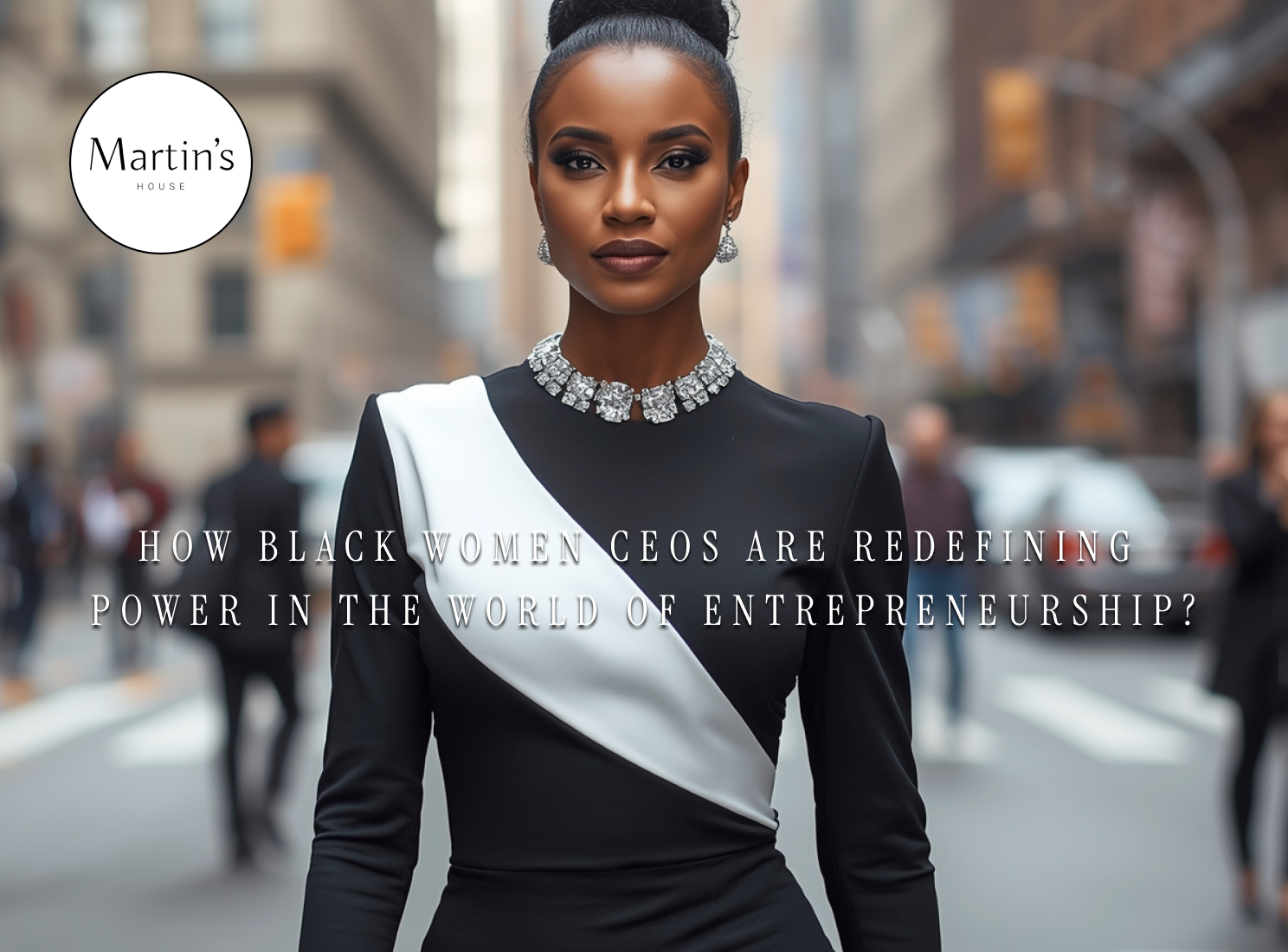
There is a particular kind of brilliance that does not seek permission. It does not announce itself loudly, does not conform to inherited expectations, and doesn’t dilute its force to make others comfortable. Black women CEOs are often referred to as ‘Black Diamonds’ - and not just as a metaphor. Diamonds are not born polished. They are formed under pressure, heat, and time - their value lies not only in rarity but in resilience, and their brilliance is not accidental. It’s forged.
Across industries and continents, Black women CEOs are redefining what power looks like in entrepreneurship, proving that it is possible to lead and succeed in the business world without conforming to traditional stereotypes. They are building companies that scale, cultures that endure, and legacies that do not ask for validation. They are not waiting to be included in the future of business - they’re shaping it.
Redefining Power: From Permission to Presence.
Traditional models of power in entrepreneurship were never designed with Black women in mind. Power was loud, centralised, aggressive - leadership was framed as domination rather than discernment. Visibility often came at the cost of authenticity.
Black women CEOs are rewriting their script.
Their power is composed, not chaotic. Authority is embodied, not borrowed. Leadership is precise, not performative. They lead with clarity born of experience and confidence forged in environments that required excellence long before recognition arrived. They understand that power is not granted - it is assumed, then proven. This redefinition is not theoretical - it’s measurable. It shows up in companies built with discipline, in teams led with accountability, and in markets reshaped by vision.
1- The Intelligence Behind the Strength.
There is a persistent misunderstanding that strength and sensitivity cannot coexist. Black women CEOs prove this every day. Their intelligence is multifaceted, encompassing the strategic, emotional and cultural realms, and they quickly read the situation. They accurately assess risk and anticipate outcomes before they arise; this is not instinct alone - it is analysis sharpened by lived experience.
They negotiate with precision, execute with patience, and expand without spectacle. This intelligence enables them to navigate systems that were not designed with them in mind, while simultaneously transforming those systems from within.
2- Culture as Capital, Not Constraint.
Black women do not succeed despite their culture - they succeed through it. Culture informs leadership style, communication, aesthetics, and values. It shapes how relationships are built and how trust is earned. For Black women CEOs, culture is not something to hide; it is a source of depth, rhythm, and originality. In business, this translates into:
- Brands with soul and structure
- Companies that value people alongside profit
- Leadership that balances authority with humanity
Black culture encompasses history, creativity, resilience and self-expression. When these elements are intentionally incorporated into the business world, they give rise to brands that resonate and leadership that endures.
Impostor Syndrome: The Quiet Adversary.
Even the most accomplished leaders face internal resistance. For Black women CEOs, impostor syndrome often carries additional weight - not because of a lack of ability, but because of heightened scrutiny. When excellence is expected but not always acknowledged, doubt can creep in quietly. Impostor syndrome does not shout, it whispers, it questions timing, it minimises achievements, and it suggests that success is temporary rather than earned.
But Black women CEOs learn to recognise this voice for what it is: noise, not truth. They counter it with preparation. They silence it with results. They outgrow it through alignment.
1- The Power of Presentation: Fashion as Authority.
At the level of leadership Black women CEOs occupy, fashion is not a trend - it is language. Clothing communicates presence before words are spoken. It signals confidence, discipline, and command. For Black women leaders, fashion becomes a strategic tool to express authority without compromise.
Tailored silhouettes communicate structure. Rich textures communicate depth. Intentional colour communicates confidence. Fashion allows Black women CEOs to occupy space fully - without shrinking, softening, or apologising.
Melissa Powell: A Story of Vision and Scale.
Melissa Powell is 45 years old. She is a real estate CEO whose portfolio spans multiple states across America and continues to expand globally. Her rise was not overnight. It was deliberate. Melissa entered real estate with ambition and intelligence, but also with the weight of expectation. She was often the only woman in the room - and frequently the only Black woman. She learned quickly that competence alone was not enough. She needed clarity of identity, command of presence, and confidence that extended beyond numbers. When Melissa partnered with Martin’s House, the work went deeper than surface-level branding.
I- Coaching the Leader Behind the Company.
Through Martin’s House coaching programs, Melissa worked on:
- Leadership identity and decision-making confidence
- Navigating impostor syndrome during expansion
- Executive presence in high-stakes negotiations
- Aligning personal values with corporate growth
The coaching was not about changing who she was. It was about amplifying her authority.
Comments ()