

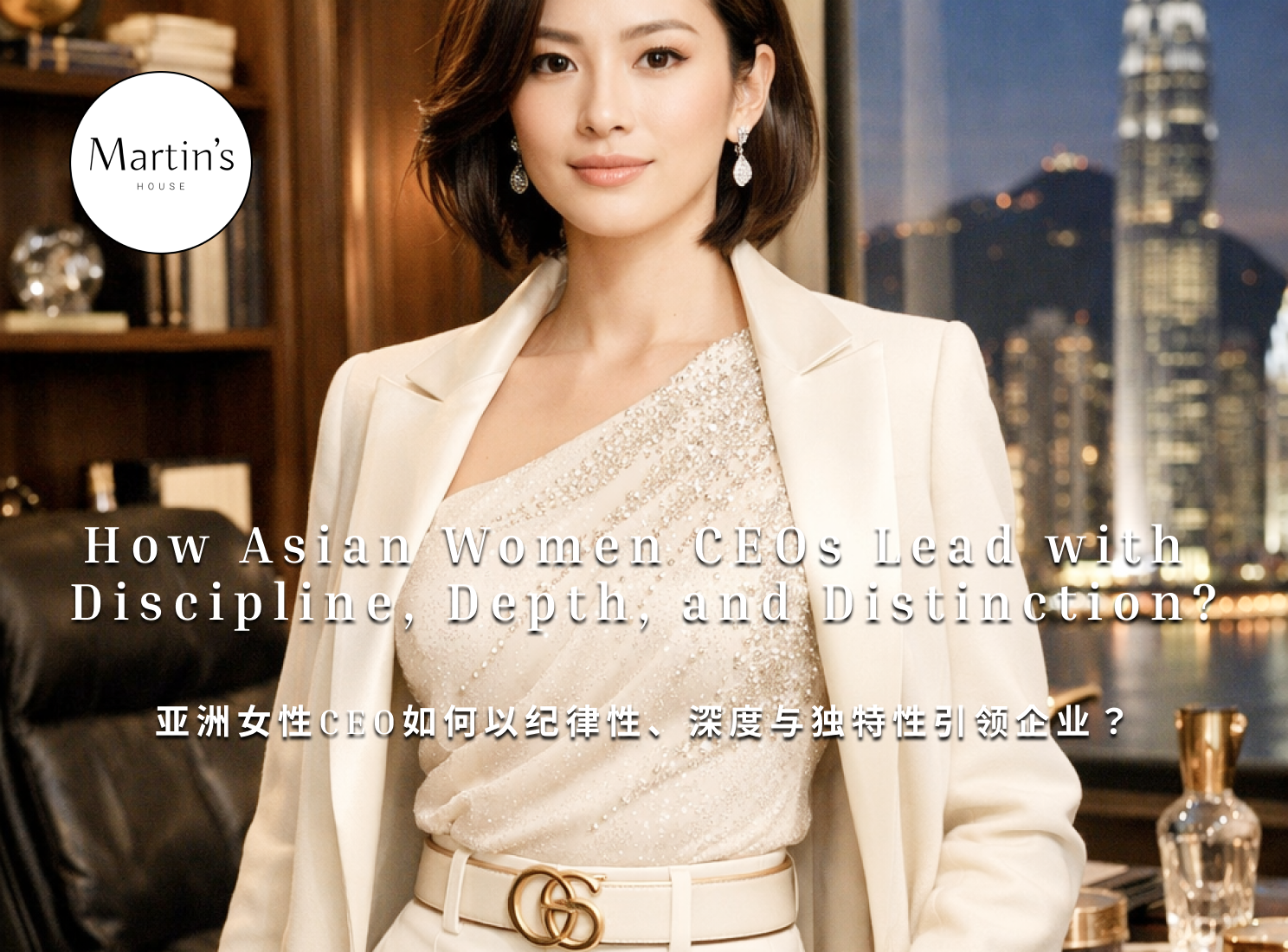
There is a form of power that does not announce itself. It enters the room quietly, observes patiently, and speaks only when necessary. In a global marketplace intoxicated with noise, visibility, and speed, Asian women CEOs represent a different frequency of leadership - one rooted in discipline, depth, timing, and distinction. They do not lead by domination. They lead by mastery.
At Martin’s House, we recognise this presence immediately. It is unmistakable. The Asian woman CEO does not compete for attention; she commands respect through consistency. Her authority is built slowly, intentionally, and with a long view of success. This is leadership shaped by patience, belief, and an almost architectural sense of time.
The Power of Restraint in a Loud World.
Asian women CEOs often operate in contrast to Western leadership archetypes. Where others rush to visibility, they refine. Where others seek instant validation, they prepare. Where others speak first, they listen longer. This is not passivity. It is a strategy. Restraint, in their hands, becomes a tool of precision. In business negotiations, they are rarely the loudest voice at the table - but they are often the most prepared. They understand that influence does not come from constant motion, but from measured presence. Their leadership is not reactive. It is considered.
1- Discipline as a Daily Practice.
For Asian businesswomen, discipline is not an abstract concept - it is a way of life. From their early education through to their professional lives, it shapes the way they think, make decisions and build things. It manifests as:
- meticulous planning
- respect for structure
- long-term vision
- consistency over spectacle
This discipline allows Asian women CEOs to operate with remarkable clarity under pressure. While others panic at uncertainty, they remain centred - they understand cycles, seasons, and most importantly, they know when not to act. In business, timing is power. Asian women leaders are masters of timing.
2- Belief, Patience, and Inner Architecture.
Many Asian women CEOs are guided by belief systems that emphasise harmony, balance, patience, and moral clarity. Whether shaped by Buddhism, Confucian thought, Taoist philosophy, or ancestral wisdom, these beliefs create an inner architecture that sustains leadership over decades - not quarters. Patience, for them, is not delay. It is alignment.
They wait not because they hesitate, but because they respect the moment when action will carry the greatest weight. This patience protects them from impulsive decisions and allows their businesses to grow with stability and dignity. In a world obsessed with acceleration, their success feels almost radical.

3- Dressing with Precision, Not Performance.
Asian women CEOs understand that appearance is language - they dress not to provoke, but to communicate authority. Every garment is intentional. Every silhouette carries meaning. They choose clothing that respects context, culture, and occasion. Their style is defined by:
- clean lines
- refined fabrics
- neutral palettes
- architectural tailoring
- quiet elegance
They do not dress to disappear. They dress to distinguish without excess. This is where fashion becomes leadership - where clothing supports identity rather than overshadowing it.
The Martin’s House Approach to Asian Women Leaders.
We do not impose identity - we listen. Asian women CEOs do not come to us seeking reinvention for its own sake. They come seeking alignment - between who they are, what they lead, and how they are perceived globally. Our work begins with understanding:
- cultural nuance
- belief systems
- leadership philosophy
- personal rhythm
From there, we build:
- a refined narrative
- a global-facing identity
- a wardrobe that travels across markets without dilution
We do not make Asian women CEOs louder. We make them clearer.
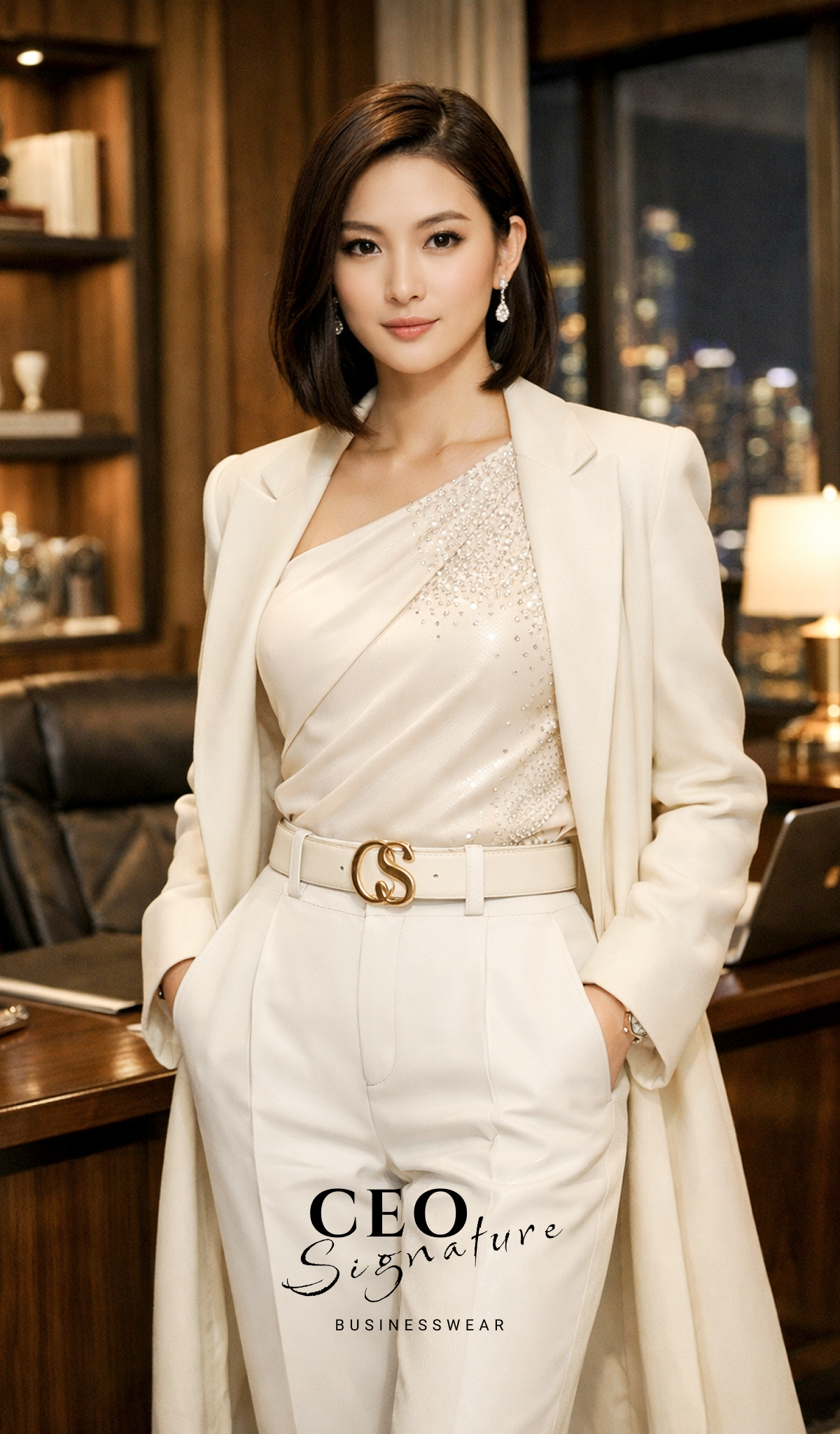
Natalie Mei Ling: A Story of Quiet Power.
Natalie Mei Ling did not seek attention. As the CEO of a well-established, profitable and trusted business based in Hong Kong, she was already well-respected - but something remained unresolved. As her company expanded globally, her identity felt fragmented. “I knew who I was,” she says. “But the world did not see me clearly.”
Natalie is a Buddhist - her life philosophy is shaped by goodness, patience, dignity, and kindness. She believes in right timing and right action. Yet the global business world demanded visibility, speed, and performance. The tension was not external - it was internal.
1- When Impostor Syndrome Speaks Softly.
Impostor Syndrome does not always arrive loudly. For Natalie, it appeared as doubt during moments of expansion. As her company expanded into new markets, she began to question whether her quiet leadership style was sufficient. Whether her restraint would be misunderstood, whether her values could survive global pressure. This is a common struggle for Asian women CEOs - their leadership style, though powerful, is often undervalued in environments that reward assertiveness over substance. Natalie did not want to become someone else. She wanted to be understood.
2- Rewriting the Business Identity Without Erasing the Self.
Natalie came to Martin’s House with one request: “Help me tell my story without breaking my values.” We began with narrative work - rewriting her leadership story in a way that honoured her belief system while positioning her as a global authority. Her discipline became her differentiator. Her patience became her strategy. Her dignity became her power. We reframed her presence not as reserved but as deliberate.
3- Redesigning a Wardrobe for Global Impact.
Natalie’s wardrobe was elegant, but inward-facing - designed for local respect rather than global recognition. Together, we redesigned it with intention:
- tailored jackets with softened structure
- silk blouses that conveyed calm authority
- neutral-toned dresses suitable for international forums
- fabrics that moved with her, not against her
Every piece respected her Buddhist values - modest, dignified, refined - while giving her the confidence to occupy global spaces. Fashion did not change her. It supported her becoming.
Comments ()