
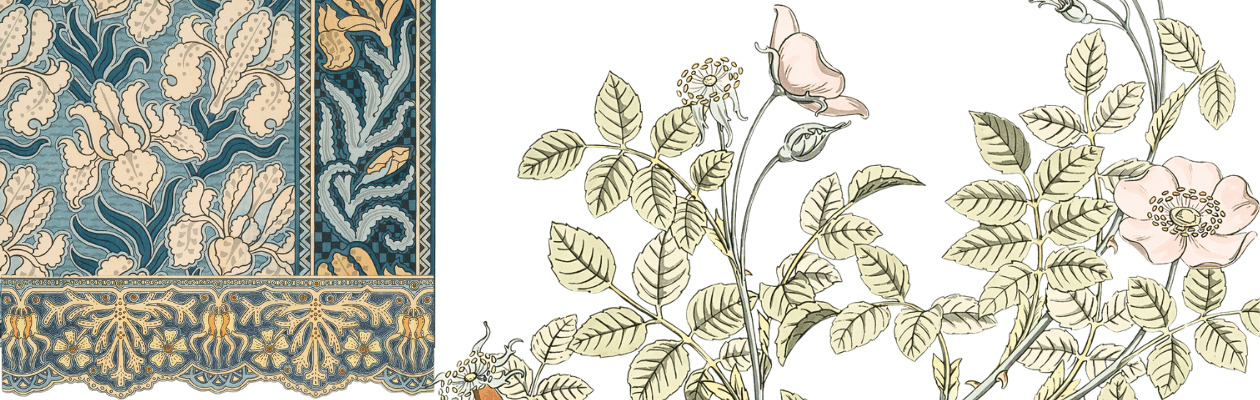
At the turn of the 20th century, a new visual language emerged—one that rejected rigid academic tradition in favor of movement, nature, and ornament. This movement, known as Art Nouveau, transformed everything from architecture and interiors to textiles, book design, and illustration.
Among its most technically refined contributors was Maurice Pillard Verneuil, a French artist and designer whose work distilled Art Nouveau into a system of repeatable, structured beauty. His designs were not just decorative—they were instructional, forming a bridge between fine art and applied design.
What Is the “Language” of Art Nouveau?
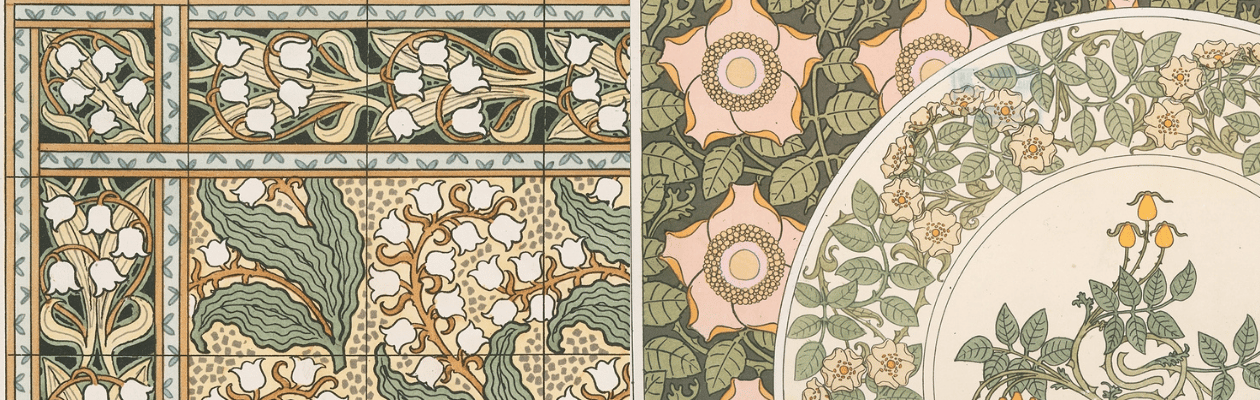
Art Nouveau is often described in visual terms—flowing lines, floral motifs, and organic forms—but beneath the surface lies a disciplined framework.
This “language” is built from several core principles:
1. The Whiplash Curve
A defining feature of Art Nouveau, this dynamic, asymmetrical curve creates movement and rhythm. It appears in everything from ironwork to illustration.
2. Stylized Nature
Rather than realistic depictions, artists abstracted natural forms—flowers, vines, insects—into flattened, repeatable motifs.
3. Structural Ornamentation
Decoration was not applied after the fact; it was integrated into the structure of the design itself.
4. Pattern Systems and Repetition
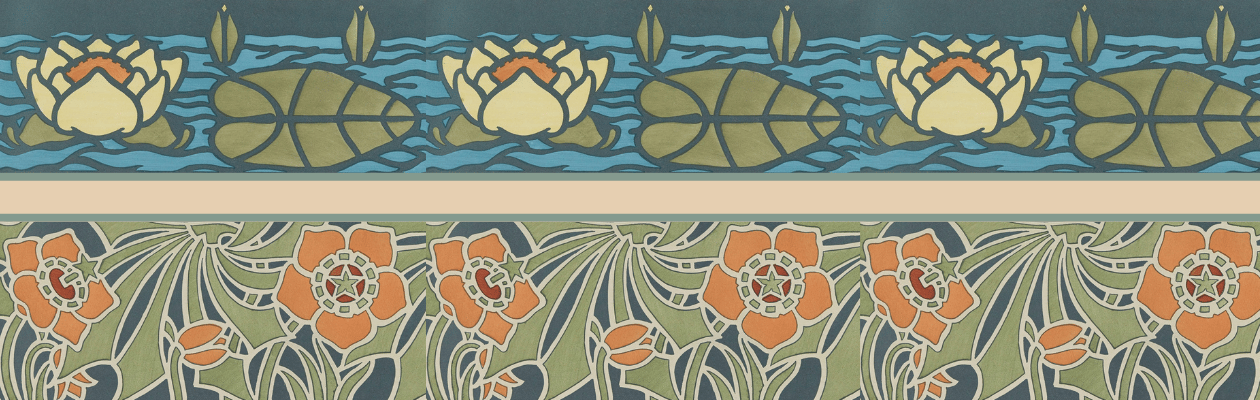
Artists like Verneuil developed modular compositions that could be used in wallpapers, textiles, and printed works.
Maurice Pillard Verneuil: Artist, Designer, System Builder
Maurice Pillard Verneuil occupies a unique position within Art Nouveau. While contemporaries like Alphonse Mucha focused on figurative illustration, Verneuil concentrated on pattern, structure, and the applied arts.
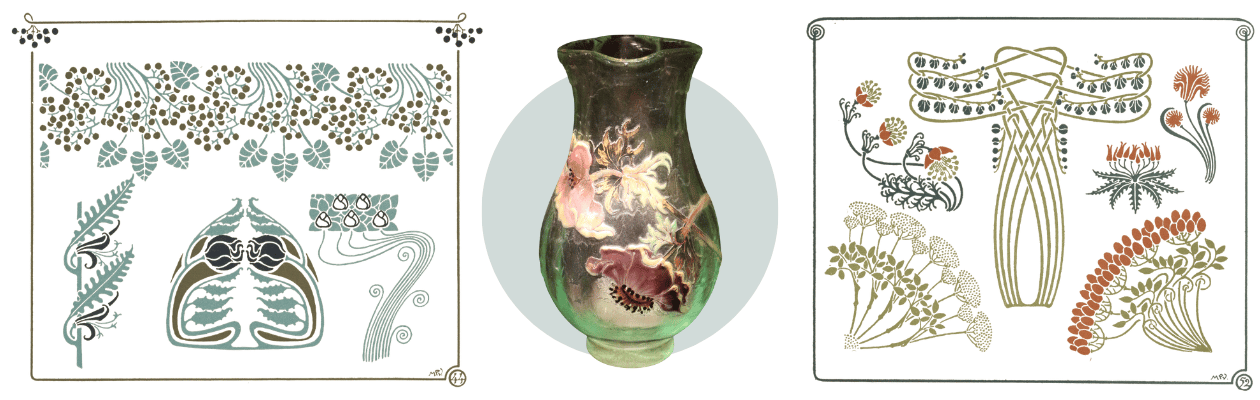
His work is especially visible in publications such as L’Animal dans la Décoration and Flore Ornamentale, where he explored:
- Botanical abstraction
- Symmetrical pattern construction
- Color harmonization for print reproduction
- Repeating tile and textile systems
These were not merely art books—they were design manuals.
The Technical Foundations of Verneuil’s Style
To understand Verneuil’s contribution, it helps to analyze his work in technical terms:
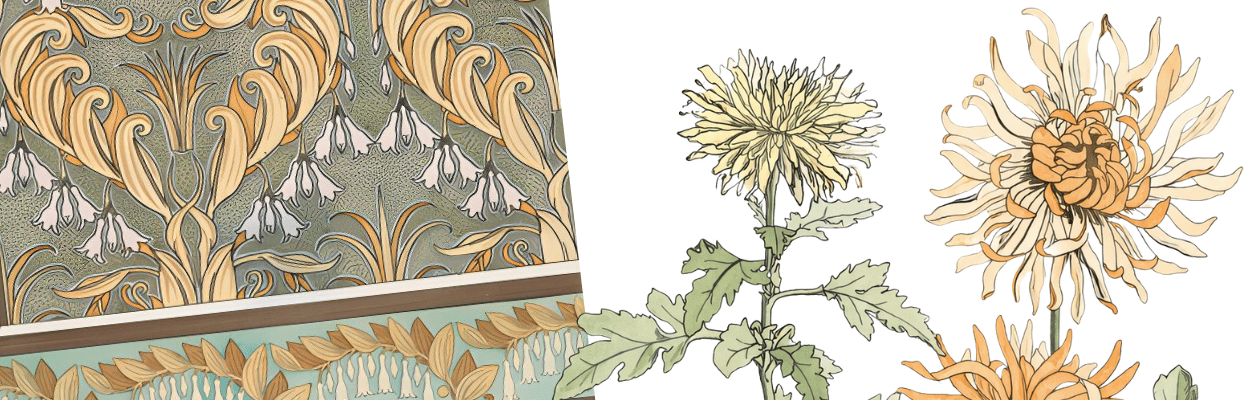
Flattened Perspective
Depth is minimized. Forms are compressed into two-dimensional planes, making them ideal for print and pattern application.
Contour Dominance
Strong outlines define form more than shading or modeling. This approach aligns with printmaking constraints and decorative clarity.
Radial and Bilateral Symmetry
Many designs are built on mirrored or circular systems, allowing seamless repetition.
Limited but Strategic Color Palettes
Verneuil often used controlled palettes to ensure consistency across printed media—critical in early 20th-century production.
Why Verneuil Matters Today
In a modern context, Verneuil’s work is highly relevant for:
- Surface pattern designers
- Textile and wallpaper creators
- Graphic designers working with repeat systems
- Artists exploring historical ornament
His approach translates directly into digital workflows, including vector design and pattern tiling in tools like Adobe Illustrator.
Art Nouveau as a System, Not Just a Style
One of the most misunderstood aspects of Art Nouveau is that it is often treated purely as an aesthetic. In reality, it is a system of design thinking.
Artists like Eugène Grasset and Hector Guimard, alongside Verneuil, helped establish a unified visual language that could be applied across disciplines—from buildings to books.
This is what makes Art Nouveau so powerful—and so adaptable.
Exploring the Language Further
For those interested in studying these principles more deeply, curated collections of Verneuil’s work provide a direct window into the mechanics of Art Nouveau design.
Your growing series of Art Nouveau publications expands on this foundation, including:
- Collections of Verneuil’s ornamental designs
- High-resolution plates suitable for study and creative reuse
- A forthcoming volume, The Language of Art Nouveau, focused on decoding these structural principles for modern creators
These types of resources are particularly valuable for artists, designers, and collectors looking to move beyond inspiration and into application.
Final Thoughts
Art Nouveau is more than a decorative style—it is a structured, intentional visual language. Through the work of Maurice Pillard Verneuil, we can see how this language was formalized, taught, and distributed.
For contemporary creatives, studying Verneuil offers something rare: a blueprint for transforming natural forms into timeless design systems.
Learn more:
If you are interested in learning more about Art Nouveau and keeping a reference of art close by visit these books on Amazon:
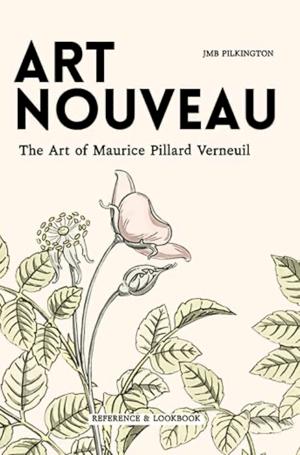
Art Nouveau, The Art of Maurice Pillard Verneuil:
A Collection of Illustrations and Designs, Reference. and Lookbook
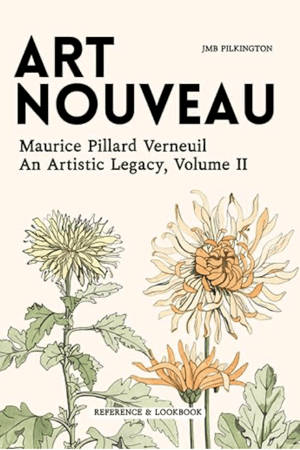
Art Nouveau, Verneuil An Artistic Legacy: A Book of Illustrations and Designs, Volume 2
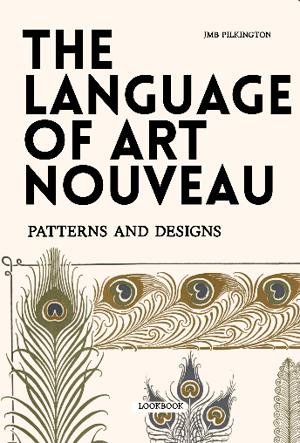
Coming Soon:
The Language of Art Nouveau, Patterns and Designs