
Have you ever come across a name that keeps quietly showing up in art history, yet never quite gets the credit it deserves? That's Maurice Pillard Verneuil for most people — and once you look closer, you start to wonder why he isn't talked about more.
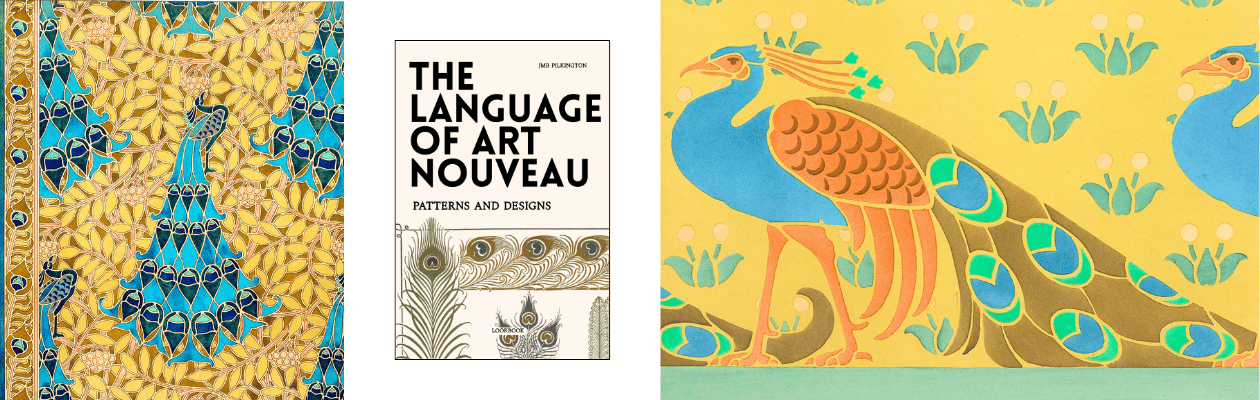
Verneuil was a French artist and designer working at the height of the Art Nouveau era, roughly the turn of the 20th century. While names like Alphonse Mucha or Gustav Klimt tend to steal the spotlight, Verneuil was doing something just as important — he was teaching the world how Art Nouveau actually worked. His books, like L'Animal dans la Décoration and his co-authored Combinaisons Ornementales (yes, alongside Mucha himself), were essentially design manuals. Artists and craftspeople across Europe used them as references for creating the flowing, nature-inspired patterns we now instantly recognize as Art Nouveau.
His designs — fish, insects, botanicals, all rendered in those beautiful flat, stylized forms — weren't just decorative. They were a system. A repeatable, teachable visual language that could be applied to wallpaper, textiles, ceramics, and print. That's a rare skill, and it made his influence quiet but incredibly wide-reaching.
So is he the most influential Art Nouveau artist? Probably not — that conversation still belongs to Mucha for his iconic posters, or Gaudí for his extraordinary architecture. But Verneuil deserves far more recognition than he typically gets. Think of him less as a superstar and more as the person who handed everyone else the tools. Without artists like him spreading and formalizing the movement's visual vocabulary, Art Nouveau might never have reached the scale it did.
He sits in that fascinating second tier of art history — not the headline act, but absolutely essential to the show.
For more information:
Art Nouveau, Verneuil An Artistic Legacy:
A Book of Illustrations and Designs, Volume 2