

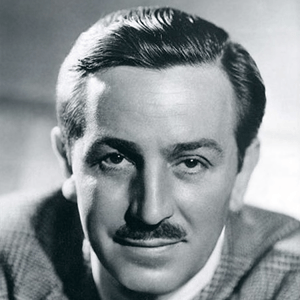
 Walt Disney didn’t start by inventing something completely new.
He started by watching what worked. In the early 1920s, animation studios were already producing short cartoons. Characters moved stiffly. Stories were simple. Most studios treated animation like a technical novelty, not storytelling.
Disney studied them carefully.
Choose Models; He looked at successful animators and filmmakers of the time. Not to copy their drawings, but to understand how audiences reacted to characters and stories.
Observe Deeply; Disney noticed something others ignored. People didn’t just laugh at cartoons they emotionally connected with characters. The problem wasn’t animation quality. The problem was story and personality.
Adapt the Context; Instead of copying other cartoons, he redesigned the formula. He created a character with personality, emotion, and humor. That character became Mickey Mouse.
Then he pushed further:
- synchronized sound in animation
- expressive character acting
- cinematic storytelling
He wasn’t copying cartoons anymore. He was reinventing what cartoons could be.
Iterate Always; The first Mickey Mouse animations weren’t perfect.
But Disney kept refining the process animation techniques, sound integration, storytelling systems.
Eventually that iteration produced Snow White and the Seven Dwarfs, the first full-length animated feature film. An idea many believed would fail.It became a global success and changed the film industry forever.
The Real Lesson
Disney didn’t invent creativity from nothing.He followed the same loop your image describes:
Choose models → Observe deeply → Adapt the context → Iterate relentlessly
Imitation wasn’t the end. It was the starting point of innovation.
Here's the Framework.
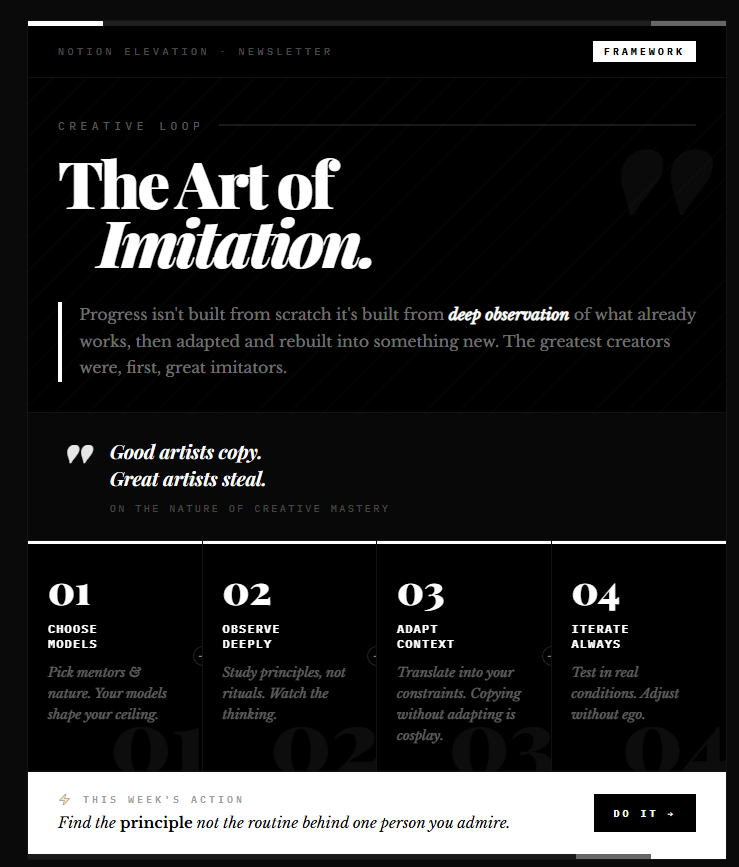
Converting Knowledge into Action. Ideas into structured progress.
Comments ()