
Actors are quitting, Not because they failed but because no one explained the game, Me too
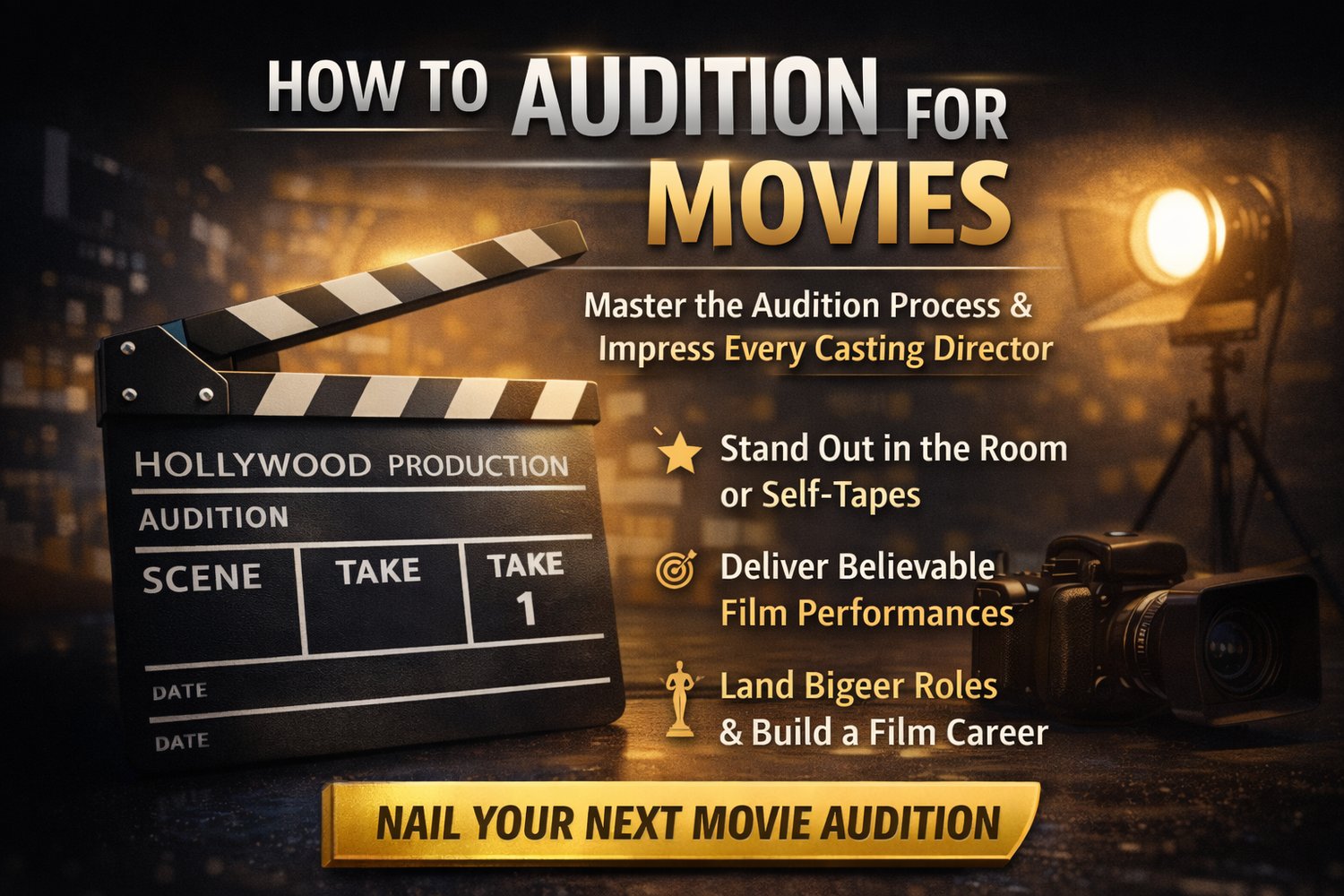
How to Audition for Movies is a practical guide for actors who want more callbacks, stronger self tapes and confident on camera performances. Learn what Casting directors actually look for, master film audition techniques and stop guessing your way through self tapes.
A few months ago, I fell into a familiar late night spiral, Reddit confession posts from actors who were done.
. “I trained for years and still no callbacks.”
. “I am exhausted from self tapes going nowhere.”
. “Maybe I am just not good enough.”
Then, YouTube served me another video: “Why I Quit Acting.” Same story. Different face. Same quiet heartbreak. Here is the counterintuitive truth most actors never hear early enough, they did not fail acting, acting failed to explain the rules. If that sentence made your chest tighten a little, you are not alone.
Most beginners and many working actors, believe auditions are about talent alone. Do the scene well. Feel the emotion. Say the words truthfully. That belief is comforting and incomplete. Film auditions are not neutral. They are filtered, timed, framed, skimmed, compared and often judged in seconds. Casting directors on platforms like Actors Access, Casting Networks and Cast It Talent are not watching like an acting teacher. They are scanning for clarity, confidence and camera readiness fast. This is why actors quit, not because they lack ability but because no one explained what the camera actually demands.
Just before: You self tape three takes. You overthink eyeline. You worry about lighting. You feel rushed. You hope they “get what you are doing.” Silence follows. After: You know exactly where to place your eyeline. Your frame is intentional. Your pacing feels cinematic. Your choices land cleanly. You upload once confidently and move on. Same actor. Same talent. Different understanding of the game. That gap between effort and results is where How to Audition for Movies lives.
Film auditions are unforgiving because they are compressed. Casting often decides within the first 5–10 seconds whether to keep watching. That is not cruelty, it is volume. Actors trained primarily for stage or class environments are rarely taught:
. How framing affects emotional impact.
. Why micro choices read louder on camera.
. What makes a Casting director stop a tape.
. How to deliver bold choices without forcing them.
Schools like Stella Adler Studio, Lee Strasberg Theatre & Film Institute, AFFTI and RADA teach craft but the translation to modern self taping is something actors must often learn on their own. Until now.
It is not rejection, it is wasted effort. Uploading tape after tape without knowing why it is not landing. Wondering if you are missing something everyone else knows. Feeling behind, even when you are working. That is the emotional cost and it is why guidance matters more than motivation.
How to Audition for Movies is not about hype. It is about relief. Inside, actors learn:
. A repeatable self tape workflow; lighting, sound, framing, eyeline, pacing.
. On camera confidence techniques that calm nerves before they show up on tape.
. How Casting directors actually evaluate performances.
. A fast system for breaking down short notice scripts.
. Delivery techniques that make performances feel grounded, cinematic and precise.
. Audition room protocols, red flags and mindset tools professionals quietly rely on.
The shift is subtle but powerful. Actors stop guessing. They start deciding.
Many actors try to “act harder” when callbacks do not come. More emotion. Bigger choices. More takes.bFilm does not reward effort, it rewards clarity. This product teaches you how to:
1. Identify what the scene actually needs.
2. Make one clean, confident choice.
3. Deliver it in a way the camera understands.
That is how performances become memorable without feeling forced.
Self tapes are not going away. They are becoming more standardized, more competitive and more filtered. Actors who understand the system gain an unfair advantage not because they cheat but because they are informed. This is why actors who have used these methods report:
. Fewer takes.
. Faster prep.
. Stronger callbacks.
. More confidence letting go after submitting.
Progress becomes measurable, not mystical.
If you have ever thought, “Maybe it is just me,” let me say this clearly, it was not you, it was missing information. How to Audition for Movies https://payhip.com/b/6SJr9 is for actors who want to stop feeling behind and start feeling prepared, whether you are submitting your first self tape or aiming for more consistent callbacks. Not louder acting. Not chasing trends. Just a clearer understanding of the game and how to play it well.
If that sounds like the guidance you wish you have had earlier, it is here when you are ready. Grab your free PDF guide: https://eu.docworkspace.com/d/sILSN9uCuAfT0ysYG?sa=601.1074.