
Cinematic vs Practical Self tapes — When to level up and when keeping it simple books more roles
Unlock better self tapes with a clear guide to choosing cinematic vs simple setups. Learn when to level up, avoid common mistakes and rehearse like a pro.
Yes, you are not the only one wondering this, me too.
There is a reason actors argue about cinematic vs simple self tapes more fiercely than drama school kids in a Meisner class at 8 a.m. Half of your feed screams, “High production value is the new standard!” The other half insists, “Casting wants YOU, not your lighting.” There you are, stuck in the middle, wondering which choice actually helps you book more roles. The truth? Both approaches work but not for the same situations. Knowing when to level up is a career advantage most actors completely overlook. This blog is your decision guide. A mentorship style map. A “read this before you panic buy new equipment” reminder. By the end, you will know exactly which style boosts your visibility, confidence and casting results.
Last year, an actor from an Los Angeles studio connected to Stella Adler emailed me devastated. He had spent two days crafting a “cinematic self-tape” lens blur, moving camera shots, a moody backlight that made him look like a Netflix antihero. Casting? They stopped watching at 0:07. Not because he was bad but because the framing did not match their expectations, the audio dipped and the pacing felt like a short film not an audition. Contrast this with another actor who taped the same scene with her phone on a tripod, clean light, crisp sound, strong choices. Casting watched the entire tape. Twice. The lesson: Cinematic only wins when it serves clarity. Practical wins when it serves story.
Whether you are submitting through Casting Networks, Actors Access, Backstage or Mandy, the core truth never changes: Casting must understand your character, your choices and your presence within the first 3–4 seconds. That is the part actors often miss. Most self tape “fails” are not due to lighting or backgrounds. They come from:
. Busy or stylized framing that hides performance.
. Over coloured lighting that kills natural emotion.
. Edits so smooth they distract from the acting.
. Cinematic shots that do not match industry expectations.
Which brings us to the decision checklist.
Your 5 question Self tape decision checklist
Use cinematic production only when:
1. The brief encourages creative interpretation, rare but powerful.
2. Your choices benefit from atmosphere, not simplicity.
3. The scene requires emotional subtlety that good lighting can enhance.
4. Your brand aligns with cinematic energy e.g., thriller or prestige drama.
5. You can maintain technical clarity, audio, framing, eye line accuracy.
Stick with practical when:
1. Casting explicitly requests “simple,” “clean,” “no edits,” or “neutral.”
2. The scene is dialogue heavy.
3. You are building chemistry with a reader.
4. The genre favours realism, procedural, sitcom, Hallmark.
5. You are short on time and clarity matters more than style.
A Self tape is not a short film. It is a clarity test + imagination trigger rolled into one.
A common pattern across actors from RADA, LAMDA, NYU Tisch and community studios alike is this, they rehearse in chaos, then tape in confusion. Then wonder why their performances feel flat or inconsistent. The biggest issue is not lighting or sound. It is the rehearsal method behind the performance. Most actors wing it. Some overthink it. Almost none rehearse with a reliable structure that bridges stage technique to on camera clarity. This is where audition results either soar or crumble.
Just before: “Hope for the best” acting
. Reads the script once.
. Makes vague emotional choices.
. Films 15 takes searching for “the one.”
. Loses presence and spontaneity.
. Self tape looks technically fine but emotionally thin.
After: Structured rehearsal
. Identifies objectives, opposition and power dynamics fast.
. Does emotional layering instead of pushing feelings.
. Uses warm ups to activate body + voice before tape.
. Plays with micro behaviors so the camera reads truth.
. Finishes in fewer takes with higher impact.
When actors apply a rehearsal system, their self tapes stop feeling desperate and start feeling embodied.
Alive. Present. Bookable.
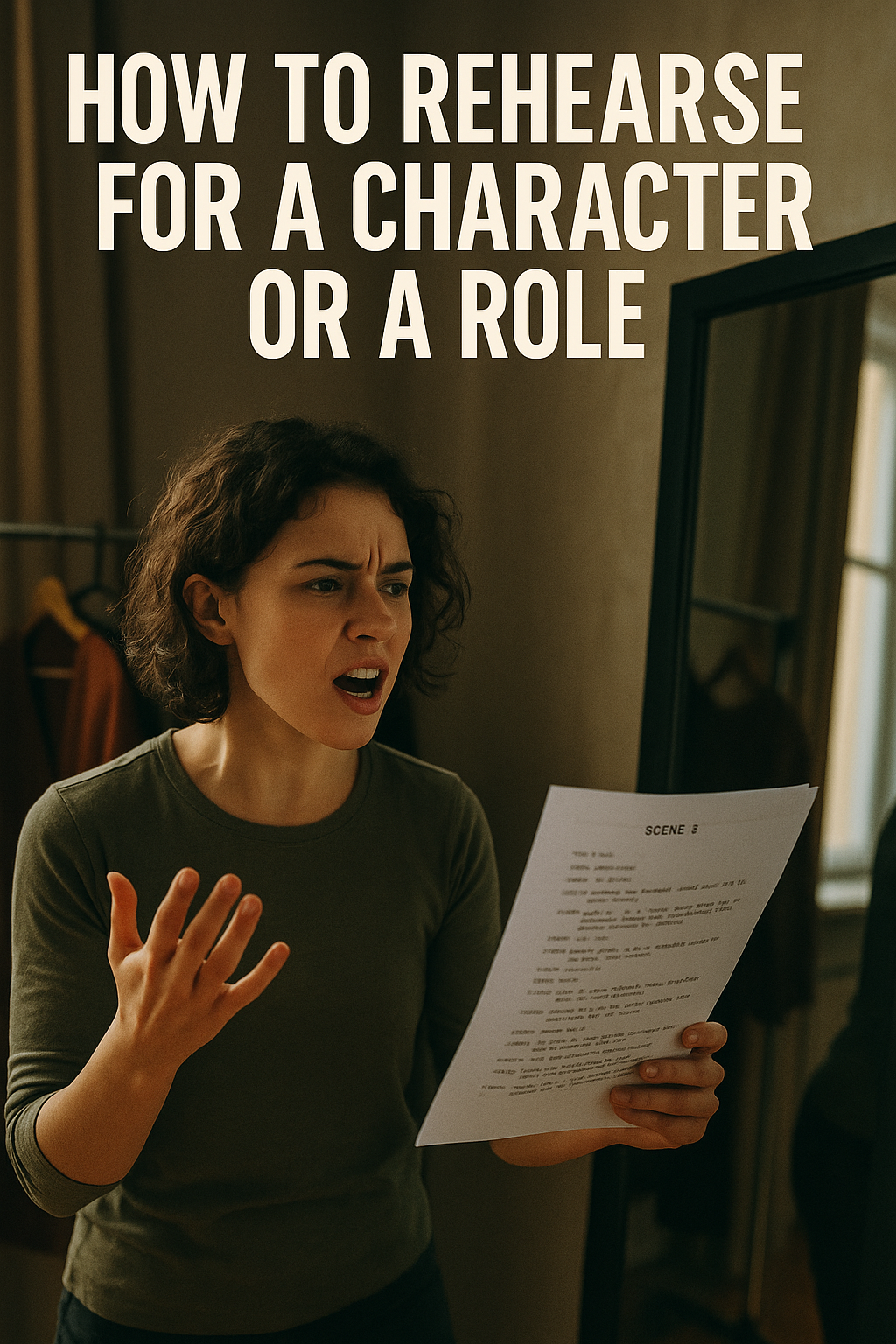
This is exactly why I created the How to Rehearse for a Character or Role PDF, a fast, actor friendly method that takes you from “flat first takes” to “alive, truthful, camera ready performances.”
Inside, you will learn:
. Character research shortcuts.
. Script study secrets.
. Mind body warmups.
. Emotional layering routines.
. Solo + scene partner rehearsal hacks.
. On camera adjustments for Film and television.
It is built to reduce prep time, increase clarity and keep you grounded so you stop spiraling between “Should I make it cinematic or simple?” and start delivering auditions that do both, clear and compelling.
THE 3 STEP ACTION PLAN
Step 1 — Identify the type of tape
Simple or cinematic? Use the checklist above. No more guessing.
Step 2 — Use a structured rehearsal method
This is where 80% of actors fail and you do not have to.
Step 3 — Deliver a tape that is alive, readable and impossible to ignore
Casting stops at 0:04 unless you give them a reason to watch.
If you are reading this, you are already ahead of most actors who scroll, complain and tape without clarity. You care about doing the work right. You care about improving. You care about booking the next level, whether that is your first co star or your first series regular callback. Clarity in your self tapes is the difference between being overlooked and being remembered.
If you want a rehearsal system that makes both practical and cinematic self tapes stronger, clearer and more emotionally grounded. You can explore the How to Rehearse for a Character or Role PDF https://payhip.com/b/XLo6y in my Payhip shop. There is a free sample waiting https://eu.docworkspace.com/d/sILSN9uCuAfT0ysYG?sa=601.1074 no pressure, no fluff, just value.
The moment your process becomes reliable, your performances become undeniable.