
Discover when to invest in cinematic self tapes and when to keep it simple. Learn how scene energy, lighting and framing affect your power dynamics and casting impressions. Trusted by actors globally, from Nairobi to New York, this post breaks down real examples, casting director tips and decision checklists inspired by Stage Milk, MasterClass and Udemy. Perfect for actors who want to book more roles and master on screen presence.
Let us be honest, the self tape game is getting wild. Scroll through Instagram or YouTube and you will find actors filming auditions that look like full blown Netflix pilots. Here is the uncomfortable truth casting directors from London to Los Angeles to Nairobi quietly admit, a cinematic self tape can either make you memorable or make them question if you understood the brief. So, how do you know when to go all in and when to keep it simple? Welcome to your practical and sanity saving guide.
Last year, an actor from Nairobi, let us call her Christine, spent two days shooting a Self tape that looked Oscar ready. Great lighting, perfect set dressing, atmospheric music but when her tape reached the London casting team, it backfired. Why? The director felt the “production value” distracted from her status work, that subtle dance of authority, vulnerability and emotional hierarchy that defines great acting. Meanwhile, another actor sent a simple, well framed video shot in his apartment. It was raw, honest and grounded. He booked the callback. Moral of the story, simplicity wins when authenticity leads the frame.
Actors from StageMilk, NYFA and Identity School of Acting often hear the same advice, the tape should feel alive, not produced. Casting platforms like Backstage and Casting Networks are prioritizing clarity and emotional truth over cinematic polish. Here is the rule, if the tape looks like a short film but feels emotionally flat, it is a fail. Your job is to communicate status, subtext and story through you not the tech. Which brings us to the ultimate decision guide.
The Self tape decision checklist
Use this whenever you are torn between going “cinematic” or “practical”.
Go Cinematic when:
. You are building your actor brand, e.g for showreel material or a visual portfolio.
. The scene relies heavily on tone, atmosphere or environment, think thrillers or period dramas.
. The casting specifically asks for “creative presentation” or a storytelling element.
. You have time to ensure lighting, sound and tone all enhance your performance, not fight it.
Keep it practical when:
. It is a first round audition or cold read.
. You are taping for commercials, sitcoms or quick turn TV roles.
. The focus is dialogue, reaction and power dynamics, not visual flair.
. You risk spending more time editing than acting.
Pro Tip: When in doubt, ask your rep or check the latest #SelfTapeTips from CDG (UK), CSA (US) or major casting coaches like Amy Jo Berman. They will tell you, they would rather feel something in 10 seconds than watch a perfect looking 90 second flat line.
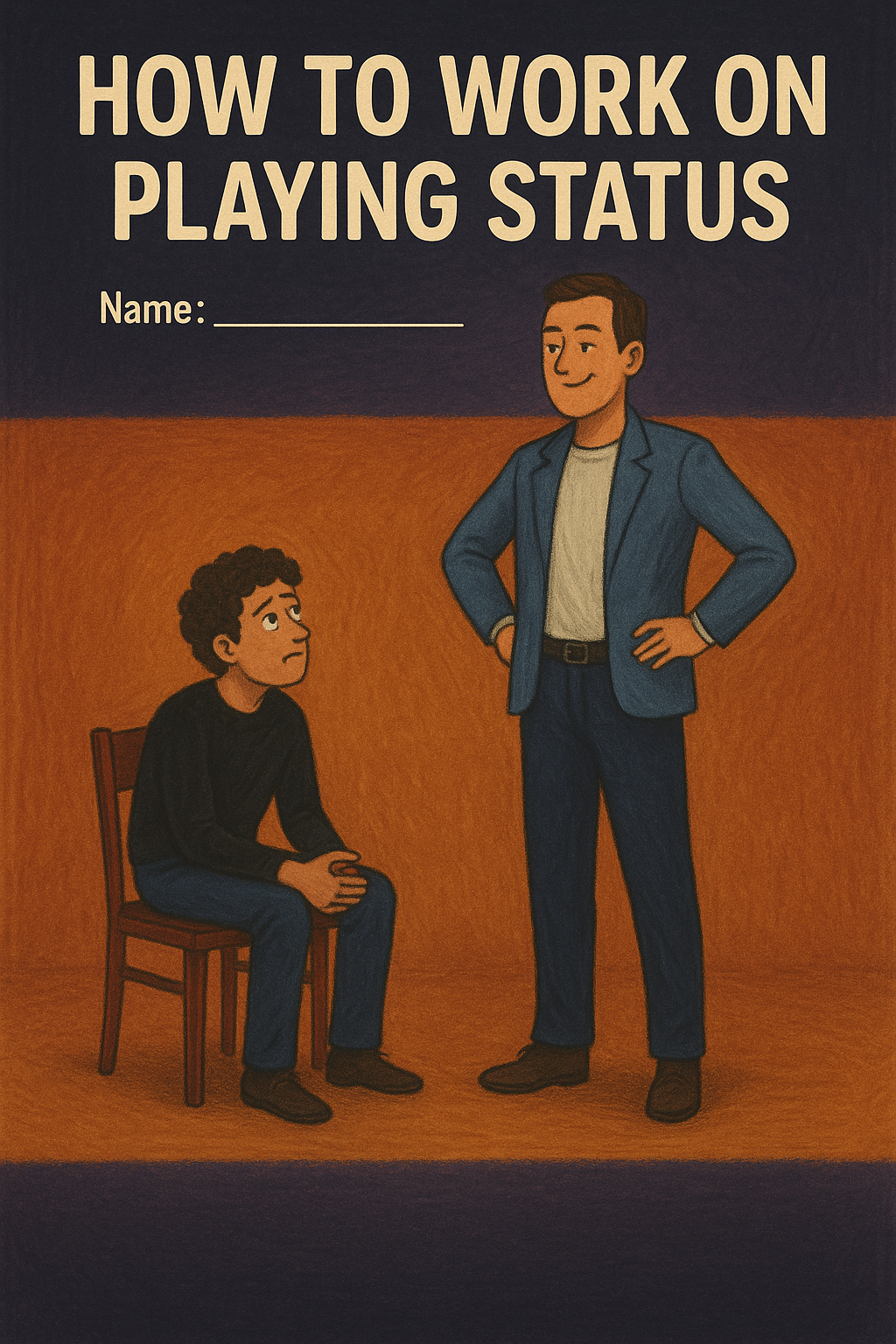
Actors who rely solely on fancy visuals often miss the deeper power play inside the scene. Whether you are filming in New York or Lagos or Nairobi every frame has status shifts, moments where one character subtly dominates or defers. Fail to read or play those shifts and the scene feels hollow. That is where “How to Work on Playing Status as an Actor” comes in. It is not about overacting or “power posing”, it is about mastering subtext through breath, eye contact, silence and stillness. The things the camera cannot ignore.
In the industry’s move toward AI driven casting and self tape automation, actors who can show emotional hierarchy without overcompensating stand out instantly. That is what this guide teaches:
. How to identify status hierarchies in any script.
. How to shift energy and tempo to command a scene.
. How to read the invisible power structure before you even speak.
The result? A presence that feels controlled, charismatic and real, not robotic.
3 step action plan
1. Audit your current tapes - Watch your last three. Are you acting or performing? Are power shifts clear?
2. Rebuild with intention - Use simple lighting, one frame and one emotional goal. Let your status drive the energy.
3. Level up when ready - Once your acting feels alive, then and only then, upgrade to cinematic setups that amplify your truth, not hide it.
Cinematic does not always mean better. It means intentional. The best self tapes whether shot in Los Angeles, London, Mumbai or Nairobi are the ones that make a casting director forget they are watching a tape at all.
If you are ready to master that invisible game of power and presence, grab your copy of “How to Work on Playing Status as an Actor” https://payhip.com/b/sgKdJ on Payhip. It is your roadmap to building believable, bookable confidence, one power shift at a time. Grab your free PDF guide: https://eu.docworkspace.com/d/sIIiN9uCuAar7u8UG?sa=601.1074.