
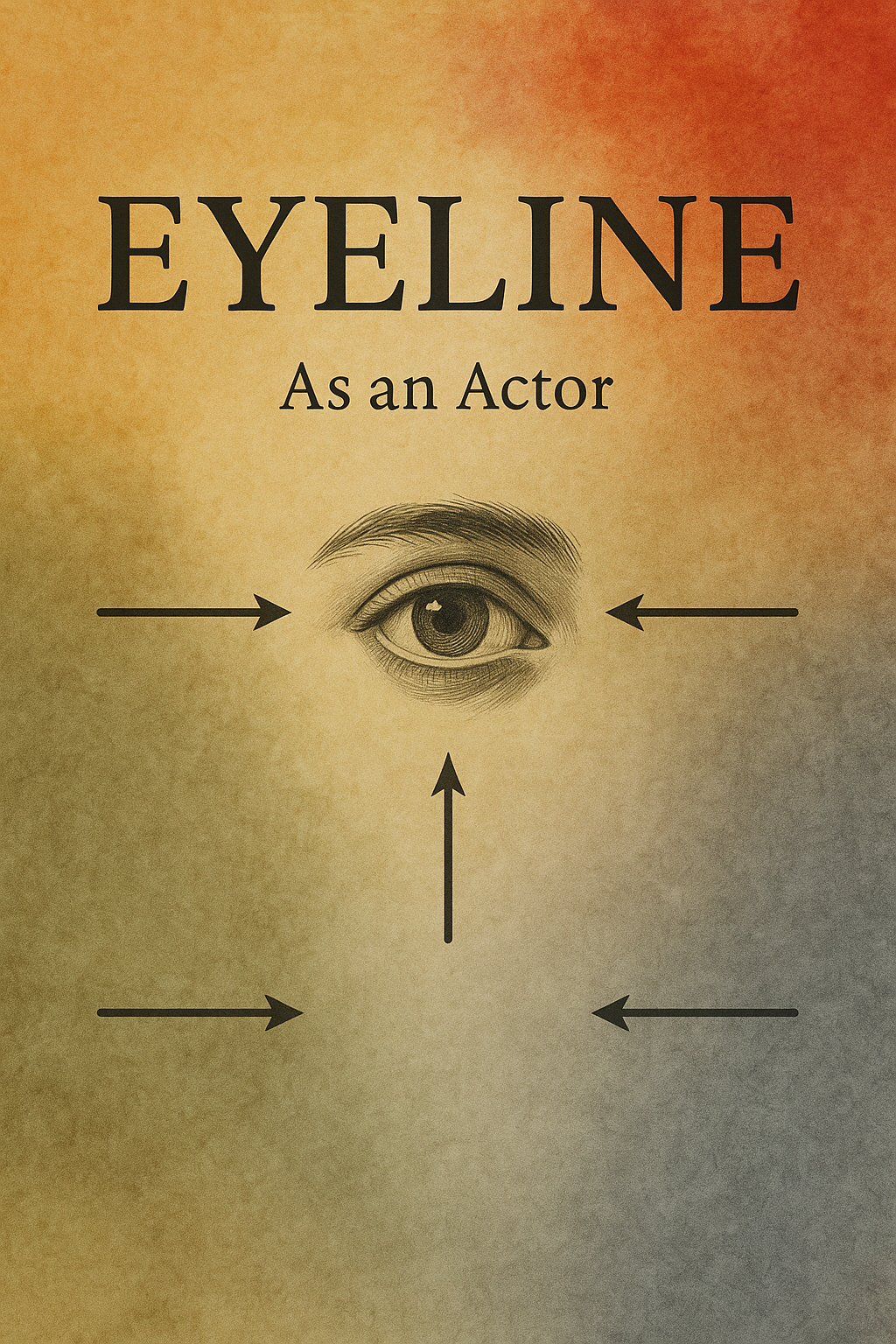
“Does your Self tape feel ‘fine’ but not bookable? Casting Directors notice this one detail.”
Master eyeline for self tapes and on camera acting. Learn how this subtle skill boosts presence, emotional truth and booking power, plus why casting directors cannot ignore it in the age of AI actors.
Eyeline as an Actor: The quiet skill that makes your Self tapes AI proof
A casting assistant once admitted something that made half the room uncomfortable, “I know in the first few seconds if the actor is with someone or just talking at a wall.” No lighting note. No sound issue. No acting critique. Just presence. If you have ever replayed a self tape and felt that strange disconnect, like you are technically fine but emotionally distant, you are not alone. Most actors experience this at some point, especially now, when self tapes dominate film, television and streaming auditions worldwide. With AI generated actors, digital doubles and synthetic performances entering headlines, the pressure to feel unmistakably human has never been higher. That is where eyeline quietly decides your fate.
Let us be honest. Actors today are carrying a new anxiety:
. “If AI can replicate faces and voices, what is left for me?”
. “Why do some tapes feel alive and others feel flat?”
. “Why do I look professional in class but awkward on camera?”
The fear is not irrational. Studios are openly experimenting with AI likenesses. Unions like SAG-AFTRA are pushing back. Casting directors are overloaded on platforms like Casting Networks, Backstage, Spotlight and Actors Access. In that environment, tiny human signals matter more than ever. Eyeline is one of them.
Eyeline is not just “where you look.” It is how the audience experiences your inner life. When your eyeline is clear:
. Casting feels relationship, not recitation.
. Emotional beats land without explanation.
. Power dynamics read instantly.
. The camera stops feeling like an enemy.
When it is off even slightly:
. You seem unfocused.
. Stakes flatten.
. Emotional truth leaks out of frame.
That is why eyeline is emphasized in institutions like RADA, LAMDA, Juilliard, AFFTI and top conservatories but often gets lost when actors self direct at home.
Just before: You are glancing between the lens, the reader and nowhere specific. You feel rushed. You overthink. You compensate by “doing more.” After: You know exactly who you are speaking to, where they are and why you are looking there. Your body settles. Your performance sharpens. You look confident even when the scene is vulnerable. The acting did not change. The eyeline did.
AI can simulate expression, it can mimic cadence, it can even approximate emotion. What it struggles with is relational awareness, the subtle calibration humans make when responding to another being in space. Eyeline carries:
. Intention.
. Status.
. Desire.
. Resistance.
. Intimacy.
A one inch shift in eyeline can turn a plea into a threat or confidence into submission. Casting directors may not articulate it this way but they feel it instantly.
Actors do not fail at eyeline because they are untalented. They fail because no one taught it clearly. Common issues include:
. Staring into the lens when the scene does not justify it.
. Looking too far off camera and losing connection.
. Changing eyeline between takes without intention.
. Following the reader instead of the character relationship.
. Ignoring how eyeline shifts with framing.
Each mistake is subtle. Together, they quietly erode believability.
Actors act when improvement feels measurable. Eyeline is measurable:
. You can see the difference on playback.
. You feel calmer during takes.
. You get clearer feedback.
. Your tapes look more professional instantly.
That is why this skill is often the difference between “good actor” and “bookable actor.”
Online tips often say:
. “Just look slightly off camera”.
. “Imagine your partner”.
. “Trust your instincts”.
That is not enough. Actors need:
. Clear rules.
. Repeatable setups.
. Adjustments for solo vs partnered scenes.
. Guidance for different camera angles.
That is the gap Eyeline as an Actor is designed to fill.
Self tapes are not going away. AI is not slowing down. Casting attention spans are shrinking. The actors who stand out will not be louder. They will be more precise. Eyeline is one of the fastest ways to:
. Elevate your self tapes.
. Increase emotional clarity.
. Look trained, grounded and professional.
. Signal irreplaceable human presence.
If you have ever thought “I don’t know why this is not landing…” or felt that invisible gap between strong acting and real connection. Then learning eyeline properly is not optional, it is strategic.
Eyeline as an Actor https://payhip.com/b/7nCxO breaks this overlooked skill into simple, actionable choices you can apply immediately, whether you are taping in Nairobi, London, Los Angeles, Mumbai Lagos or your bedroom after work. Not to compete with AI. To remind casting directors quietly and unmistakably why you are worth watching.
Sometimes the smallest shift is the one that changes everything. Grab your free PDF guide: https://eu.docworkspace.com/d/sILSN9uCuAfT0ysYG?sa=601.1074.