

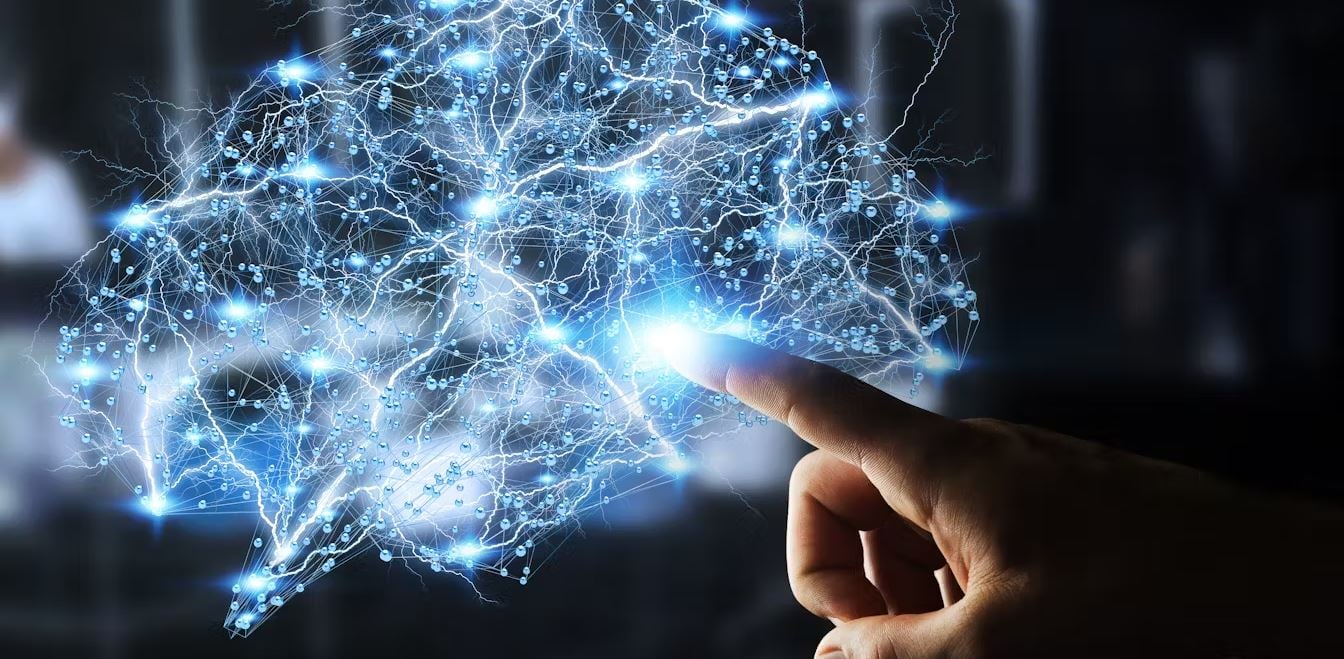
Ever felt like your phone knows you better than your friends? Or that you can't make a decision without Googling first? These are more than quirks of modern life. They might be signs of something much deeper: a fundamental change in how the human brain works. Are we already becoming part artificial intelligence, not with wires in our skulls, but with tech shaping how we think?
Let’s explore how neuroplasticity, constant digital interaction, and our growing reliance on technology are blurring the lines between natural and artificial intelligence.
Neuroplasticity: The Brain’s Secret Superpower
Neuroplasticity is the brain’s ability to rewire itself based on experience. When you learn a new skill, like riding a bike or coding, the brain forms new connections. But here’s the twist: it doesn’t care if you're learning to play piano or learning to rely on your phone’s GPS. Either way, it rewires accordingly.
The more we use digital tools, the more our brains adapt to working alongside them. Studies have shown that people who frequently rely on technology tend to have decreased spatial memory (because of GPS) and increased visual attention (thanks to fast-paced apps and video games). This isn't just convenience, it’s brain remodeling.
Outsourcing Thought: From Memory to Machine
Think about how many phone numbers you remember today. Probably just one or two. Now think back to your childhood. You likely knew dozens. That shift isn’t laziness, it’s evolution. We’ve started to treat phones and cloud services as extensions of our brains. Psychologists call this transactive memory, the idea that we store knowledge in relationships, tools, or systems rather than in our own heads.
Your brain no longer needs to retain raw data. It just needs to know where to find it. That’s not too different from how AI systems store and retrieve information. We're beginning to think less like a traditional biological brain and more like a hybrid networked intelligence.
The Invisible Merge: Where Humans End and Tech Begins
We’re already in a soft merger with AI. It’s not about microchips in our skulls; it’s about symbiosis. Think about:
- Predictive typing that finishes your sentences.
- Recommendation algorithms that shape your taste in music, food, and even relationships.
- Wearables and health apps that influence your habits and decisions.
- Social media algorithms that subtly steer your worldview.
These tools don’t just assist thought. They shape it. They decide what you see, when you see it, and how often. In a way, they’re a form of artificial cognition blended into our daily routines.
And as AI grows more context-aware and personalized, it doesn’t just reflect our behavior, it begins to guide it.
What Does It Mean to Be Human in the Age of AI?
The old line between tool and user is fading. In ancient times, a hammer was just a hammer. But today’s tools anticipate needs, analyze emotions, and alter behavior. That pushes us into a new philosophical space.
Are we still the same species, or are we evolving into a new kind of intelligence, cybernetic organisms, not in body, but in mind?
This isn't science fiction. It’s the daily reality of digital life. The future of humanity may not involve a sudden leap into robot bodies. It may be a gradual shift in how we think, nudged along by the apps we open every morning and the AI systems learning more about us each day.
So… Are We Already Part AI?
In a word: yes. Not in the sense of sci-fi cyborgs or neural implants, but in the way we process the world. Our minds are now entangled with digital ecosystems. Our thoughts are increasingly shaped by machines. We are no longer just human in the traditional sense.
We’re becoming something new, something in between.
Should We Embrace or Resist?
This isn't a warning cry or a celebration. It’s an observation. The merger is happening. The question is: do we want to guide it consciously, or drift into it unaware?
In a world where thought and technology are fusing, the most human thing we can do is stay aware of what we’re becoming.

Comments ()