


Prompt engineering is a critical skill in the world of AI, especially when working with language models like GPT. As the technology behind these models has evolved, so too has the craft of prompting them effectively.
Let's explore what prompt engineering is, its origins, how it has evolved over time, and some real-world examples.

What is Prompt Engineering?
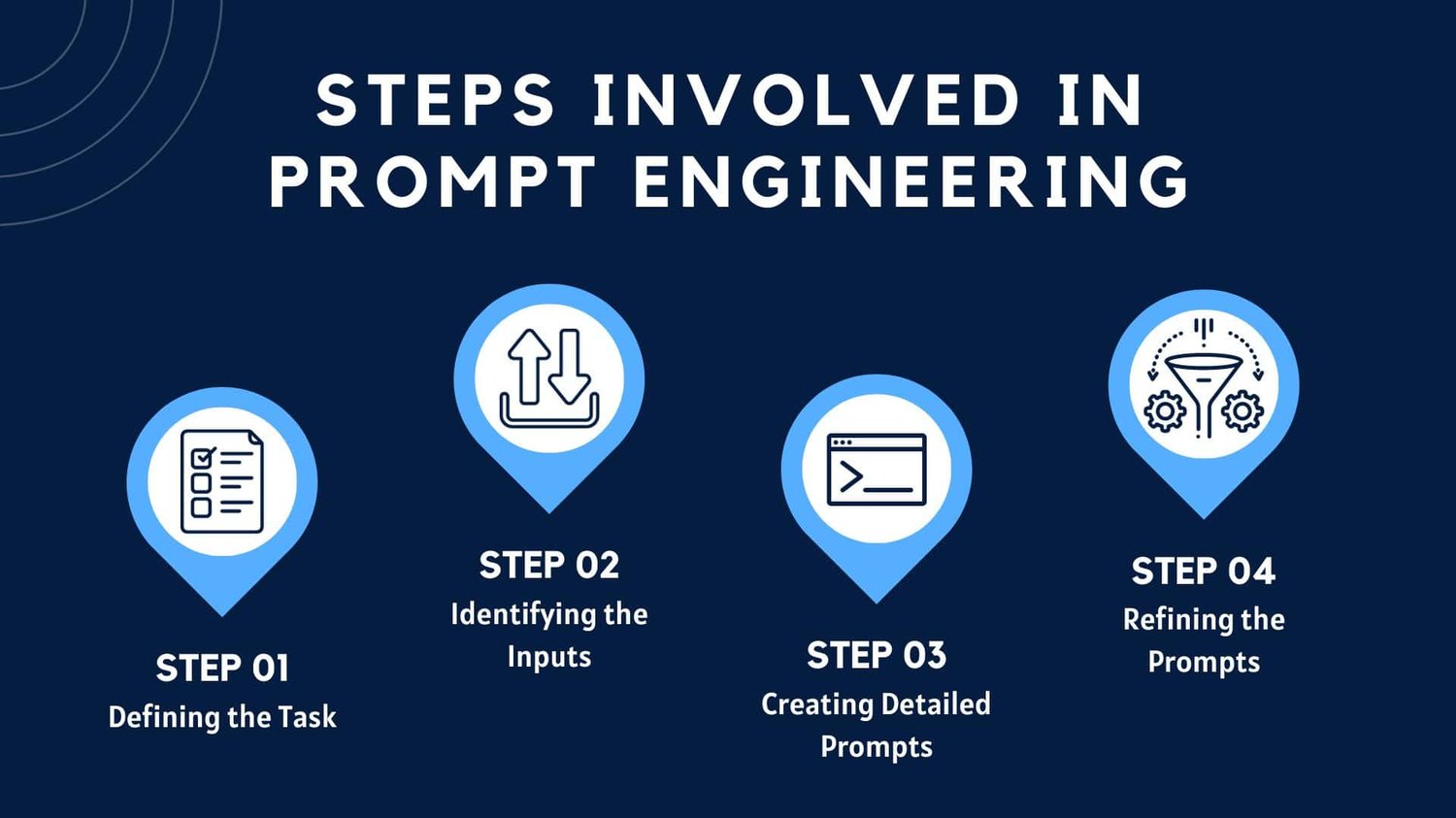
Prompt engineering refers to the art and science of crafting inputs (or "prompts") to interact with AI models in a way that produces the most accurate, useful, or creative responses. In essence, it's about asking the right questions or providing the right context to ensure the AI understands the desired outcome.
Prompt engineering isn't just about throwing words at the AI; it's about understanding how the model processes information, predicting how it will respond to different inputs, and shaping your prompts to get the best results.
The goal is to maximize the potential of AI systems by communicating with them in the most effective manner.
Origins of Prompt Engineering
The concept of prompt engineering began with the rise of Natural Language Processing (NLP) models. Early AI models, like rule-based systems and basic machine learning algorithms, were designed to handle specific tasks with pre-programmed rules. These models had limited ability to understand the nuance of human language or respond creatively to ambiguous inputs.
As machine learning evolved, so did the models. The advent of transformer-based models like GPT (Generative Pretrained Transformer), developed by OpenAI, marked a major shift. These models were trained on massive amounts of text data, enabling them to understand and generate human-like responses to various inputs. However, because these models were trained on such a broad array of text, they were not always perfect at understanding the exact intentions behind vague or poorly-constructed prompts. This gap in effectiveness led to the emergence of prompt engineering as a formal practice.
Users of these models needed a way to communicate with the AI clearly and efficiently, resulting in the creation of specialized techniques for crafting prompts.
The Evolution of Prompt Engineering
As AI language models have become more powerful, prompt engineering has evolved to become an essential skill for anyone working with these systems. Initially, prompt engineering was more trial-and-error, as users tested various inputs to see which ones produced the best outputs. Over time, a deeper understanding of how these models work allowed for more sophisticated prompting strategies.
Basic Prompts (Early Models): Early AI models were relatively limited in their capabilities, so prompts had to be very specific. A typical prompt might have been a direct instruction like, "Translate the following sentence into French," or "Summarize the paragraph."
Contextual Prompts (Mid-Evolution): As models became more complex, users realized that providing more context helped the AI understand the task better. For example, a prompt like "Summarize the following paragraph from a business article, focusing on key points about marketing strategies" is more specific and helps the model generate a more useful response.
"Zero-Shot" and "Few-Shot Learning" (Current Models): With advanced models like GPT-3 and GPT-4, prompt engineering has become much more sophisticated.
These models are capable of zero-shot learning, (where they can perform a task with no prior examples.)
Few-shot learning (involves giving the model a few examples within the prompt to help it understand the task.)
A prompt like, "Here are some examples of writing styles: 1. Formal, 2. Casual, 3. Technical. Write a short article in the 'formal' style about AI." This helps the model understand the style before generating the content.
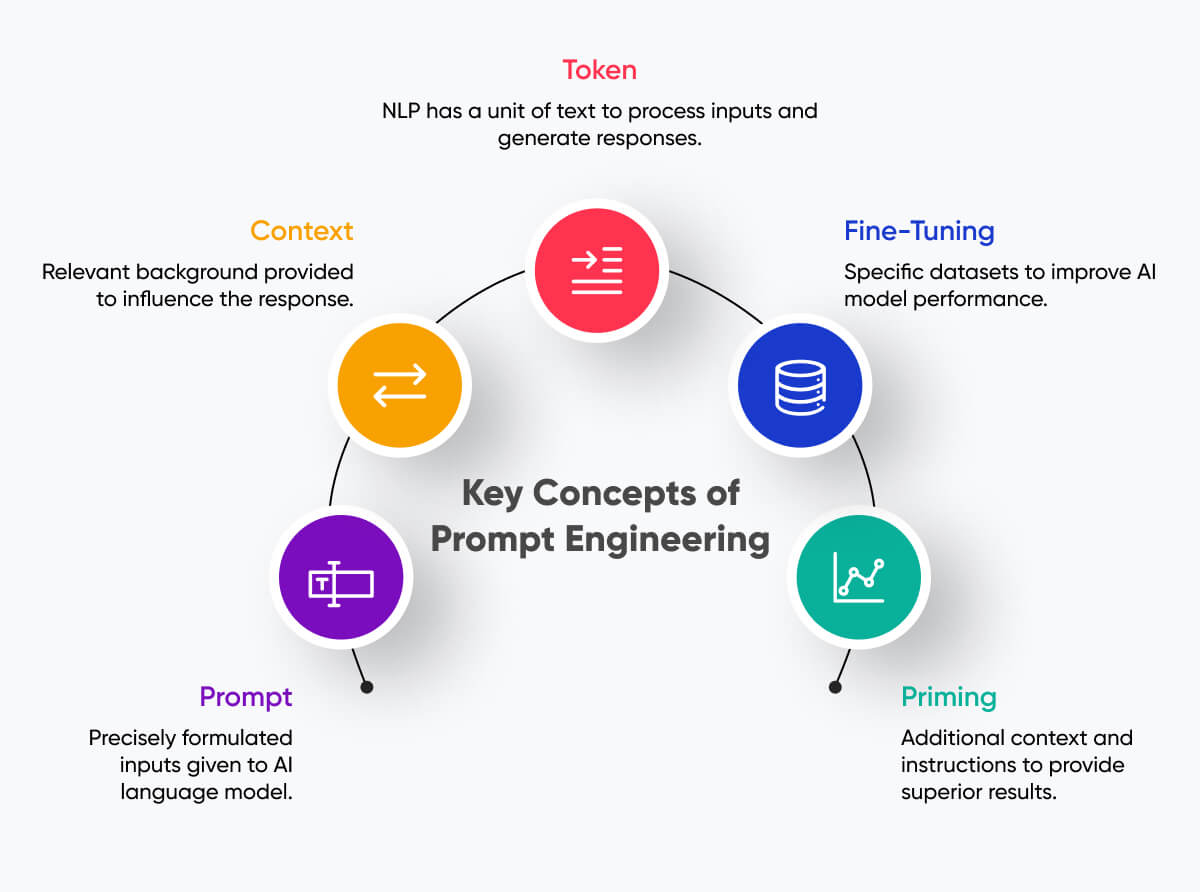
Advanced Prompting Strategies: Today, prompt engineering involves a variety of techniques, such as using temperature settings to adjust the creativity of the output, specifying a tone, or even using "priming" to nudge the AI toward a particular type of response.
Key Techniques in Prompt Engineering
Several advanced techniques have been developed to optimize prompts, including:
- Chain-of-Thought Prompting: This technique involves asking the model to break down its reasoning step-by-step, which leads to more accurate and coherent answers. For example, instead of asking, "What's the square root of 144?" a chain-of-thought prompt would be, "First, identify the factors of 144. Then, find the square root."
- Priming: This involves giving the AI a specific instruction or context at the start of the prompt to influence its responses. For instance, "As a professional chef, describe how to make a vegan lasagna" primes the AI to respond with a specific expertise.
- Temperature Control: Temperature is a setting that controls the randomness of the model’s responses. A low temperature (e.g., 0.2) produces more deterministic responses, while a higher temperature (e.g., 0.8) allows for more creative, varied outputs. A well-engineered prompt can take advantage of temperature to generate either precise or imaginative content.
Real-World Examples of Prompt Engineering
Content Creation: Writers and marketers use prompt engineering to generate blog posts, social media content, or product descriptions. For example, "Generate a 300-word blog post on the benefits of sustainable fashion, using a casual tone" directs the model to create a specific type of content that matches the tone and length requirements.
Code Generation: Developers leverage AI for writing code. A prompt like, "Write a Python script that calculates the factorial of a number using recursion" helps the model produce code that fits the specified task.
Customer Support: AI can be prompted to handle customer queries. For example, "Respond to a customer complaint about a delayed shipment in a friendly, professional manner" ensures the AI maintains the right tone while addressing the issue.
Research Assistance: Researchers use AI to gather and summarize information. A prompt like, "Summarize the latest research on renewable energy sources, highlighting the most promising technologies" guides the AI to focus on the most relevant aspects of the topic.
Data Base Building: Using a LLM as a form of memory augmentation lets you build an ecosystem where the AI learns from the specifics you provide, becoming more effective over time at generating relevant content and insights.
It’s like having a highly customizable, interactive assistant that can adapt its responses to your evolving needs, whether for marketing copy, data analysis, or brainstorming ideas.
The more details you feed it, the sharper and more personalized the responses become. for example, "if you're using it for social media", you could not only get help writing ad copy but also analyze which posts have performed best historically, determine engagement patterns, or suggest optimal posting times based on your data.
In this example , this level of interaction, where the AI uses context you've built, makes it a powerful tool for content creation, strategic planning, and efficient decision-making.

The Future of Prompt Engineering
As AI continues to evolve, so will the techniques and tools used in prompt engineering. The development of more specialized models and the integration of multimodal capabilities (such as combining text, image, and audio inputs) will likely change how prompts are designed. For example, prompting an AI that understands both images and text could involve describing an image and asking for an analysis based on both the visual and textual context.
In the coming years, prompt engineering will continue to play a vital role in maximizing the potential of AI, whether for creative, technical, or problem-solving tasks.
Conclusion
Prompt engineering has transformed from a trial-and-error approach to a well-established discipline that enables users to unlock the full potential of AI language models. From basic commands to advanced strategies, the evolution of prompt engineering has opened up countless possibilities in fields ranging from content creation to software development. As AI technology advances, the role of prompt engineering will become even more crucial in guiding these systems to produce valuable, accurate, and creative responses.

Comments ()