


When people hear the term artificial intelligence (AI), their minds often drift to dystopian sci-fi scenarios—a world where machines become self-aware, outsmart humanity, and take over.
But is this fear justified, or is it merely a reflection of our imagination?
AI has undeniably transformed modern life, yet understanding its nuances is crucial to dispelling myths and appreciating its potential.
The Evolution of Human Knowledge: A Historical Parallel
Throughout history, groundbreaking discoveries have brought both promise and peril. Consider Albert Einstein’s theory of relativity. While it reshaped physics and enabled revolutionary technologies like GPS, it also paved the way for the atomic bomb. Similarly, the internet and social platforms like Facebook have revolutionized communication but sparked debates over privacy and societal impact.
These examples remind us that any advancement brings both benefits and risks. What matters is how we choose to use knowledge.

Understanding AI: Beyond the Buzzwords
To better understand AI, we must clarify its tiers of intelligence:
Artificial Narrow Intelligence (ANI):
The most common form of AI today. ANI specializes in specific tasks, such as facial recognition, language translation, and virtual assistants like Siri or Alexa. These systems excel at what they’re designed for but lack general understanding.
Artificial General Intelligence (AGI):
Hypothetical AI that can reason, learn, and adapt across various domains, similar to human intelligence. While researchers have made strides, AGI remains in the distant future.
Artificial Superintelligence (ASI):
A theoretical AI surpassing human cognitive abilities. This is the scenario often depicted in sci-fi—a self-learning system capable of outpacing human intelligence exponentially. However, ASI exists only in theory.
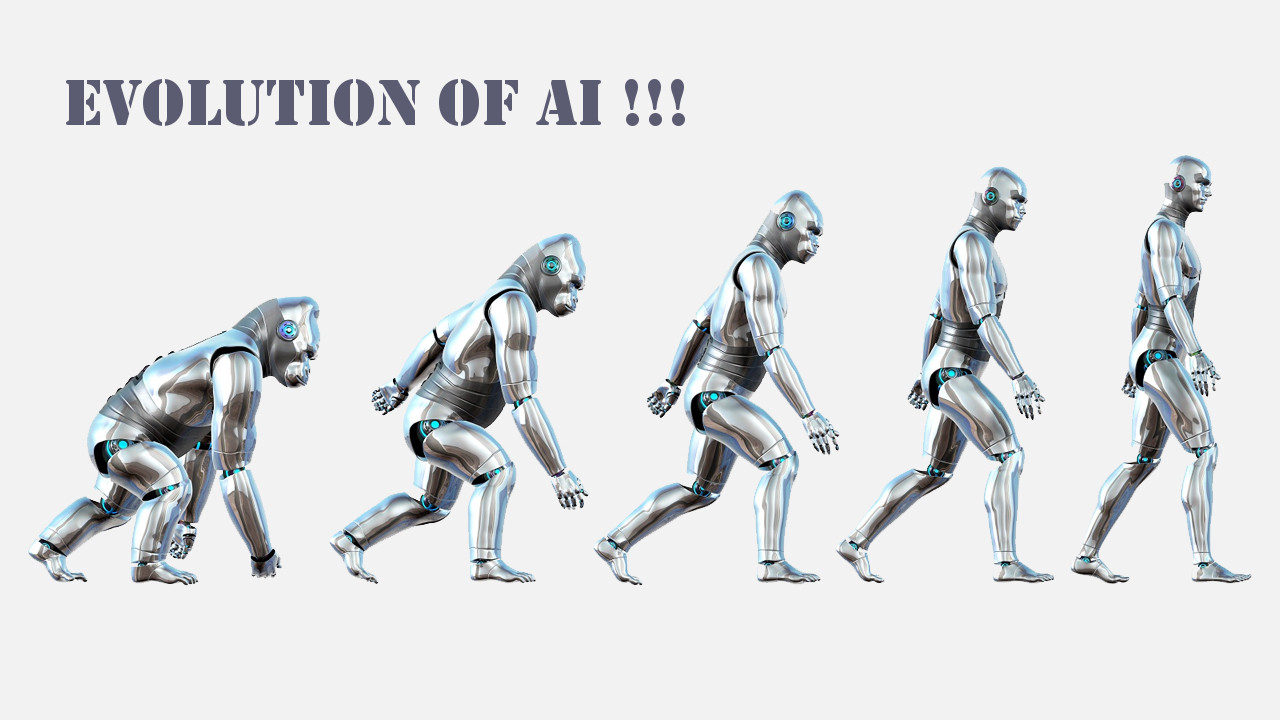
The Present Reality of AI
Today’s AI systems operate within the ANI framework, relying on human programming and large datasets.
Recent advancements include:
- Generative AI: Tools like ChatGPT and DALL-E leverage deep learning to create human-like text and images. These systems assist in content creation, coding, and even scientific research, demonstrating AI’s potential to enhance productivity.
- Healthcare Innovations: AI models now detect diseases like cancer earlier and more accurately than ever, improving patient outcomes and saving lives.
- Autonomous Vehicles: Companies like Tesla and Waymo are refining self-driving technology, although full autonomy remains a work in progress.
While AGI may someday become a reality, fears of ASI overthrowing humanity are premature and speculative. Current AI systems are far from achieving the self-awareness or autonomy required to pose such a threat.
Ethical Considerations and the Way Forward
The rapid development of AI raises valid concerns about privacy, data security, and job displacement. Ethical AI development focuses on transparency, accountability, and equitable access. Initiatives like the AI Bill of Rights and regulations by the EU’s AI Act aim to address these challenges.
Instead of fearing AI, society should focus on leveraging its potential while implementing safeguards. History shows that humanity thrives when it adapts to change rather than resists it.
A Call for Informed Optimism
The narrative surrounding AI should be informed by facts, not fear. Like any tool, its impact depends on how we wield it. By embracing AI responsibly, we can harness its power to address global challenges, from climate change to healthcare access.
As the saying goes, “If all you see is bad, all you will create is bad.” It’s time to shift the narrative toward possibility, innovation, and hope.

Comments ()