
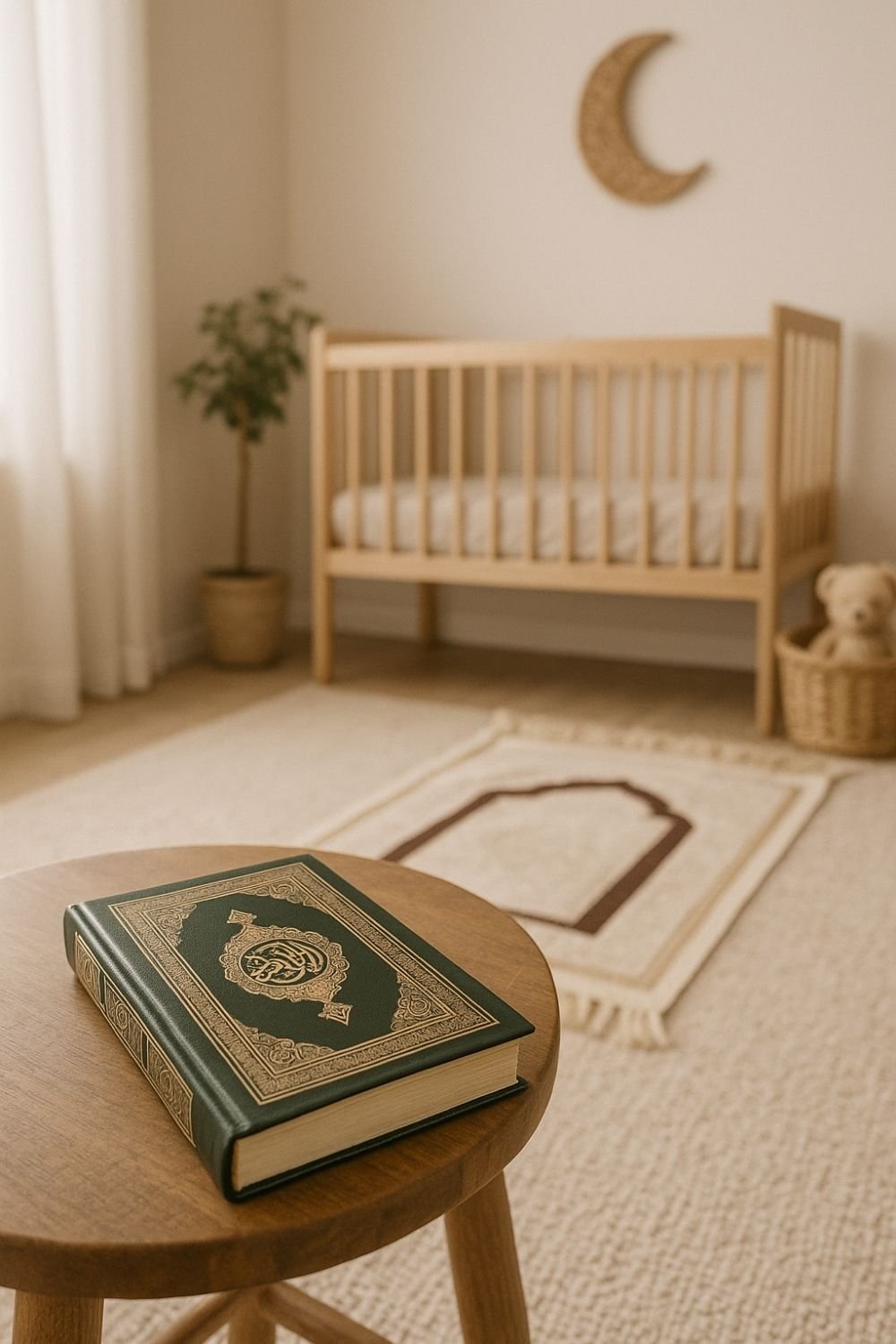
Becoming a parent , whether you’re expecting your first baby or settling into those early newborn months — has a way of softening the heart. Suddenly, life slows down just enough for you to feel the weight of this amanah Allah has placed in your hands.
And just like how we plan our finances, our goals, our routines, even our meals… raising a child who knows Allah, loves the Prophet ﷺ, and carries beautiful adab doesn’t happen by accident.
It requires niyyah, tawakkul, and deliberate tarbiyyah.
Most couples enter parenthood excited, hopeful, and eager , but unsure of how to begin shaping the kind of environment that nurtures a heart connected to Allah. And that’s okay. Parenting was never meant to be mastered overnight; it’s a journey we walk step by step.
But the journey becomes clearer when we pause to reflect:
“Who do we hope our child will become…
and how are we preparing our home, our marriage, and our hearts to help them get there?”
In Islam, three core pillars form the foundation of a child’s upbringing. Let’s explore them gently together with reflective questions you and your spouse can use to clarify your vision.
1. Ta‘līm — Nurturing Their Islamic Knowledge
For most parents, this is the easiest place to start:
“We want our child to read Qur’an.”
But ta‘līm goes deeper. It’s about nurturing a child who understands their faith, not just recites it. A heart that knows Allah, not just knows the rules.
Consider these reflective questions:
- What do we truly want our child to KNOW about Allah, the Qur’an, and the Sunnah by the time they’re 5… 10… 15?
(Eg: knowing short surahs, basic dua’, stories of the Prophets, loving the masjid, recognising halal/haram, understanding adab with others.)
- What kind of Islamic environment do we want to build at home?
(Eg: Qur’an playing daily, reading Seerah stories, bedtime dua’ routines, Arabic phrases, Ramadan preparation.)
- What steps can we take — now, even during pregnancy — to make Islamic learning feel natural and joyful?
(Eg: setting a small weekly goal, reading a page of Qur’an aloud to the baby, choosing Islamic books, enrolling in play-based Qur’an classes.)
Your child’s ta‘līm doesn’t begin when they’re “old enough.”
It begins with your intention today.
2. Tahdhīb — Cultivating Manners, Character & Discipline
A child can memorise Qur’an beautifully, but without adab and discipline, the knowledge won’t blossom into action.
The Prophet ﷺ said:
“Nothing is heavier on the scale than good character.” (Tirmidhi)
Tahdhīb is the art of shaping the inner world of your child — their self-control, their speech, their kindness, their resilience.
Here are gentle questions to reflect on:
- What manners and akhlāq do we want our child to embody?
(Eg: gentleness, patience, gratitude, sharing, respect, kindness to parents.)
- What discipline style aligns with Islamic values and our family’s calm, barakah-centred approach?
(Eg: guiding instead of punishing, teaching instead of shaming, modelling instead of demanding.)
- How will we model the behaviour we hope to see in our child?
(Eg: speaking with kindness, handling stress with dhikr, apologising sincerely, showing mercy.)
Often, tahdhīb begins with parental self-awareness.
Children absorb who we are, not only what we teach.
3. Tarbiyyah — The Vision for Who They Will Become
Tarbiyyah is not just a parenting method; it is the entire journey of raising a child with purpose.
It’s about imagining the adult your child will one day become and asking:
“Ya Allah, how can I guide this child towards a life of righteousness, service, and closeness to You?”
Then breaking that vision into daily choices — small actions, small routines, small habits which, over years, form a heart anchored in faith.
Reflect with your spouse:
- What kind of Muslim do we hope our child grows into?
(Eg: someone who loves Allah, someone responsible, someone compassionate, someone who seeks knowledge, someone confident in their identity.)
- What kind of home culture do we want to build to support that vision?
(Eg: a home of shukr, calm rhythms, Qur’an, warm communication, du’a before decisions, respectful disagreements.)
- How do our own habits, emotions, and marriage dynamics shape the tarbiyyah of our child?
(Eg: do we resolve conflict with grace? do we prioritise salah? do we speak good words? do we treat each other with rahmah?)
Tarbiyyah is not just about the child.
It transforms us as parents.
Every choice — from what we watch to how we react to stress — is silently teaching our child what Islam looks like in daily life.
Why These Reflections Matter
If we don’t set an intention, the world will set it for us.
And the modern world is loud, fast, and full of influences that pull children away from fitrah, adab, and tawheed.
By pausing to reflect now — in pregnancy, in early postpartum, or even with toddlers — you are doing exactly what conscious Muslim parents do:
> Raising your children with purpose, not autopilot.
> Walking your journey with clarity, not confusion.
> Building a home where barakah can truly settle.
And ultimately, we ask Allah:
“Rabbana hablana min azwajina wa dhurriyyatina qurrata a’yun, wa’j’alna lil-muttaqīna imāma.”
“Our Lord, grant us from our spouses and offspring comfort to our eyes, and make us leaders for the righteous.” (Qur’an 25:74)
A du’a that begins with the parents — before the children.
Your Turn: A Gentle Invitation to Reflect
Here are three questions to journal with your spouse tonight:
- What is one Islamic value we want to intentionally build into our home in the next 30 days?
- What kind of emotional environment do we want our baby to grow up in, and what changes can we make to nurture that?
- What small daily habit can we start today that aligns with the type of Muslim we hope our child will become?
Parenthood is a long journey… but when it starts with clarity, sincerity, and tawakkul, it becomes a path filled with barakah.
If this reflection stirred something in your heart…
You may find it helpful to slow down further and reflect together as a couple.
We’ve created a gentle Reflective Parenting Journal for Expectant Muslim Couples with guided questions, du’a prompts, and space to clarify your shared vision for parenthood — beginning even before your baby arrives.
It’s not about doing more, but about becoming more intentional, one page at a time OR
If you’d like a simple starting point, we offer a free Trimester 1 Reflection & Intention Checklist designed to help couples pause, set niyyah, and align their hearts as they begin this journey.
Sometimes, the smallest step brings the greatest clarity.Til the next blog...