
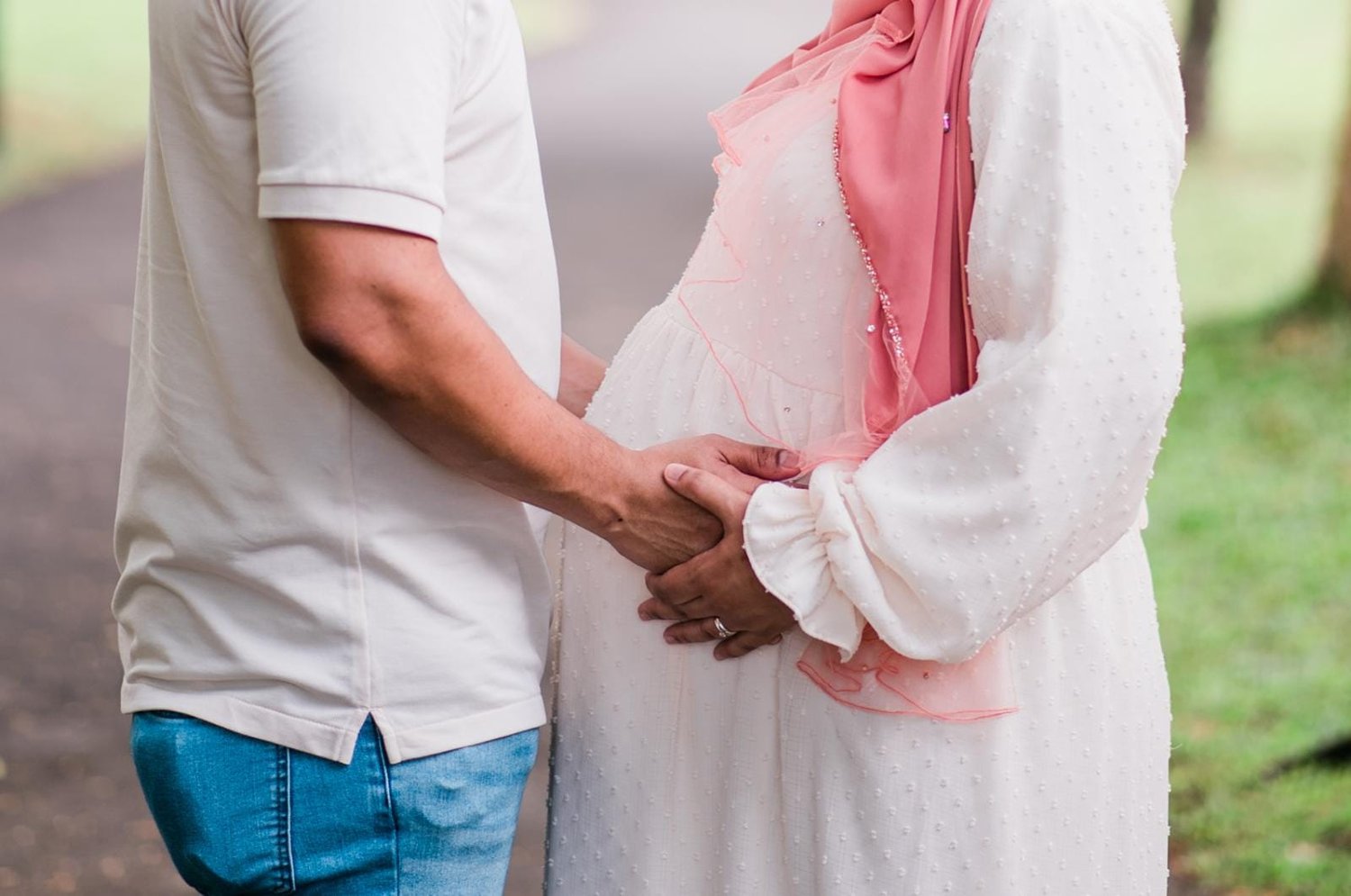
A Journey Begins Long Before the Baby Arrives
Pregnancy is not simply a biological process.
Birth is not merely a medical event.
Parenthood is not just a milestone.
In Islam, the arrival of a child is an amanah, a sacred trust—a doorway Allah opens for the husband and wife to grow, mature, reconnect with Him, and step into a new chapter of worship, responsibility, and mercy.
Sacred parenthood begins before the baby is born.
Before the cradle, before the first cry, before the first smile.
It begins in the hearts of the parents.
This is why the Qur’an reminds us:
“He created you in stages.” Surah Nuh (71:14)
Every stage—hope, fear, love, uncertainty, excitement, exhaustion—is part of the divine design.
Sacred parenthood is not about perfection.
It is about presence, purpose, and barakah.
And in today’s world—where pregnancy is often reduced to appointments, tests, shopping lists, and baby gear—it is time for Muslim couples to reclaim what this journey truly means.
Sacred Parenthood: What It Really Means in Islam
When we talk about “Sacred Parenthood,” we are not adding an Islamic label to modern parenting.
We are returning to what Allah intended parenthood to be:
1. A spiritual transformation
Pregnancy softens the heart.
Birth humbles the soul.
Parenthood cracks us open and rebuilds us with a deeper understanding of tawakkul.
The Prophet ﷺ said:
“Children are the joy of the heart." (Narrated in Ahmad)
But they are also a means of spiritual elevation. Raising a child with sincerity becomes continuous charity.
2. A journey of intention (niyyah)
Every step can become worship if the couple anchors the journey with intention:
“Ya Allah, make this child among the righteous.”
“Ya Allah, purify my heart as I prepare for this amanah.”
“Ya Allah, grant us a home of sakinah and barakah.”
This is sacred parenthood.
3. A partnership between husband and wife
In Islam, parenthood is never a solo journey.
A mother carries the baby.
But a father carries the environment she grows in.
His emotional support, his calm presence, his leadership—these shape the mother’s mental health, her sense of safety, and ultimately, the baby’s well-being.
4. A journey towards upright character and adab
Sacred parenthood means:
- Raising a child who loves Qur’an
- Creating a home filled with mercy
- Modeling forgiveness and adab
- Showing Allah’s Names through our behaviour (As-Sabur, Ar-Rahman, Al-Latif)
This begins during pregnancy, not after.(in some text, it is said to even start before that)
5. A calling that shapes the ummah
The Prophet ﷺ said:
“Each of you is a shepherd, and each of you is responsible for his flock.” (Bukhari)
Your child is part of that flock.
Your womb becomes a place of mercy, your home a place of light, your marriage a reflection of the deen.
This is sacred parenthood
Why Sacred Parenthood Begins in Pregnancy
Most couples believe parenting starts when the baby is born.
But neuroscience, psychology, and Islamic teachings all affirm that it starts in the womb.
Here’s how:
1. The mother’s emotional state affects the baby’s nervous system
A calm mother → calmer baby.
An anxious mother → overstimulated baby.
This is not guilt—it is empowerment.
Dhikr, slow breathing, Qur’an recitation, loving support from the husband—these are not “nice extras”.
They literally shape the baby’s developing brain.
2. The father’s presence affects the mother’s hormones
When a husband:
- speaks gently
- reassures her
- makes du’a with her
- supports her physically and emotionally
…her cortisol decreases, and oxytocin increases.
These hormones directly support fetal development and easier labour.
3. Baby absorbs spiritual energy
The womb is the baby’s first classroom.
When the mother listens to Qur’an, engages in dhikr, or makes dua…
The baby’s heart is surrounded by mercy.
A Beautiful Reminder From the Chishtī Tradition
There is a much-loved story in the Chishtī spiritual lineage about Shaykh Qutbuddin Bakhtiyar Kaki (rahimahullah). When he was a small child, his family held a simple gathering to teach him Bismillah. During the ceremony, he was invited to recite — and to everyone’s amazement, he continued reciting the Qur’an from memory until he completed fifteen juzʾ.
When the elders encouraged him to continue, the young child replied:
“This is what I heard my mother reciting while I was in her womb.
Whatever she recited, I memorised.”
This narration appears in later Sufi manāqib — inspirational collections about the awliyā — and is shared for its spiritual lessons rather than historical verification.
Why This Story Matters for Expectant Parents
Whether or not a baby memorises anything in the womb, the deeper message is timeless and profound:
A baby’s heart absorbs the mother’s emotional and spiritual state.
Qur’an, dhikr, and serenity leave an imprint even before birth.
Barakah truly begins in the womb.
Your child is nourished not only by what you eat — but also by what you feel, what you recite, and how you remember Allah.
It is a gentle reminder to every expectant mother and father:
Fill your womb-space with Qur’an, calmness, and du’a —
for your baby is already listening.
4. Barakah enters where Allah is remembered
In a home where pregnancy is treated as:
worship
amanah
dua
teamwork
humility
Allah places barakah.
This barakah cannot be bought.
It must be cultivated.
Sacred Parenthood as a Couple-Led Journey
A major crisis in many modern Muslim relationships is emotional separation during pregnancy:
- Husbands don’t know how to help.
- Wives feel alone.
- Couples move in parallel, not together.
But in Islam, pregnancy is a joint spiritual and emotional journey.
The mother carries the baby.
The father carries the mother.
Together, they carry the amanah.
This is why your entire program, 40 Weeks of Blessings, is couple-led — because Allah designed this journey for two hearts walking side by side.
How Muslim Couples Can Begin Sacred Parenthood Today
1. Begin with intention
Before pregnancy or in early pregnancy, couples should recite:
رَبِّ هَبْ لِي مِن لَّدُنكَ ذُرِّيَّةً طَيِّبَةً
“My Lord, grant me from Yourself righteous offspring.” (Qur’an 3:38)
2. Protect the emotional climate of the home
Speak softly.
Be gentle.
Create a space where the mother feels safe.
3. Build routines of Qur’an & dhikr
Morning dhikr
Listening to Qur’an
Making dua together before sleeping
Reciting Surah Maryam
4. Learn together—avoid leaving the mother alone
Sacred parenthood involves:
attending classes together
reading Islamic birth stories
discussing fears
planning for postpartum
5. Honour modesty, mercy, and adab throughout the journey
Your behaviour becomes your child’s blueprint.
6. Start learning early
Learning pregnancy–birth–postpartum before challenges arise creates emotional readiness.
How 40 Weeks of Blessings Supports Sacred Parenthood
It is designed around the exact needs of modern Muslim couples:
Barakah Pregnancy Blueprint – foundations
Pregnancy Wellness Bootcamp – deep mindset + routines
Birth Prep & Comfort Measures – fear → faith
Postpartum Courses – emotional safety
Baby Care eCourse – calm early parenting
Husband resources – heart of the home
Dua cards & journals – spiritual grounding
WE don’t just teach information.
WE guide transformation.
If you’re beginning your own sacred parenthood journey and want to walk it with tranquility, clarity, and barakah…
Start with the Barakah Pregnancy Blueprint — the gentle starting point for every Muslim couple.
Or join our Barakah Birth Mailing List for weekly reminders, du’a, and resources
Or if you are still unsure, just book a FREE consultation call