
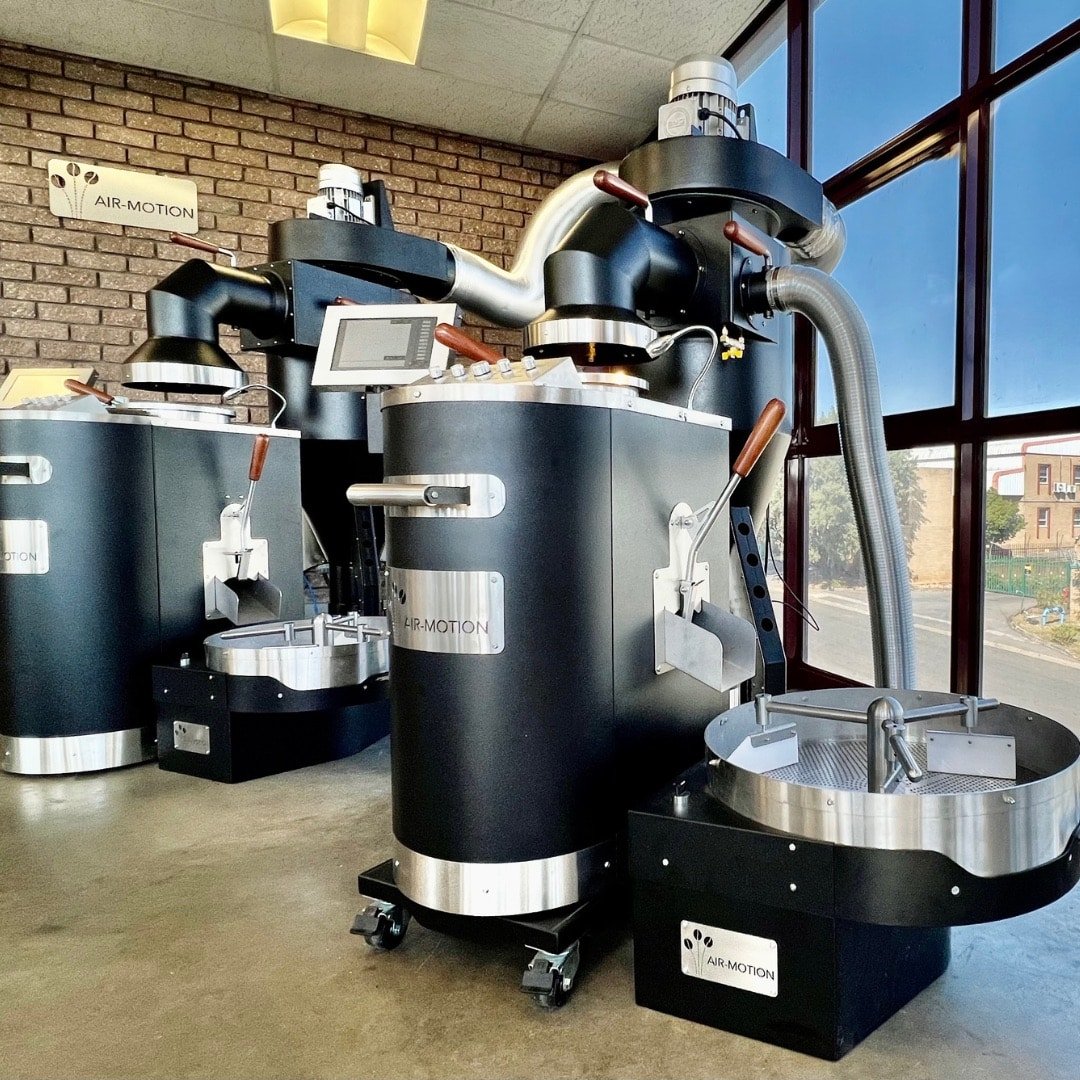
Commercial roasting has consistently dealt with imperfections—such as tipping, underdevelopment, and structural strain that compromise flavor clarity. Yet operators continue asking whether a modern system can meaningfully shrink these inconsistencies.
Early tests indicate that the air coffee roaster machine may reshape that conversation, not by replacing what you already know, but by pushing familiar principles into measurable territory.
As you continue through this blog, the emerging patterns around heat transfer, bean suspension, and defect prevention begin to reveal more than expected.
How Does Defect Formation Change When Heat Moves Differently?
Defects typically emerge when heat transfer becomes unbalanced. Direct-contact systems expose beans to repeated high-temperature touchpoints, creating layers that develop at unequal speeds. An air-driven system alters this by circulating heat across all surfaces simultaneously.
The beans remain suspended, which reduces prolonged contact with hot metal and stabilizes internal-to-external development rates. Over multiple trials, operators often report fewer early scorch marks and fewer over-caramelized patches because the thermal exposure is evenly distributed through the batch.
Does Air Suspension Lower Scorching and Tipping Rates?
Scorching frequently appears when the bean surface temperature rises faster than the center can follow. Tipping tends to follow when edges absorb more thermal energy than the core.
When beans move in continuous suspension, heat disperses more uniformly, narrowing the temperature gradient between surface and center. The reduction isn’t only visual; roast curves display fewer abrupt spikes and smoother transitions between stages. This allows more predictable control over first crack timing.
Some operators scale this with mid-sized systems such as a 6kg air coffee roaster, which maintains airflow velocity even under heavier loads, protecting the batch from edge burn.
What Happens to Chaff and Smoke Interference During Air Roasting?
Chaff retention is one of the least-discussed contributors to roast defects. Trapped chaff absorbs heat faster than the bean surface, creating micro-scorching and smoky interference.
Air systems divert chaff out of the roast chamber the moment it separates, preventing it from circulating and re-attaching. With less particulate matter interacting with the beans, the roast curve remains more stable, and sensory outcomes show fewer bitter or ashy undertones.
This airflow-assisted removal also supports cleaner conduction pathways when the system is heated through electric elements rather than open flame.
Does Electric Heating Improve Development Consistency?
Electric-powered systems introduce another layer of defect reduction: steadier thermal delivery. Instead of flame variability, the heat source delivers a controlled rise that reduces early roast overshoot—a common cause of internal underdevelopment.
A 6kg electric coffee roaster running with calibrated airflow often shows well-balanced internal moisture migration. This protects cellular expansion during the first crack, lowering the risk of structural fractures and uneven internal browning.
Because the heat curve shifts predictably, operators can rely on repeatable results without compensating for burner inconsistencies.
How Does Roast Time Influence Defect Control?
Roast duration shapes how moisture escapes and how sugars break down. If the process takes place too rapidly, the internal pressure will increase very soon, that is, before the bean structure can fix itself, resulting in micro-tears or halting the development curve.
Air roasting typically completes a batch in 12–15 minutes, depending on your beans and desired roast profile. This timing window sits within the ideal range for uniform expansion.
It also creates a controlled environment for managing color transitions, reducing the risk of surface burn while preserving deeper caramelization layers.
Are Sensory Improvements a Sign of Lower Defects?
Flavor uniformity is one of the clearest indicators that structural defects have decreased. Batches roasted through suspended heat movement tend to show:
- Reduced sharpness linked to scorch compounds
- Cleaner aromatics due to lower smoke interference
- More defined origin expression
- Fewer hollow or grassy notes tied to partial underdevelopment
Data from sensory evaluations often points to tighter flavor clustering across multiple batches, signaling improved thermal balance rather than random variance.
How Do Operators Measure Defect Reduction Over Time?
Beyond visual inspection, roasters typically evaluate defect reduction through:
- Colorimeter readings
- Agtron scale variance
- Moisture retention metrics
- Roast curve stability
- Cup scoring range
Machines that stabilize airflow and temperature inputs typically show narrower deviations on all these measures. Operators often report that the biggest shift isn’t a dramatic elimination of defects, but a steady decrease in outlier batches. Over months of production, this stability becomes a measurable operational advantage.
Does an Air System Support Broader Roast Profile Flexibility?
Earlier generations of air-driven systems were known for producing only bright, light-leaning roasts. Modern designs, however, combine controlled convective heat with moderated conductive elements.
This allows deeper coloration without triggering harsh defect notes. Operators can shift toward medium and dark profiles while retaining clarity, because heat enters the bean evenly instead of creating surface overshoot.
This expanded profile range supports brands looking to maintain diverse offerings while reducing batch-to-batch unpredictability.
Conclusion
As operators evaluate technology capable of reducing roast defects, attention often returns to the air coffee roaster machine for one consistent reason: measurable stability.
Across airflow management, temperature control, chaff removal, and roast curve predictability, the system tends to reduce the environmental conditions that cause scorching, tipping, and uneven development.
For businesses seeking cleaner flavor structure, fewer sensory outliers, and more reliable production cycles, this approach offers data-backed advantages worth deeper consideration.