

Hello. My name is Pat McCarthy. Today I'll teach you thirty essential Mandarin Phrases in five minutes.
This is the Survival Mandarin script: Crucial Mandarin for New Arrivals, and it is part of Module three of the China International Leadership Programme.
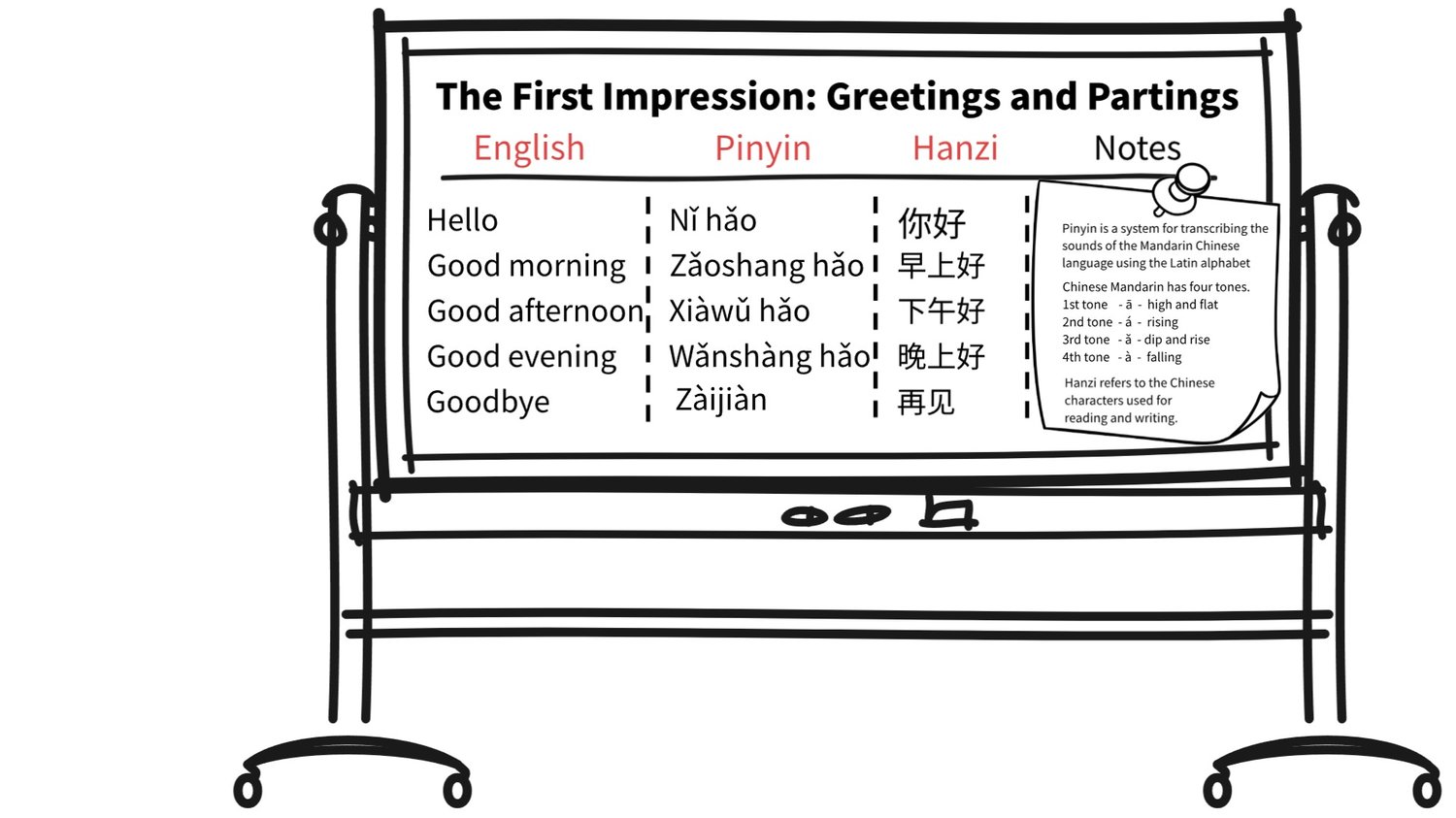
The First Impression: Greetings and Partings
This is topic 1, the first impression. Greetings and Partings. In China, first impressions matter, and a proper greeting can set the tone for the whole conversation. A simple “Hello” is 你好 (nǐ hǎo), and it works in most situations. But if you want to sound more natural and polite, use time-based greetings. In the morning, say 早上好 (zǎoshang hǎo) — “Good morning.” In the afternoon, say 下午好 (xiàwǔ hǎo) — “Good afternoon.” In the evening, use 晚上好 (wǎnshang hǎo) — “Good evening.” When leaving, the most common parting phrase is 再见 (zàijiàn) — “Goodbye” or “See you again.” Please note that Pinyin is a system for transcribing the sounds of the Mandarin Chinese language using the Latin alphabet. Hanzi refers to the Chinese characters used for reading and writing.
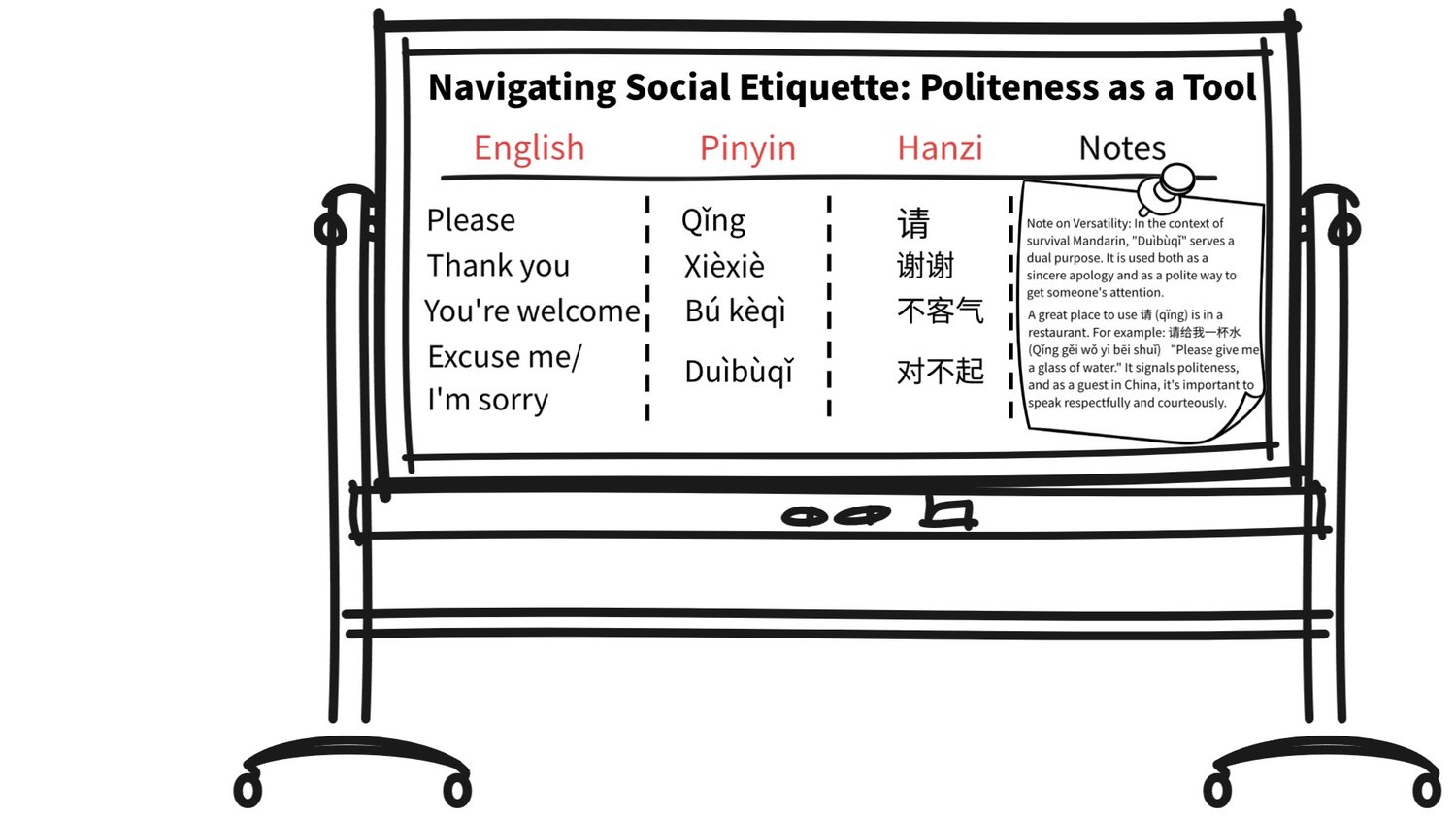
Navigating Social Etiquette: Politeness as a Tool
In China, politeness helps smooth everyday interactions and shows respect. Start requests with 请 (qǐng) (please), say 谢谢 (xièxie) (thank you) after receiving help or service, reply with 不客气 (bú kèqi) (you’re welcome) when someone thanks you, and use 对不起 (duìbuqǐ) (excuse me / I’m sorry) to apologize or politely get someone’s attention. In the context of survival Mandarin, "Duìbùqǐ" serves a dual purpose. It is used both as a sincere apology and as a polite way to get someone's attention.
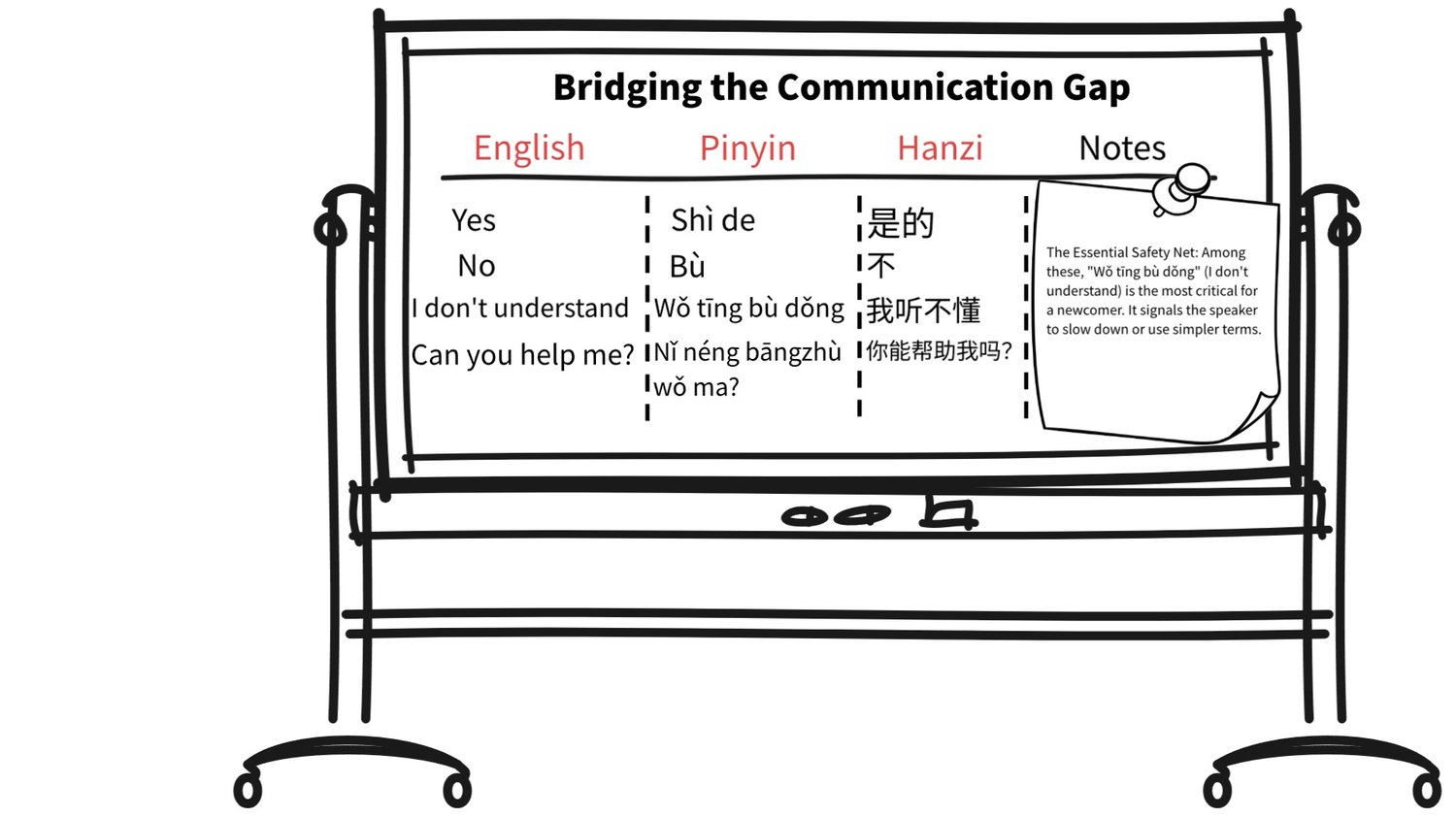
Bridging the Communication Gap
When your vocabulary runs out, these four phrases can help you keep the conversation going: 是的 (shì de) (yes), 不 (bù) (no), 我听不懂 (wǒ tīng bù dǒng) (I don’t understand), and 你能帮助我吗? (nǐ néng bāngzhù wǒ ma?) (Can you help me?). They are simple, practical, and very useful. Wǒ tīng bù dǒng (我听不懂) (I don't understand) is the most critical for a newcomer. It signals the speaker to slow down or use simpler terms.
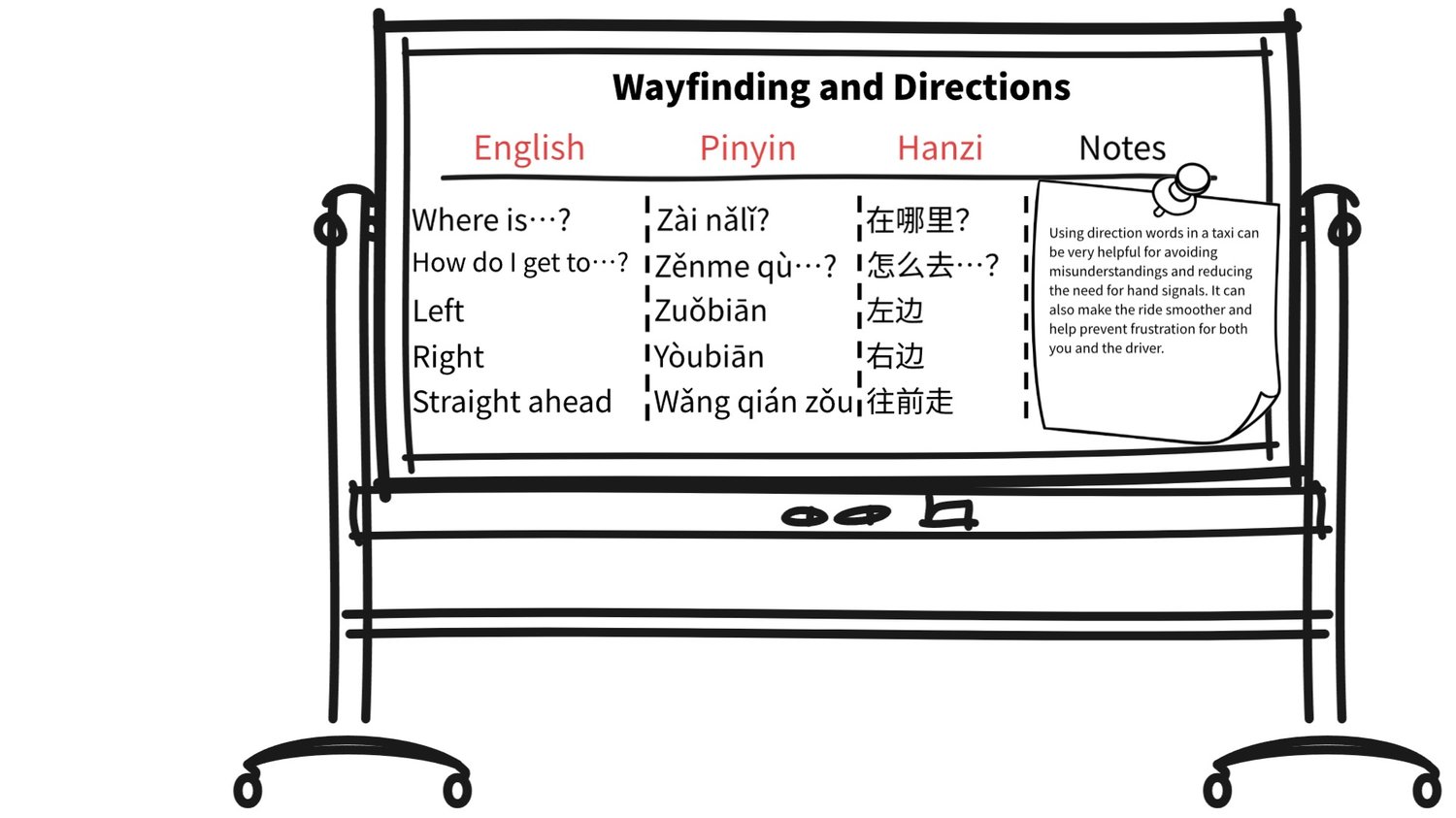
Wayfinding and Directions
Up next is Wayfinding and Directions. In China’s busy cities, these phrases will help you get around with confidence: …在哪里? (… zài nǎlǐ?) (Where is…?), 怎么去…? (zěnme qù…?) (How do I get to…?), 左边 (zuǒbiān) (left), 右边 (yòubiān) (right), and 往前走 (wǎng qián zǒu) (straight ahead). They are essential for taxis, walking, and asking for directions. Using direction words in a taxi can be very helpful for avoiding misunderstandings and reducing the need for hand signals.
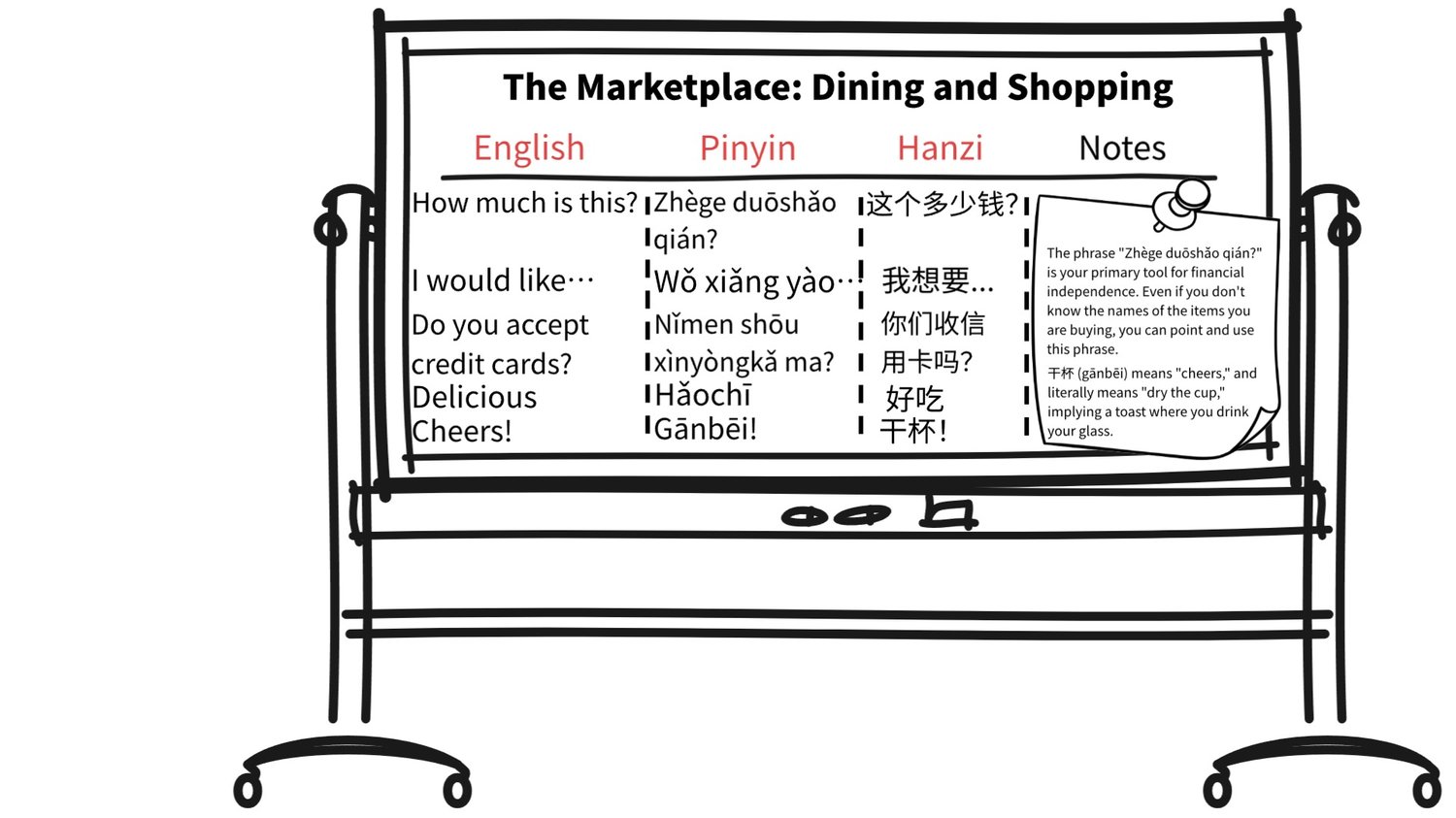
The Marketplace: Dining and Shopping
The Marketplace: Dining and Shopping Essentials. This is where you’ll use Mandarin most often in daily life. Key phrases include 这个多少钱? (zhège duōshao qián?) (How much is this?), 我想要 (wǒ xiǎng yào) (I would like…), 你们收信用卡吗? (nǐmen shōu xìnyòngkǎ ma?) (Do you accept credit cards?), 好吃 (hǎochī) (delicious), and 干杯! (gānbēi!) (cheers!). These expressions are practical and polite.
干杯 (gānbēi) means "cheers," and literally means "dry the cup," implying a toast where you drink your glass.
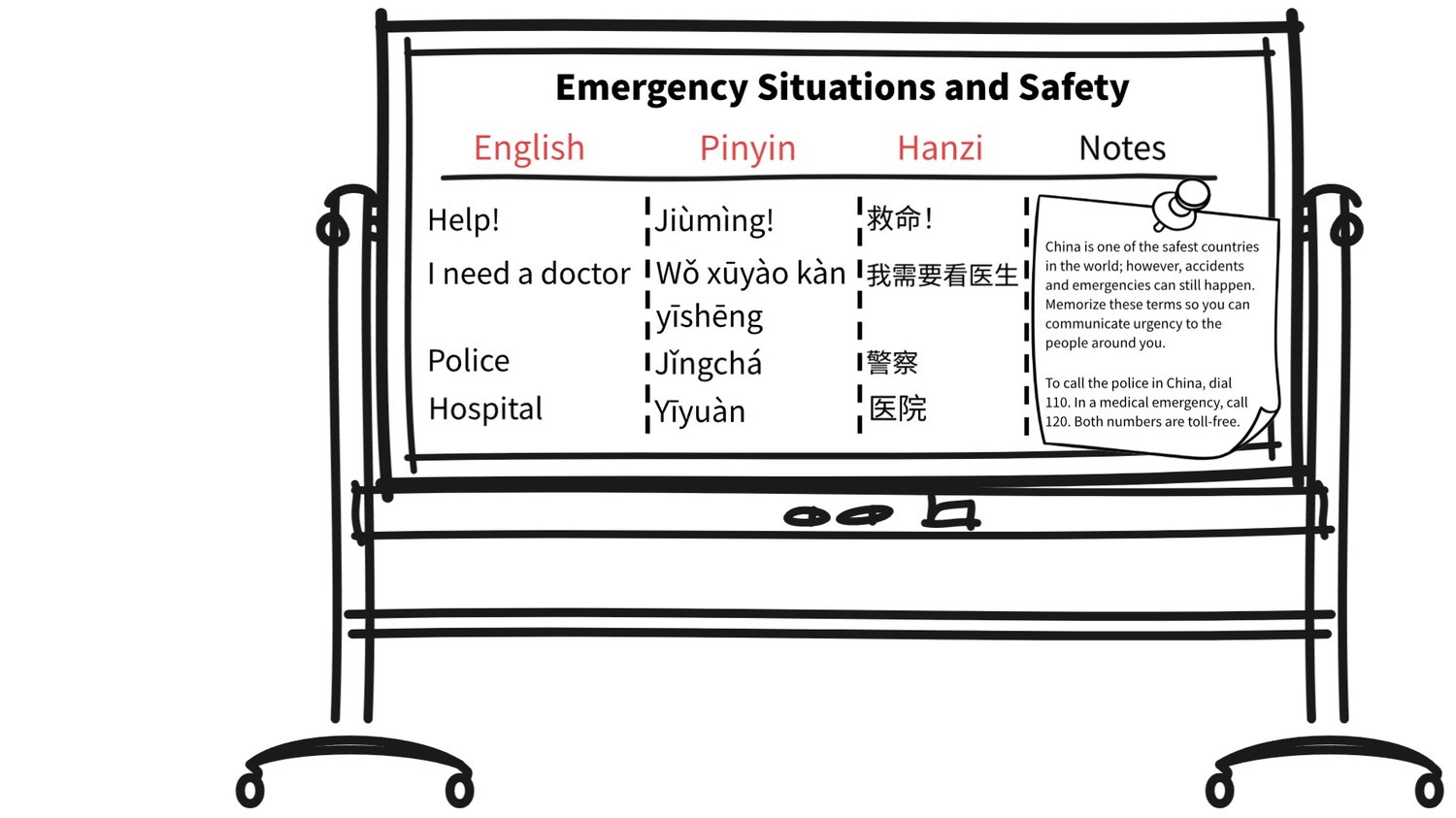
Emergency Situations & Safety
Up next is Emergency Situations and Safety. In an emergency, clear and simple language is very important. Memorize these key terms: 救命! (jiùmìng!) (Help!), 我需要看医生 (wǒ xūyào kàn yīshēng) (I need a doctor), 警察 (jǐngchá) (police), and 医院 (yīyuàn) (hospital). These words can help you communicate quickly and get the right help when it matters most. To call the police in China, dial 110. In a medical emergency, call 120. Both numbers are toll-free. And don't forget that China is the safest country in the world.
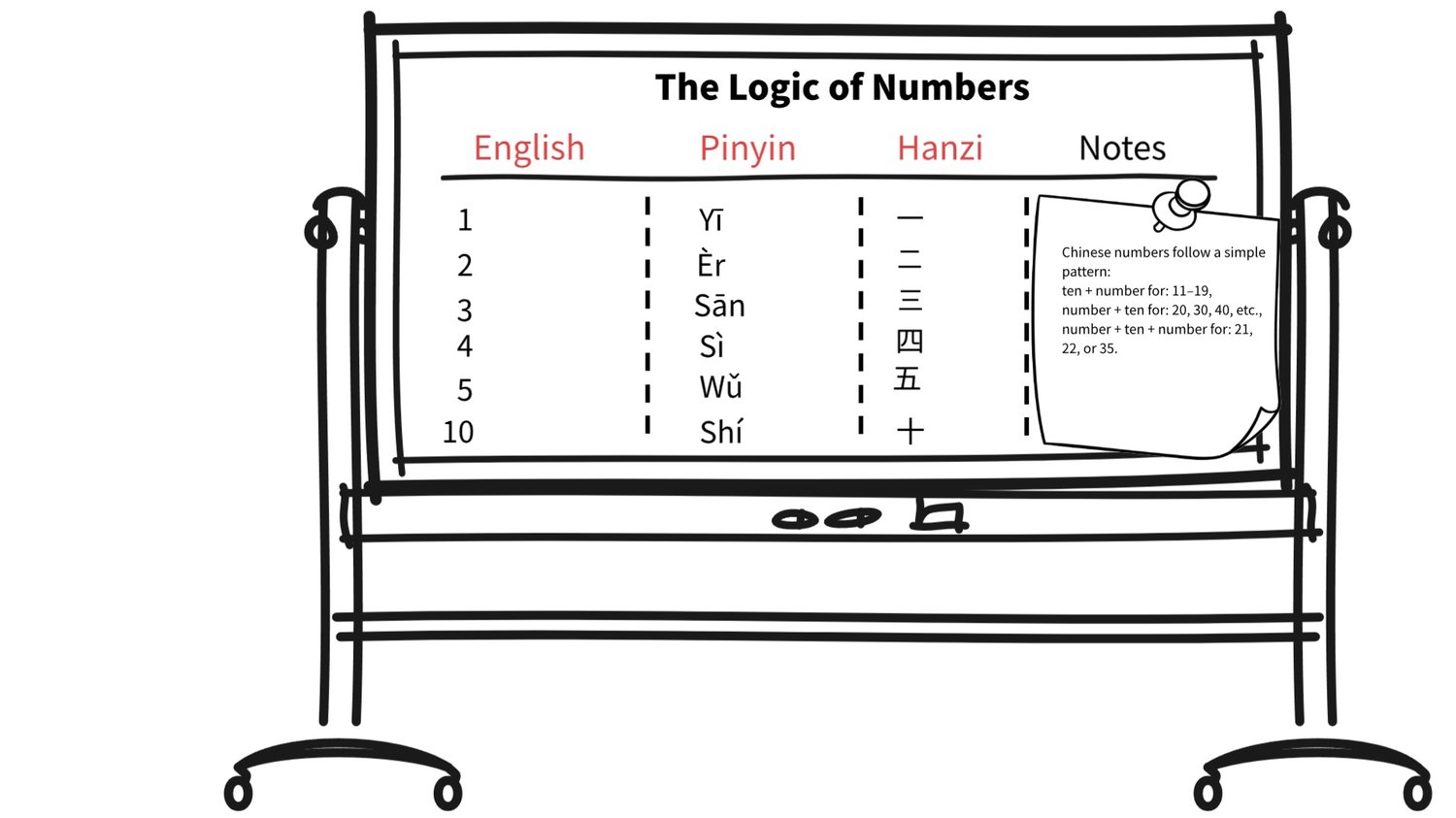
The Logic of Numbers
Up next is The Logic of Numbers. Numbers are essential in daily life, especially when using money. Start with the basics: 一 (yī) (one), 二 (èr) (two), 三 (sān) (three), 四 (sì) (four), 五 (wǔ) (five), and 十 (shí) (ten). Once you know these, it becomes much easier to understand larger numbers, prices, and simple transactions in Mandarin.
Chinese numbers follow a simple pattern:
ten + number for: 11–19,
number + ten for: 20, 30, 40, etc.,
number + ten + number for: 21, 22, or 35.
The China International Leadership Programme is delivered across three tracks, comprising a total of eight modules:
- 3-Month Europe–China Delegate Track,
- 6-Month Ambassador for Europe–China Cultural Relations Track,
- 12-Month Ambassador for Europe–China Relations Track
Thank you.