
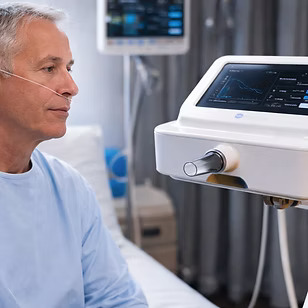
Respiratory diagnostics have advanced significantly over the past decade. While spirometry continues to be the foundation of pulmonary function testing, many clinics are now exploring technologies that provide additional insight into airway mechanics during normal breathing. One such technology is Impulse Oscillometry (IOS).
For pulmonologists, hospitals, and respiratory clinics, choosing the right Impulse Oscillometry device is more than a purchasing decision. The right system should improve workflow, support clinical decision-making, and integrate seamlessly into everyday practice.
If your clinic is evaluating an oscillometry solution, here are the key factors to consider before making an investment.
What Is an Impulse Oscillometry Device?
An Impulse Oscillometry device is used to assess airway resistance and lung mechanics by applying small pressure oscillations while the patient breathes normally through a mouthpiece. Unlike spirometry, the test does not require repeated forceful inhalation and exhalation.
Because the assessment is performed during quiet tidal breathing, oscillometry can provide valuable information about airway function while reducing dependence on patient effort.
Today, many modern respiratory diagnostic systems use Forced Oscillation Technique (FOT) to deliver similar physiological insights while integrating advanced digital analysis and reporting.
1. Choose a System That Combines Oscillometry and Spirometry
Rather than investing in separate devices, clinics should consider systems that combine oscillometry with spirometry in a single platform.
An integrated solution allows clinicians to perform both assessments during one patient visit, creating a more complete understanding of lung function.
Benefits include:
- Streamlined workflow
- Less equipment to manage
- Unified patient reports
- Easier staff training
- Better utilization of clinical space
Instead of choosing one technology over another, integrated systems allow both tests to complement each other.
2. Look for Effort-Independent Testing
One of the biggest advantages of oscillometry is that testing is performed while the patient breathes naturally.
This makes the technology particularly useful for patients who may struggle with conventional spirometry, including:
- Young children
- Elderly patients
- Individuals with severe breathlessness
- Patients recovering from respiratory illness
- Patients who cannot perform repeated forced breathing manoeuvres
When evaluating an Impulse Oscillometry device, look for a system that produces consistent measurements while minimizing dependence on patient technique.
3. Evaluate the Clinical Parameters Provided
Different oscillometry systems may vary in the parameters they report.
A comprehensive system should provide clinically relevant measurements that help clinicians understand airway mechanics in greater detail.
These commonly include:
- Airway resistance
- Reactance
- Small airway assessment
- Frequency-dependent airway behaviour
Detailed respiratory mechanics can support a more comprehensive interpretation alongside conventional pulmonary function testing.
4. Consider Intelligent Reporting Features
Modern respiratory clinics generate a large amount of diagnostic data every day. Reporting tools that simplify interpretation can improve both efficiency and consistency.
Look for systems that offer:
- Automated report generation
- Visual interpretation aids
- Trend analysis
- Digital patient history
- Decision-support features
These capabilities help clinicians review results more efficiently while maintaining confidence in clinical interpretation.
5. Prioritize Workflow Efficiency
Adding a new diagnostic device should simplify clinic operations rather than increase workload.
When comparing oscillometry systems, consider whether they provide:
- Fast testing
- Guided workflows
- Automatic calibration
- Easy patient setup
- Reliable repeatability
A device that integrates smoothly into existing workflows can improve patient throughput without compromising diagnostic quality.
6. Check Digital Connectivity
Healthcare is becoming increasingly digital. Respiratory diagnostic equipment should support this transition.
Important connectivity features include:
- Cloud-based reporting
- Electronic medical record (EMR) integration
- Secure wireless connectivity
- Digital data storage
- Easy report sharing
These features help clinics maintain organized patient records while improving long-term respiratory monitoring.
7. Think About Long-Term Value
Choosing respiratory diagnostic equipment is a long-term investment.
Before making a purchase, ask questions such as:
- Can the device support both adult and pediatric patients?
- Will software updates expand future capabilities?
- Is the system portable enough for different clinical environments?
- Does it fit within available clinical space?
- Can it support growing patient volumes?
Selecting a flexible platform helps ensure the investment continues to meet the clinic's needs over time.
Why Integrated Respiratory Diagnostics Matter
Modern respiratory care increasingly relies on combining complementary diagnostic approaches rather than depending on a single test.
Spirometry provides valuable information about airflow and lung volumes, while oscillometry evaluates airway mechanics during normal breathing. Together, these approaches can provide a broader understanding of respiratory function and support more informed clinical decisions.
For this reason, many clinics now prefer integrated systems instead of standalone devices.
alveoFlow®: An Integrated Solution for Modern Respiratory Diagnostics
When evaluating oscillometry systems, clinics should look beyond individual features and consider the overall clinical workflow.
alveoFlow® is designed as an integrated respiratory diagnostic solution that combines Forced Oscillation Technique (FOT) with spirometry in a single platform. According to the product brochure, it includes AI-assisted interpretation, digital reporting, cloud connectivity, automatic calibration, and a compact design to support efficient respiratory assessment in clinical settings.
By bringing multiple diagnostic capabilities together, alveoFlow® helps clinicians perform comprehensive lung function assessment while maintaining a streamlined workflow for both healthcare professionals and patients.
Conclusion
Selecting the right Impulse Oscillometry device requires more than comparing specifications. The ideal system should support accurate respiratory assessment, integrate easily into daily clinical practice, and provide the flexibility needed for long-term patient care.
Features such as effort-independent testing, integrated spirometry, intelligent reporting, digital connectivity, and efficient workflow can make a meaningful difference in routine respiratory diagnostics.
As respiratory care continues to evolve, clinics are increasingly choosing integrated solutions that simplify testing while expanding clinical insight. Exploring platforms like alveoFlow® can help healthcare providers strengthen their respiratory diagnostic capabilities and support more confident clinical decision-making.