
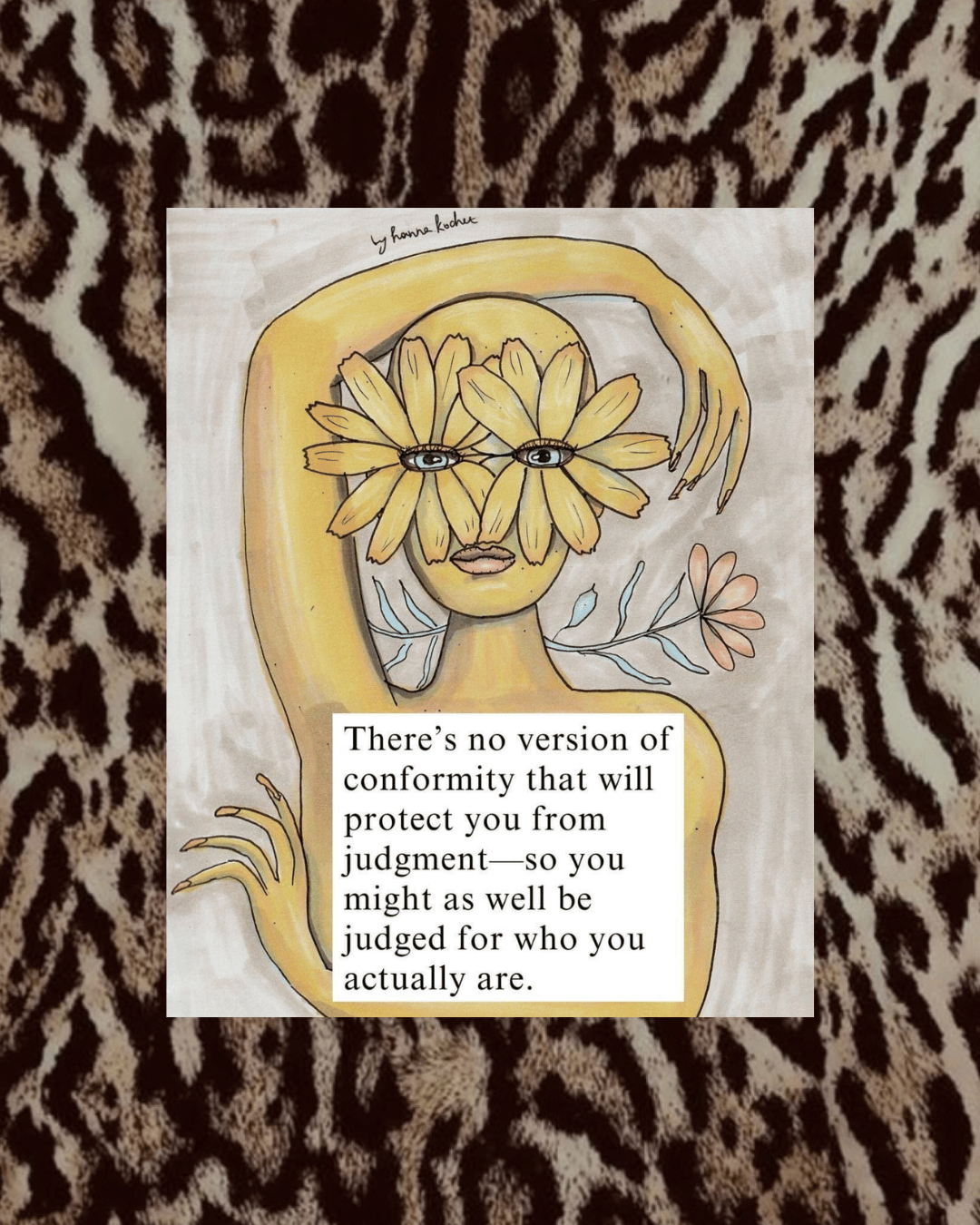
What does it mean to survive as yourself?
As we approach the November 22–27 activation of the 34–20 Channel of Charisma with the Sun in Gate 34 and Earth in Gate 20, I’ve been thinking about Integration, presence, and what it means to survive as ourselves.
Gate 20 carries the theme of the now. And honestly, I keep wondering how much room we give ourselves to actually be here: to recognize what we need today without immediately measuring it against an expectation, a responsibility, or a plan.
We talk about individuality, but what happens when someone’s needs interrupt the structure?
When a student needs a different way to learn? When a boundary changes a relationship? When the life we want no longer fits the version of ourselves we’ve been trying so hard to maintain?
I’m curious about the space between encouraging people to trust themselves and actually allowing them to do it. Studying the Channels of Integration has given me another way to sit with these questions. And as I explore the teachings surrounding 2027, I keep thinking about how our individual relationship with self-empowerment might influence the ways we live together.
The Channels of Integration
Integration includes four channels:
- 34–57, Channel of Power: intuitive awareness connected to Sacral life force
- 20–10, Channel of Awakening: authentic behavior expressed in the present
- 34–20, Channel of Charisma: Sacral response moving directly into action
- 57–10, Channel of Perfected Form: intuitive awareness guiding behavior and survival
Together, these channels connect the Spleen, Sacral, G Center, and Throat. Their shared theme is non-interference: room to be, act, and survive according to one’s own nature.
Where does Integration fit into the conversation about 2027?
In Human Design’s teachings, 2027 marks a threshold in a much longer transformation. Ra Uru Hu described changes involving the Solar Plexus, what Ra described as the emergence of the Rave, and shifts in social agreements and shared resources.
Richard Rudd’s Gene Key 55 interpretation extends this transformation to the wider web of life, describing changes in humanity as inseparable from changes affecting other species. These are spiritual teachings about the future, offering a lens through which to contemplate change.
I see a thematic connection with Integration. When we consider changes in shared structures and agreements, we can also ask: what does it mean to embody self-empowerment within those changes?
Integration offers a way to bring these big ideas back to everyday life: how do we recognize our needs, trust our own decision-making process, and give one another room to be different as the world changes?
Whether or not these channels are defined in your chart, you can explore that question through your own Strategy and Authority.
What might self-empowerment look like in everyday life?
To me, self-determined survival brings together the instinct to stay alive and the freedom to direct our own lives: having the agency to make decisions that support our physical needs, mental well-being, and individual direction.
My background in education always brings me back to the classroom. What might change if we made more decisions around the needs of an individual student? A student-centered approach recognizes learners as competent, curious, capable people and gives them meaningful opportunities to participate in their education.
This is where my background in education meets what I’m studying in Human Design from the theme of self-empowerment. It makes me curious about the structures we create and how much room they leave for us to be individuals. A foundation that supports autonomy can give people space to explore their choices and direction. It can also make room for belonging that includes being ourselves.
In our personal lives, self-empowerment might mean establishing limits, questioning perfectionism, asking for what we need, or taking a more active role in our decisions. We can honor our own needs while caring deeply for the people around us.
Change begins in the life we’re living
We’re not going to change overnight, some changes have been building for a long time while others are only beginning to surface.
I find myself contemplating our relationship with control and trust. Life continues to present situations that ask us to recognize our needs, listen more closely, and act with awareness and authenticity.
Within Human Design, listening to the body through our unique Strategy and Authority offers a personal way to explore these themes. We can experiment, observe, and learn from what unfolds. This is where Integration’s theme of self-empowerment becomes meaningful: in the choices available to us today.
Presence doesn’t have to mean urgency. We can recognize what’s happening now and still give ourselves the time we need to respond.
Where in your life are you asking for more room to be yourself, and what would honoring that need look like?
References and influences
- Human Design Collective, Integration
- Christie Inge, How to Align with the Higher Purpose of Defined Integration Channels — a personal interpretation of Human Design mechanics
- Ra Uru Hu, The 2027 Series, as summarized in my study references
- Richard Rudd, Gene Key 55
The connections to education, autonomy, and everyday life are my own reflections