

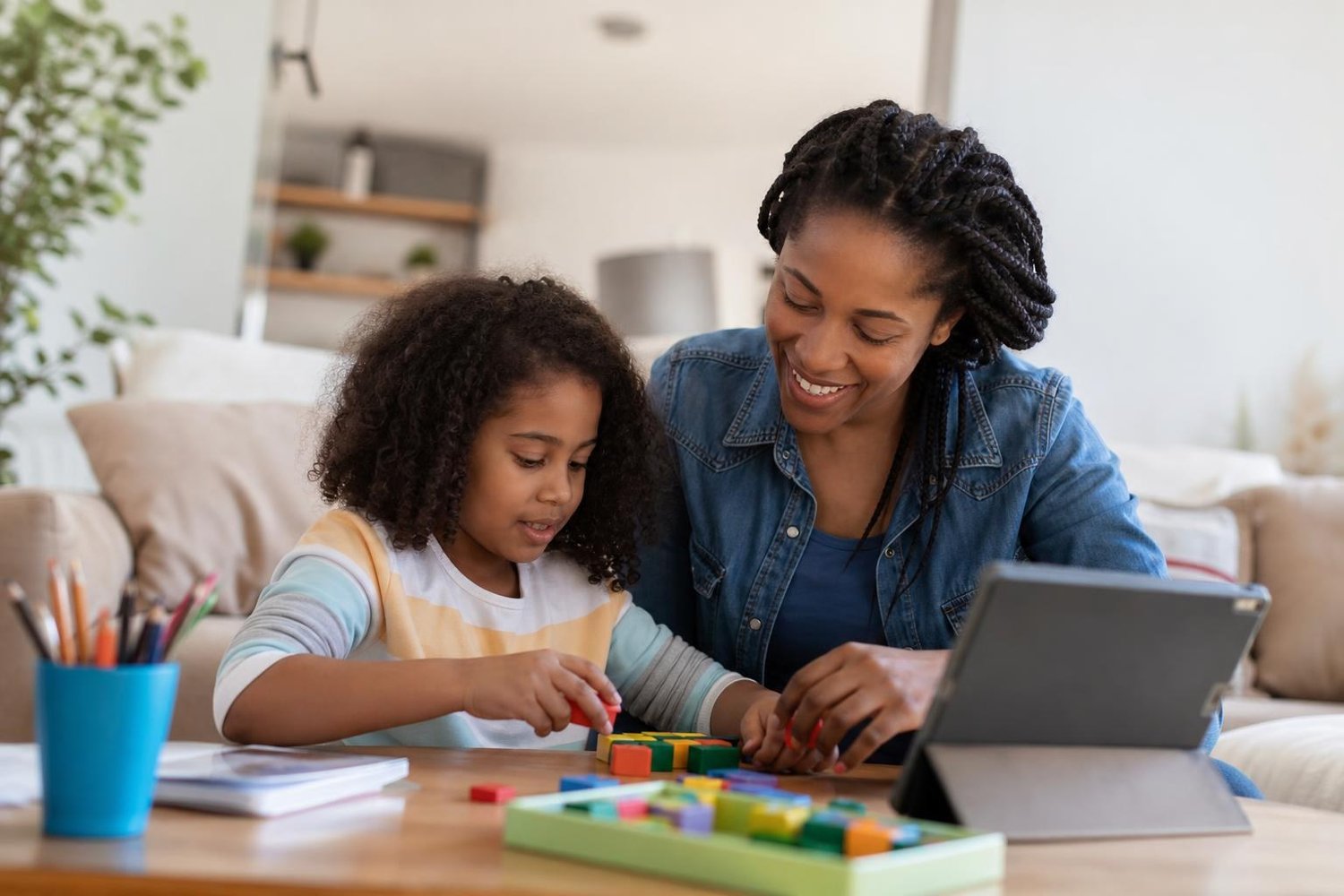
Most parents don't need another worksheet. They need ideas that fit into a Tuesday evening when dinner is late, someone is cranky, and the homework folder is somewhere under the couch.
The good news is that a lot of real learning already happens at home without anyone calling it that. A child who argues about whether a whale is a fish is doing science. A kid who counts down the days to a birthday is doing math. Your job isn't to build a classroom in the living room. It's to notice those moments and stretch them a little further.
What follows are practical, low-cost ways to support kids' learning outside school hours. Some take five minutes, some take a weekend, and none require you to be a trained teacher. Pick two or three that suit your family and ignore the rest. Consistency beats variety every time.
Reimagining the Home as a Dynamic Learning Environment
You don't need a dedicated homeschool room. You need a few small changes that make curiosity easier to act on than to ignore.
Start with access. Books on a low shelf get read. Books in a box in the closet don't. The same goes for paper, tape, markers, a magnifying glass, a tape measure, and a cheap world map. When these sit within a child's reach, a passing question ("How long is our hallway?") turns into a quick experiment instead of a forgotten thought.
Rotation matters too. Kids stop seeing things they look at every day. Swapping out a handful of books, puzzles, or building materials every couple of weeks makes old items feel new again, and it costs nothing.
A few other small shifts that work well:
- A question board: a whiteboard or sheet of paper on the fridge where anyone can write a question they want answered. Pick one each weekend to look into together.
- A "maker" corner: a bin of cardboard, string, bottle caps, and scrap fabric. It invites building without needing a plan.
- Labels for younger kids: simple word labels on everyday objects help early readers connect print to the world around them.
The goal is a home that quietly says "go ahead and try that" rather than one where learning only happens at the kitchen table at 4 p.m.
Gamifying Daily Routines for Skill Development
Kids will do remarkable amounts of thinking if you call it a game. Points, timers, challenges, and silly rules turn ordinary chores into practice for math, reading, and planning. The trick is to build games into things you already do so they don't become one more item on the to-do list.
Kitchen Math and Culinary Science
The kitchen might be the best free classroom in your house. Recipes are full of fractions, measurement, sequencing, and cause and effect, and there's a snack at the end.
Try doubling or halving a recipe and letting your child work out the new amounts. If pancakes call for three-quarters of a cup of milk, what do you need for a double batch? A seven-year-old can pour and count quarter cups; a ten-year-old can do the arithmetic on paper first and check it with the measuring cup.
Cooking is also chemistry. Ask why bread rises, why an egg goes solid when it's heated, or why salt makes ice melt faster. Make a quick prediction before you start and compare results.
Will the cookies spread more with melted butter or soft butter?
Writing predictions on a sticky note and checking them afterward is the scientific method in miniature.
Scavenger Hunts for Literacy and Logic
Scavenger hunts work for almost any age and can be set up in ten minutes. For early readers, write clues as short sentences: "Look under the thing you sleep on." For older kids, use riddles, rhymes, or simple codes where each letter shifts one place in the alphabet.
You can tie hunts to specific skills. Hide cards with words that rhyme, objects that start with a certain sound, or math problems whose answers point to the next location.
"Go to the room number that equals 12 minus 9"
Flip the roles occasionally and have your child write the clues for you. Writing a clue that's hard but fair takes real thinking about how another person reads and reasons.
Integrating Multisensory Tools and Creative Arts
Some children learn best by hearing, some by seeing, and many by touching and moving. Most do better when a lesson uses more than one sense at once. That's why tracing letters in a tray of salt, building numbers out of play dough, or clapping out syllables can stick when a worksheet doesn't.
Art is one of the easiest ways to bring this in. A child who just read a story can draw a comic strip of the plot, which quietly practices summarizing and sequencing. A kid studying the water cycle can paint it, label it, and explain it to a grandparent over a video call. Music works the same way: setting multiplication facts or spelling words to a familiar tune gives the brain a hook to hang them on.
Movement deserves a spot too. Hopscotch with numbers or letters in the squares, a "spelling relay" across the backyard, or acting out a historical event all get kids up and engaged. For restless children especially, this can be the difference between a fight over practice and actually enjoying it.
Keep supplies simple and messy-friendly. A plastic tablecloth, washable paint, and an old shirt remove most of the stress from creative projects for everyone involved.
Leveraging Technology for Interactive Exploration
Screens get a bad reputation, and some of it is earned. But there's a big difference between a child scrolling short videos alone and a parent and child using a device together to explore something they're both curious about. The second kind of screen time can open doors that books and backyard experiments can't.
A useful rule: favor tools where the child creates, explores, or makes decisions, and be more cautious with passive watching. Sit nearby, ask questions, and talk about what they're seeing.
Virtual Field Trips and Global Connections
Many museums, zoos, aquariums, and national parks offer free virtual tours, live animal cameras, and online exhibits. A family can look at ancient artifacts in the morning and watch a live feed of sea otters after lunch without leaving the couch.
Make these trips more than a click-through. Before you start, have your child write down three things they expect to see or want to find out. Afterward, ask them to explain the most surprising thing they learned. Pair a virtual visit with a map so kids get a sense of where in the world they "went," and look up what time it is there right now. For connections with real people, consider a pen pal program through your child's school or a family friend abroad.
Coding and Digital Storytelling Platforms
Block-based coding tools let children snap together commands to make characters move, talk, and react. Kids as young as five or six can start with simple sequences, while older children can build full games with scores and levels. Coding teaches logic, patience, and debugging, which really means figuring out why something didn't work and trying again.
Digital storytelling is a natural partner. Kids can write and illustrate their own e-books, record a short podcast about their favorite animal, or make a stop-motion movie with toys and a phone. These projects combine writing, planning, and technical skills, and they give children something they're proud to share.
Fostering Curiosity Through Inquiry-Based Projects
Inquiry-based learning starts with a question rather than an answer. Instead of telling a child how plants grow, you ask "What do you think a plant needs?" and then test it together. It's slower than a lecture, but kids remember what they figured out themselves far better than what they were told.
Good project questions are specific and testable. A few examples that work at home:
- Which room in our house gets the most sunlight during the day?
- Do ants prefer sugar, salt, or bread crumbs?
- How many times can you fold a piece of paper, and does the type of paper matter?
- Which paper airplane design flies the farthest?
- What kinds of birds visit our yard, and does it change over a month?
Let your child lead. Help them make a prediction, decide how to test it, record what happens (a notebook, photos, or a simple chart), and then talk about whether the results matched the guess. When an experiment "fails," treat it as the most interesting part. Asking "Why do you think that happened?" builds more thinking than any correct answer.
Projects can last an afternoon or a few weeks. Longer ones teach planning and follow-through, which are skills school often can't give enough time to.
Building Emotional Intelligence and Lifelong Learning Habits
All the clever activities in the world fall flat if a child believes they're "bad at math" or panics every time something gets hard. Emotional skills and academic skills grow together, and home is where children first learn how to handle frustration, ask for help, and keep going.
Praise effort and strategy more than talent. "You tried three different ways to solve that" teaches more than "You're so smart." When your child gets stuck, resist the urge to jump in immediately. Give them a minute, then ask what they've tried so far. Naming feelings out loud helps too: "It sounds like you're frustrated because the tower keeps falling. Want to take a break or try a wider base?"
Model the habits you want to see. Let your kids catch you reading, looking things up, admitting you don't know something, and making mistakes. A parent who says "I have no idea, let's find out" teaches more about lifelong learning than one who always has the answer.
Small rituals add up. A daily read-aloud, a weekly "what did you wonder about this week?" conversation at dinner, or a family project jar can anchor learning in routines that last for years.
None of this requires a perfect plan or a big budget. Rearrange a shelf, turn a recipe into a math puzzle, follow a question wherever it leads, and pay attention to how your child feels while they learn. Strong kids learning habits grow from many small, ordinary moments, not occasional grand efforts. Pick one idea from this list and try it this week. Then watch what your child does with it, and follow their lead from there.
Comments ()