

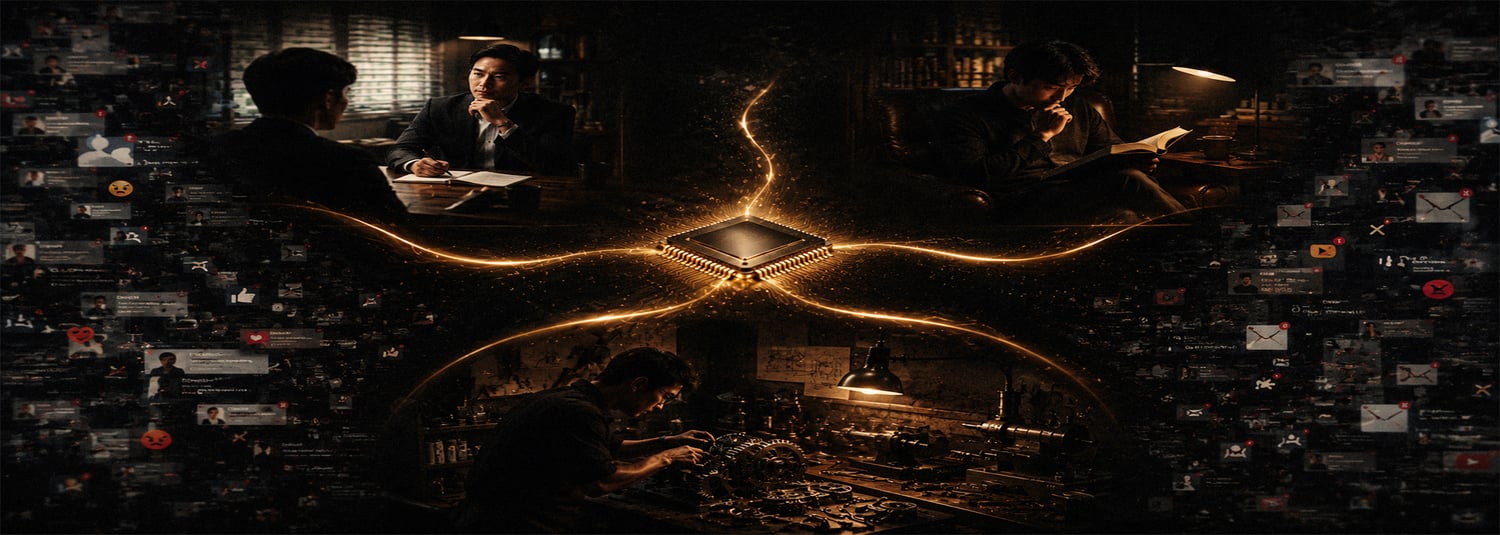
Artificial intelligence has made it so much easier to capture attention. A single prompt generates an article, a presentation, a marketing campaign, a polished resume, a product description, even a month's worth of social media posts... almost anything these days.
In many ways, that is an extraordinary achievement. It lowers the barriers to entry across many industries and understandably raises concerns about employment, revenue and income. However, attracting attention and earning trust are not the same thing.
A well-written resume may earn an interview; it does not earn the job.
A striking book cover may encourage someone to read the first page; it does not persuade them to finish the book.
A beautifully designed product page may generate clicks; it does not convince someone to spend their hard-earned money.
Attention opens the door.
Trust determines whether anyone chooses to walk through it.
For decades, businesses competed for visibility.
Today, artificial intelligence has dramatically lowered the cost of producing content that attracts attention. The internet is now filled with polished articles, impressive presentations and convincing marketing copy, much of it generated within minutes.
Yet something fundamentally remains unchanged. People are still deciding who they trust. Not because a piece of content looks professional but because experience eventually meets reality.
- What convinces a recruiter that the person behind the resume can actually do the job?
- What convinces a reader that an author is worth spending several hours with?
- What convinces a customer to buy a product they have never physically seen or touched?
Reality has a habit of revealing what appearance cannot. For better or worse, people often act on perception long before they discover reality. Perhaps then, Applied Intelligence begins where appearance ends. Not Artificial Intelligence.
Applied Intelligence
The ability to observe carefully, think critically, test ideas against reality and learn from failure; to build something that continues to work long after the presentation has ended and long after the algorithm has moved on.
Artificial Intelligence can help us write faster, design faster and publish faster.
Applied Intelligence helps us decide what deserves to be written, designed and published in the first place.
Applied Intelligence cannot be generated. It can only be demonstrated.
Applied Intelligence is difficult to fake because reality eventually audits every claim.
Compensation rarely follows attention. It follows trust. And trust is earned through consistency, competence and outcomes. It grows through the quiet confidence that comes from doing real work long after the excitement of being discovered has faded.
Perhaps the future will not belong to those who capture the most attention. It may belong to those whose work continues to deserve it.
Attention starts the conversation.
Trust determines whether it continues.