


The photograph was taken several years ago: three friends at lunch, enjoying a moment on an amusement ride.
Today, our combined ages exceed 150 years and between us we have more than 100 years of professional experience. The three of us came from audio engineering and music production, with a shared love of the work. We learnt early that a shared passion does not guarantee a shared outcome or a sustainable livelihood. That realisation led us to take our careers in different directions decades ago.
Looking at that photograph now, I find myself thinking about the advice we keep receiving and giving throughout our working lives.
- Keep learning.
- Keep adapting.
- Follow your passion.
- Keep moving forward.
All reasonable enough, until we are asked what the effort is supposed to deliver and how long we can afford to keep investing in it.
Experience and continued learning may produce better work within a familiar field. Moving into another industry carries a different cost: rebuilding credibility, establishing new relationships and finding out how much of our previous experience a new employer will recognise. A career switch depends on opportunities being available and may require the person to accept a lower income or a less senior role while starting over.
Neither path automatically produces a financial return. Becoming capable of doing something and earning a living from it remain separate problems. Yet when an outcome is explained only through an individual’s skills, attitude or willingness to adapt, the role of employers, market demand and access to opportunities disappears from view.
An encouraging national statistic can coexist with an unresolved individual problem. The person still has to find work, meet expenses and carry the consequences of yet another attempt that did not pay off.
The bills arrive whether the work finds a paying audience or not.
NVIDIA’s announcement on 12 November 2026 of Jensen Huang’s resignation after 33 years brings his career back into focus. The more revealing story, however, is how the company began in 1993.

Huang brought engineering experience from AMD and LSI Logic, alongside relationships that helped secure funding. In a Sequoia Capital interview, he recalled how former boss Wilfred Corrigan introduced him to investor Don Valentine and recommended backing him.
Someone who knew his work was willing to stake his reputation on him; someone else was willing to commit the money.
That money did not make commercial success inevitable. NVIDIA’s early products encountered serious problems. Huang described a later crisis in which Sega released the company from a development commitment while continuing payments, giving NVIDIA enough time to change direction.
The engineering mattered. So did access to people willing to finance another attempt. For those without that backing, one failure can exhaust every means to try again.
Investment is not revenue and neither automatically means profit. But funding can pay for development before customers are ready to pay for the result. It can keep people working long enough to discover whether the business will work at all.
That part deserves as much attention as the founder’s vision. Encouragement becomes materially different when it pays salaries, buys equipment, keeps the lights on and puts food on the table.
An engineer with backing operates under very different conditions from even an accomplished founder financing every experiment personally. That difference cannot be explained solely in terms of motivation, willingness to learn or the quality of either person’s ideas.
Michael Jackson’s Neverland illustrates another side of the same problem.
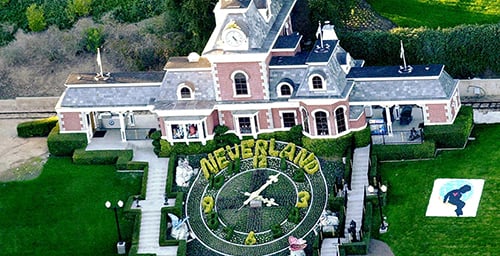
Jackson bought an existing Californian estate and developed it into a highly personal environment, with amusement rides, animals, railway facilities and entertainment spaces. His musical career helped finance its development but maintaining the estate required continuing funding. Journalist Ethan Smith reported peak annual running costs of approximately US$10 million, with around 150 staff. A ticketed gathering was advertised in 2003 but that did not establish that its operations could support themselves financially.
Neverland was principally a private home and entertainment estate and it did not have to make a profit to mean something to Jackson. Personal enjoyment and hospitality can be legitimate reasons to spend money but as its owner, he still had to meet the costs.
The financial strain appeared during his lifetime: Neverland faced foreclosure before Colony Capital intervened in 2008. After years of sale attempts, it reportedly sold to Ron Burkle for US$22 million in 2020.
That was only US$2.5 million above the commonly reported US$19.5 million purchase price more than three decades earlier. The modest nominal increase was before accounting for inflation, let alone the money spent on improvements, maintenance and financing. It cannot be treated as a lifetime profit or evidence that the cost of creating Neverland was recovered.
Whatever Jackson had invested in the estate, that investment did not determine its resale value. Prospective buyers could assess the property on their own terms, negotiate or walk away. The money spent and the personal significance attached to Neverland did not guarantee a corresponding price. What mattered so much to him did not have to matter to them. Neverland’s story also demonstrates the continuing obligation created by something expensive to maintain. Building it once does not settle what happens next.
Jackson had music and publishing income between major projects. But the problem was more complicated than waiting for another concert cheque: accounts of his finances describe spending exceeding income and increasing borrowing against valuable assets.
Even when substantial earnings arrive intermittently, the bills still have to be paid in between.
Warren Buffett offers a third perspective.
At Berkshire Hathaway’s 2008 annual meeting, he said:
“We do little variations of it but we kept doing the same thing for years and we’ll keep doing it.”

He was describing Berkshire’s steady growth through the businesses it owned and continued to acquire. His shareholder letters emphasise the underlying economics of what he owns.
The useful lesson is consistency applied to something economically productive. Repeating what continues to earn money can be a sound business decision. Repeating an activity does not, however, make it profitable merely because we become more skilled at it. Refining work that nobody buys can leave us with a better result and the same unpaid bills.
That is an uncomfortable distinction for anyone who has spent years acquiring new skills yet remains without paid work, while others earn steadily from doing the same thing over and over again.
Two articles published in 2026 about working life in Singapore bring these questions closer to home. Both present individual accounts rather than a representative picture of workers’ experiences.
The first describes mid-career workers reconsidering promotion because of its cost to health, relationships and time. A contributor wanted room for practical learning, pets, travel and creative interests. Another described stepping away from career advancement after paying off a housing loan.
Every financial detail matters. Someone whose lifestyle priorities have changed may choose to reduce their financial obligations. Having fewer expenses to cover can give them more options, including accepting a lower income and changing how they work.
The second article describes a worker questioning the expectation of spending an entire life continually adjusting to employers’ requirements. Lower pay may be acceptable if the work leaves them enough time and energy to live.
Other contributors pointed out the constraints: dependants, household expenses, healthcare and retirement.
One older freelancer regretted not having the financial security enjoyed by peers who remained in corporate employment.
For those who cannot afford to step away, the need to keep working means remaining in an endless cycle of learning, adapting and proving their relevance, without an equivalent obligation on those giving the advice to explain where all that effort leads.
These accounts do not supply a universal answer. They expose the costs on both sides. A demanding career can consume the life it is meant to finance, while a freer working life can leave someone unable to finance daily expenses, let alone the years ahead.
Neither problem is resolved by telling people to follow their passion.
Nor is it necessarily resolved by telling them to take another course.
The three examples bring us back to the financial conditions that sustain an undertaking. Huang had people willing to back the venture. Jackson had substantial earnings but continuing commitments that outgrew his means. Buffett described consistently building businesses with productive underlying economics.
In each case, capability and commitment were only part of the equation. The money had to come from somewhere and remain sufficient for what followed.
A worker may be capable, experienced and willing to learn, yet still need an employer prepared to hire them at a viable salary. A creator may complete excellent work and still need customers or a distribution partner. A venture may need financial backing before it can earn enough to sustain itself.
Further training can help when a gap in knowledge or ability is a meaningful barrier to paid work. But presenting subsidised lifelong learning as an answer to economic insecurity still requires a credible link to employment. Participants continue to bear the cost of their time, effort and any earnings forgone.
Learning can expand capability. It cannot compel a business to create a position, a recruiter to recognise experience or a customer to make a purchase. Those decisions sit elsewhere.

My experience of building Art Mechanics has made this distinction difficult to ignore. Continuing an undertaking requires some understanding of the financial conditions that make it possible. Sometimes, judgement means recognising that those conditions do not exist.
There should also be room to decide that work has a limited purpose in one’s life. Someone may want an adequately paid job that leaves energy for family, friendships or interests with no commercial ambition whatsoever. Learning a skill for enjoyment does not create an obligation to turn it into another income stream.
The three friends in that photograph share a professional background. Our different paths have changed how I hear the next invitation to keep learning, keep adapting and keep moving forward.
Before asking for another investment of someone’s life, explain how it could pay off and who carries the cost if it does not.