

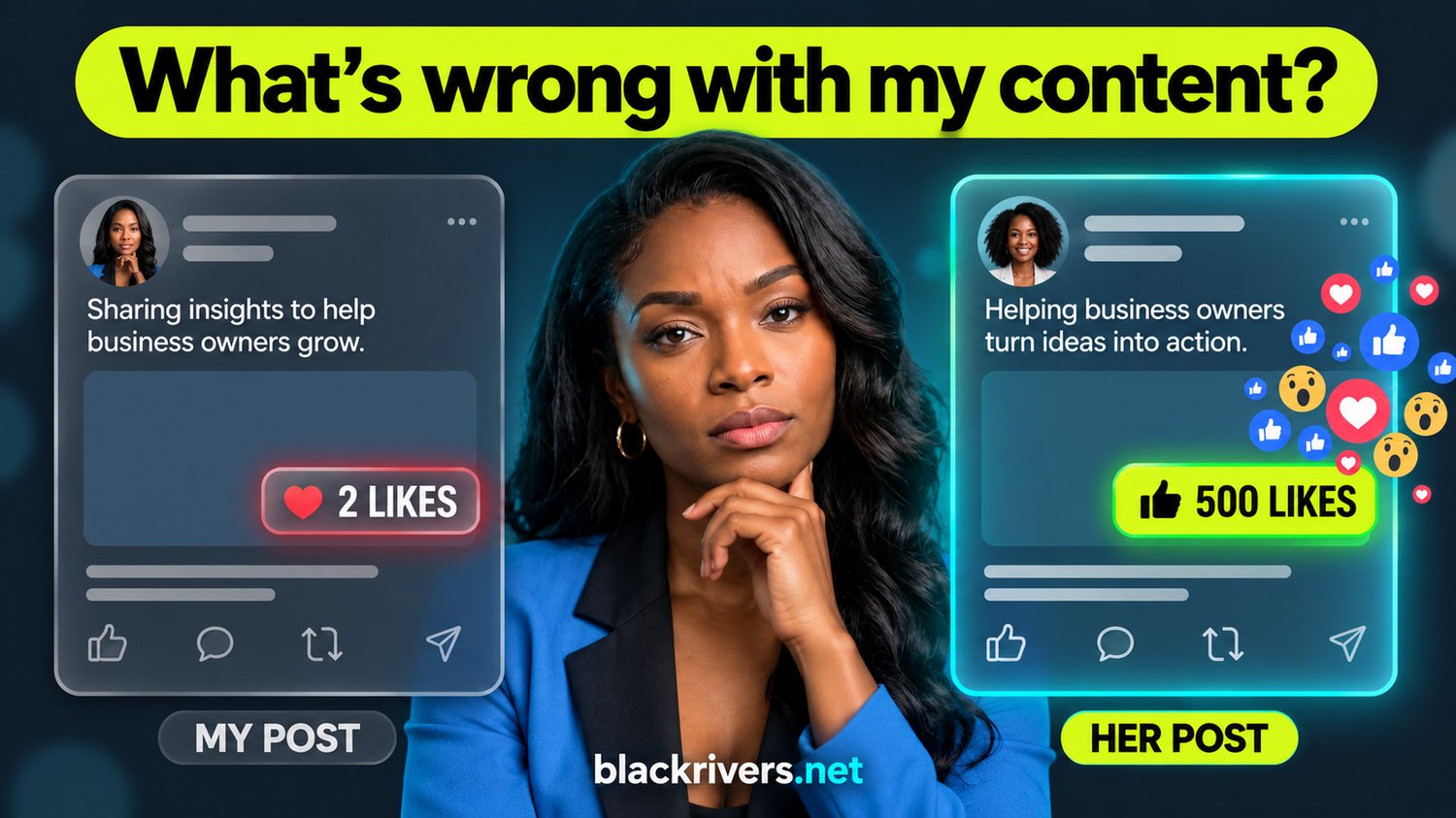
Quick Answer: Unusually high engagement can involve paid promotion, company networks, or coordinated engagement communities, alongside genuine audience interest. Public likes cannot reveal which explanation applies. For business owners, the useful response is to investigate distribution, audience relevance, and downstream actions—then build a newsletter strategy around evidence from their own business.
Four Reasons Some Posts Receive Extraordinary Engagement

1. The business paid to promote its Page content
A business can pay to distribute eligible content beyond its ordinary organic audience. LinkedIn offers boosting for company Pages. Someone’s impressive results may therefore reflect advertising investment as well as the content itself.
You are not making a fair comparison if you judge your unpaid results against a campaign with a budget you cannot see.
2. The personal-profile post received paid distribution
Paid promotion is also available for eligible personal-profile posts. A post appearing under someone’s name is not proof that all its exposure was organic. Availability and requirements depend on the applicable product and account eligibility.
That does not diminish legitimate advertising. It means you need to understand what produced the result before copying the strategy.
3. An established company network supported the discussion
Employees, colleagues, partners, and professional contacts can genuinely contribute to a conversation. Someone with a substantial company network starts with different relationships from an independent consultant building an audience.
This is a plausible explanation, not something you can establish from the reaction count alone. Genuine discussion is also different from mandatory or reciprocal engagement arranged to inflate numbers.
4. An external engagement community manufactured activity

Some groups coordinate likes, comments, and shares to make posts appear more popular. LinkedIn identifies engagement pods as prohibited inauthentic activity and says it can limit distribution or restrict accounts involved.
These four explanations deserve attention. They are not an exhaustive account of successful content: established expertise, relevant ideas, and authentic audience interest also contribute.
The mystery becomes more manageable when you stop treating a public engagement count as the complete story.
The Commercial Problem Starts When You Copy the Wrong Benchmark

For founders, CEOs, owners, and managing partners, the desired outcome is usually a business opportunity: a relevant conversation, a qualified inquiry, or a potential client investigating your services.
Hundreds of reactions do not establish any of those outcomes.
If you copy a popular creator’s topics without understanding their audience or distribution you may spend weeks improving the wrong thing.
An IT consulting firm can attract technical peers while leaving prospective customers uncertain about its value. An agency can entertain other marketers without helping a business owner make a buying decision.
Before asking how to reproduce someone’s numbers, ask whether those numbers represent the outcome your business needs.
What LinkedIn Actually Says About Its Recommendation System

LinkedIn’s March 2026 engineering explanation describes language-model-based retrieval and a sequential ranking system. Its discussion includes professional profile information, content understanding, and member activity over time.
This is more complex than a formula where a particular number of comments in the first hour guarantees virality.
It also matters whose experience the signals describe. Your reading and engagement help personalize what you see; they do not give you a dependable switch for directing your own posts toward buyers.
My practical interpretation is straightforward: communicate the professional context clearly. Identify the problem, explain its business consequence, and make the relevance understandable to the intended reader.
Industry names and job titles can help establish that context. Repeating them cannot guarantee distribution.
What the Market Offers—and What Buyers Need
Consider a real provider’s process. Column describes founder interviews, writing and design, and paid promotion through Thought Leader Ads. Its offer illustrates how professional content services can combine voice capture with distribution. These are the provider’s stated services, not independent proof of its results.
On the buyer side, Edelman’s summary of its 2025 research with LinkedIn emphasizes accessible language and fresh perspectives among less visible buying stakeholders. Those survey findings concern reported preferences, not proof that a particular article generated sales.
Read together, the useful insight is that production, distribution, and buyer usefulness are separate questions.
A founder should evaluate all three. Compelling writing needs a relevant subject; wider exposure needs a useful destination; buyer interest needs a credible next step.
Our Analytics Gave Us a Reason to Develop Newsletters

We examined 228 posts in our export covering June 16 through October 25, 2026.
Of those, 88 were newsletter editions—approximately 39% of our posts.
Those editions generated 30,430 of 40,829 impressions, approximately 75% of the total. They also accounted for 54 of 66 attributed followers gained, approximately 82%, and 115 of 170 attributed profile viewers, approximately 68%.
That was a meaningful signal for our publishing decisions.
However, the results came from one account, with different subjects and unequal time since publication. They do not prove that newsletters caused more sales.
Publishing equal numbers of each format would also require a real test. An equal-volume calculation can illustrate historical rates, but it cannot establish what additional posts would actually achieve.
Our conclusion is that newsletters earned further investment and investigation in our strategy.
Why a Newsletter Creates a Different Opportunity
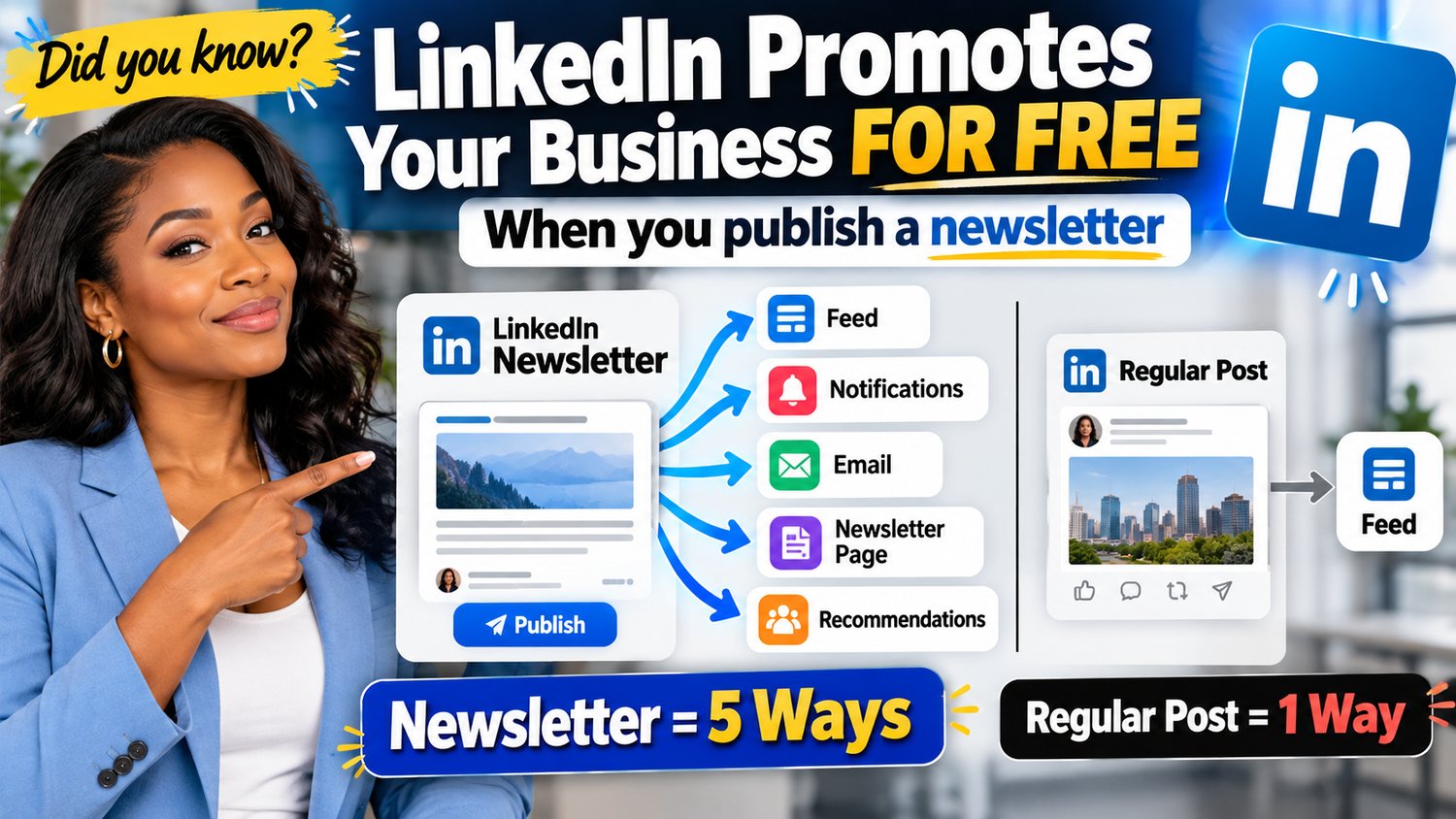
A newsletter gives readers a subscription relationship and an archive of related editions.
LinkedIn supports newsletter discovery and subscriber notifications, including email, subject to settings. Its FAQ cautions against expecting duplicate notifications across every enabled channel.
That gives a consulting firm room to develop a business problem beyond one short post.
An edition can explain why recommendations fail during implementation. Another can examine unclear responsibilities. A third can show how to evaluate progress.
Together, the articles help readers assess the firm’s thinking.
Feed posts can introduce those ideas and invite discussion. The question is how the formats work together to help an interested reader understand the business and its offer.
Replace Imagination Marketing with Evidence

I call it “imagination marketing” when topics come mainly from what sounds interesting, without investigating what potential customers need to understand.
Start with competitors’ offers, positioning, FAQs, and proof. Compare those with customer interviews, legitimate reviews, sales questions, and recurring objections.
Look for an unresolved buying question.
If agency customers repeatedly question reporting clarity in the evidence you collect, investigate content about meaningful measurement. If consulting customers describe difficulty implementing recommendations, examine that problem.
Treat those themes as hypotheses until the evidence supports them. One complaint cannot establish a market-wide pattern.
For the next edition, choose one buyer question, gather evidence from both sides of the market, and write down what would count as a useful response. After publication, record the result and the uncertainty. That gives the next editorial decision a basis you can inspect
.
Then contribute your own experience: what have you seen, what judgment can you explain, and what can a reader use independently?
Give AI the Research and Your Professional Thumbprint

Our 50-question interview is designed to capture the founder’s experience, perspective, customer knowledge, and examples.
Combined with competitor research and customer insights, those answers give AI a stronger foundation for drafting.
The founder still confirms the meaning. Research claims still require verification. Client examples need accurate details and appropriate permission.
Review performance monthly, separating impressions from relevant conversations, tracked website visits, and bookings. Investigate which themes deserve another test and which attracted an audience with little connection to the offer.
We can teach you this process or ghostwrite your newsletter with your input.
The goal is a repeatable system that learns from evidence and helps potential clients understand why your expertise matters.
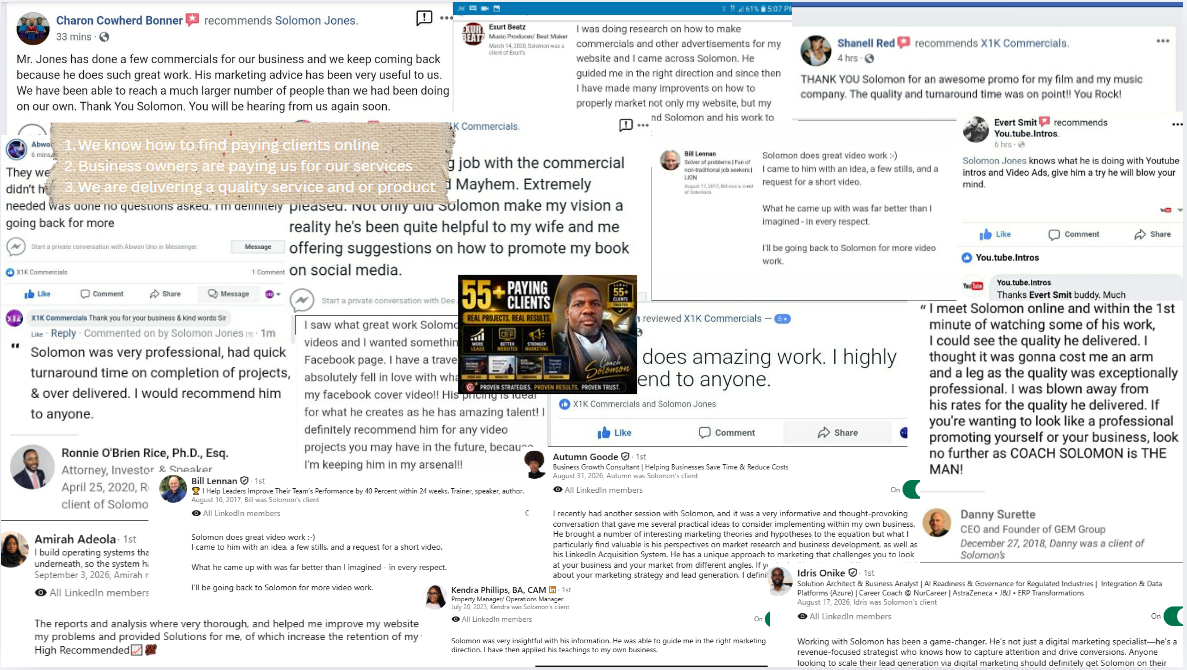 .
🚀 Professional LinkedIn strategy. Experience serving 55 paying clients. A free opportunity to examine what’s holding your marketing back.
I’m helping business owners identify gaps in their LinkedIn messaging, content, and path to qualified appointments—starting with a FREE 15-minute LinkedIn Marketing Diagnostic. 🔎
Where else can you get an experienced marketer’s perspective on your business at no cost?
Comments ()