
Ever looked at a driveway after a big rain and thought, “Why does my gravel keep disappearing?” You’re not alone. Water is sneaky. It doesn’t just sit there. It finds the soft spots, cuts tiny channels, and slowly pulls your driveway apart.
That’s where driveway culvert installation comes in. It’s one of the simplest ways to control water flow before it turns into a real mess. And yes, it’s also one of the most overlooked parts of Excavation work on rural and semi-rural properties.
Why Erosion Starts at the Driveway
Erosion usually begins with one thing: unmanaged water.
When rain or melting snow has nowhere to go, it follows gravity. It runs down the driveway, around the edges, and into low spots. Over time, that movement:
- washes away gravel
- softens the base
- creates ruts
- causes pooling and potholes
- damages nearby landscaping
And the worst part? It often starts small. People ignore it because it looks like “just a little washout.” Then one storm later, it becomes a driveway repair project.
What a Culvert Actually Does
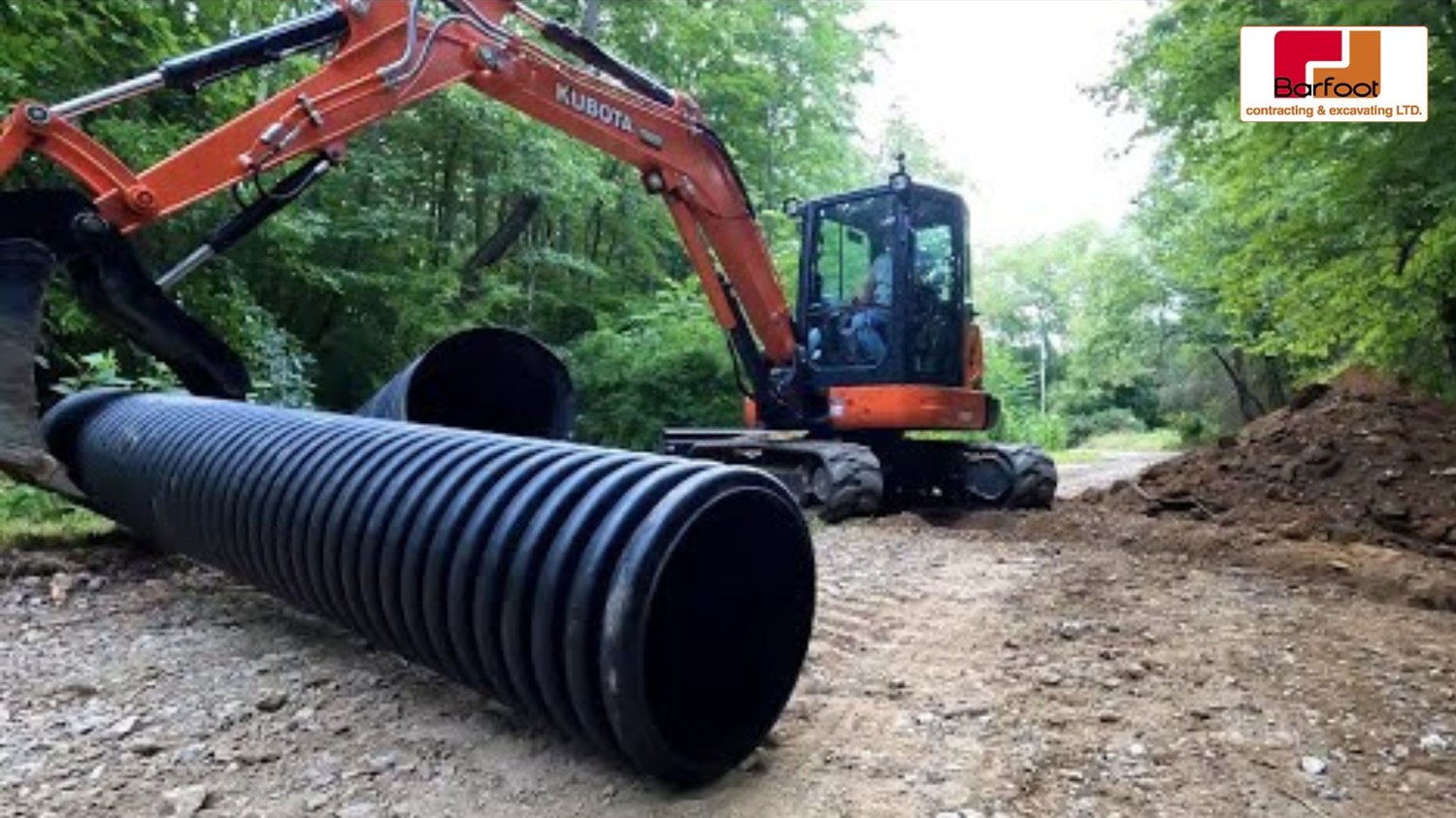
A culvert is basically a pipe that lets water pass under your driveway.
Instead of water rushing across the surface and dragging gravel with it, the water gets redirected under the driveway and out the other side.
Think of it like giving water a shortcut so it doesn’t destroy your hard work.
The Hidden Damage Water Can Cause
Here’s the part most people don’t realize: erosion doesn’t just wreck the top layer. It can mess with the structure underneath too.
If water keeps pushing through the same areas, it can:
- weaken the driveway base
- create soft spots that sink under vehicle weight
- shift the driveway grade over time
- cause edge collapse near ditches
- lead to larger drainage issues on the property
So if you’re constantly re-graveling and wondering why it never lasts, the issue may not be the gravel. It’s the water.
Common Signs You Need Better Drainage
If you’re not sure whether a culvert is needed, here are some easy clues.
Look for these red flags:
- water crossing the driveway during rain
- gravel washing into the ditch
- ruts forming in the same spots
- puddles that sit for hours or days
- driveway edges breaking down
- ice buildup in winter from poor drainage
And yes, you can still have a “good-looking” driveway and have drainage problems. A driveway can look fine on a dry day and still be set up to fail.
The Role of Grading (Because Water Needs a Direction)
A culvert isn’t magic on its own. It needs proper grading.
Grading is what makes water move where you want it to move. Without it, water will still run across the driveway, even if a pipe is installed.
A good driveway setup usually includes:
- a slight crown or slope
- clean ditch lines
- stable shoulders
- drainage that stays open over time
Or to put it simply: if the driveway doesn’t guide water, water will guide itself.
How Installation Helps Long-Term Driveway Health
When done right, culvert work does more than prevent erosion. It protects your driveway investment.
This is why many pros treat it as part of the full Excavation plan, not a last-minute add-on.
A properly installed culvert helps:
- keep gravel in place
- reduce the need for frequent repairs
- stop rutting and washouts
- support safer winter conditions
- protect nearby land from runoff damage
And honestly, it just makes life easier. Nobody wants to fix the same driveway problem every spring.
Key Factors That Make a Culvert Work Well
Not all culverts perform the same. A lot depends on planning and placement.
A culvert works best when:
- it’s sized properly for the water flow
- it sits at the correct angle
- it has stable backfill and compaction
- the driveway surface is graded correctly
- ditch lines stay clear on both sides
Here’s a simple truth: most culvert problems happen because someone installed a pipe, but didn’t manage the water leading into it.
What Homeowners Should Ask Before the Work Starts
Before any work begins, homeowners should ask a few basic questions.
Smart questions to ask:
- Where is the water coming from?
- Where should it exit?
- What size pipe is best for this area?
- How deep will it be placed?
- How will the driveway be rebuilt above it?
- Will this reduce washouts long-term?
One contractor quote that sticks with a lot of people is:
“If you don’t control the water, the water will control the driveway.”
And that’s not just talk. It’s the whole game.
The Most Common Mistakes People Make
If you want a culvert that actually prevents erosion, avoid these common errors:
- installing a pipe that’s too small
- placing it too high so water can’t reach it
- skipping compaction and proper fill
- leaving ditches uneven or clogged
- failing to rebuild the driveway surface correctly afterward
A culvert should feel like it’s part of the driveway, not like something that was “stuffed in” under it.
Final Takeaway
Barfoot Contracting has spent over 24 years working on rural and residential properties where drainage problems are common and often underestimated. Their approach focuses on real-world solutions, not shortcuts. They understand that a gravel driveway is only as strong as the ground beneath it and the water flow around it.
Instead of treating erosion as a surface issue, Barfoot Contracting looks at the full layout of the driveway, the slope of the land, and how water moves across the property. That bigger-picture thinking is what helps homeowners stop repeating the same repairs year after year. In the end, the best driveway is not the one that looks perfect today. It’s the one that still holds up after the next heavy rain.