
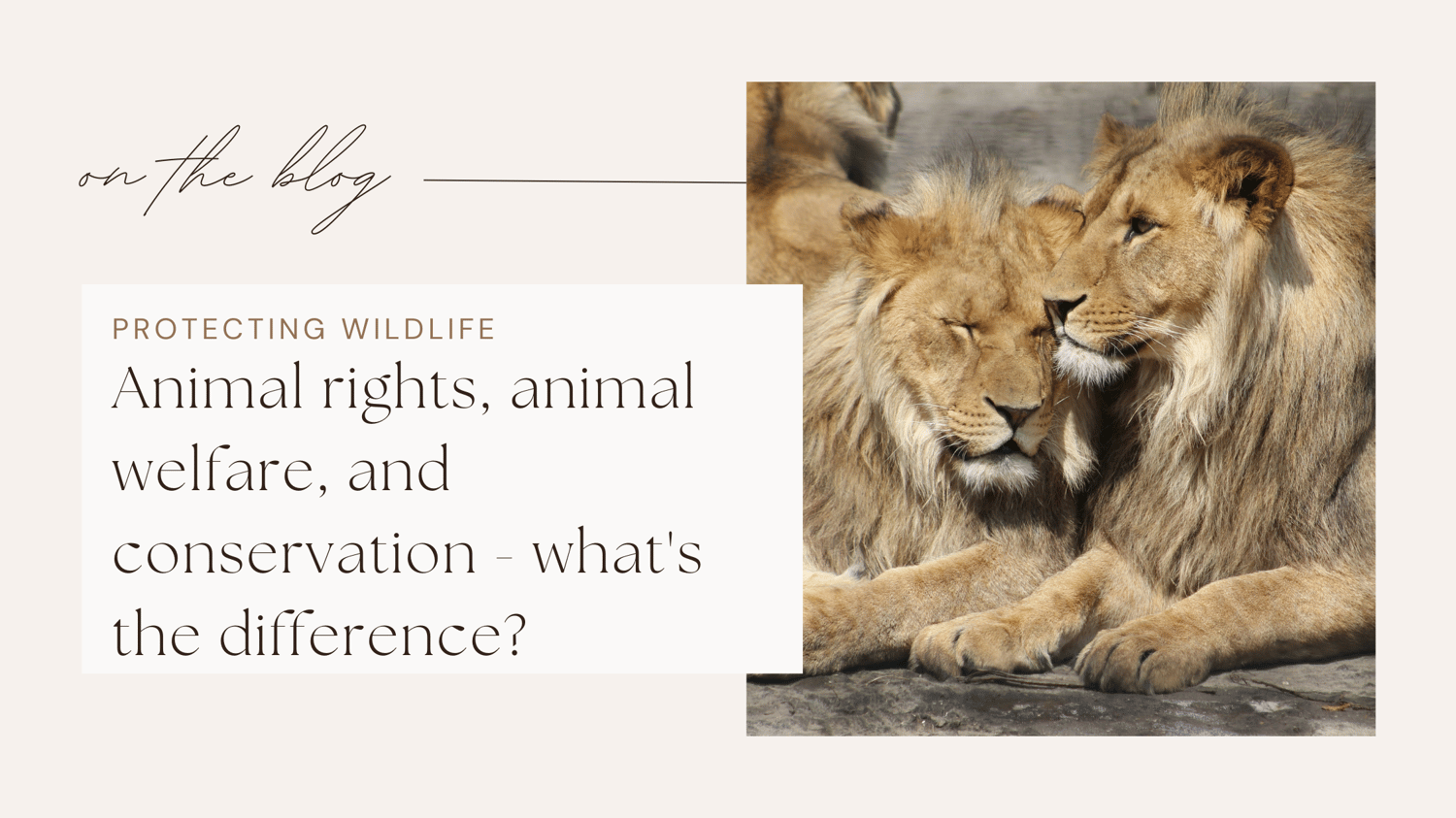
Understanding different approaches to animal protection is important for ensuring you choose the right path for your animal advocacy efforts. Discover more about what roles suit your skill set, interests, and experience in our Wildlife Career Accelerator and Wildlife Work Directory.
When it comes to protecting wild animals, three interconnected yet distinct approaches often come into play: animal conservation, animal welfare, and animal rights. Each has unique goals, methods, and ethical perspectives, shaping the way society interacts with wildlife.

[Credit Gwen Weustink]
Animal Conservation
Animal conservation focuses on preserving wildlife species and their natural habitats. It addresses threats such as habitat destruction, climate change, and poaching to ensure the survival of species. Conservation efforts often aim to maintain biodiversity, recognising the ecological importance of every species within an ecosystem. Conservationists may employ strategies like rewilding, anti-poaching initiatives, and protected area management. Organisations like the World Wildlife Fund (WWF) and Panthera are key players in this field, emphasising a balance between human development and ecological health.
Animal Welfare
Animal welfare prioritises the well-being of individual wild animals, ensuring they live free from unnecessary suffering. Welfare concerns are particularly relevant when humans directly interact with wildlife, such as in wildlife tourism or when wild animals are kept exotic pets, in commercial industries where wild animals are farmed and traded for commodities or killed for their body parts (e.g. for fashion or entertainment), and in wildlife rehabilitation and sanctuary settings. Organisations like Four Paws, World Animal Protection, and Born Free Foundation advocate for humane treatment of wild animals, ending exploitative practises and emphasising ethical practices that consider an animal’s physical and psychological health.
Animal Rights
Animal rights, in contrast, emphasise the inherent rights of wild animals to exist without human interference or exploitation. This philosophy often opposes practices like zoos, hunting, or any form of captivity. Advocates argue that wild animals have a right to live in their natural habitats without human-induced harm. Animal rights organisations, such as PETA (People for the Ethical Treatment of Animals), frequently challenge practices that commodify or disrupt the autonomy of wild animals.
While animal conservation seeks to protect species and ecosystems, animal welfare focuses on the humane treatment of individuals, and animal rights emphasise moral considerations and autonomy. Together, these approaches provide a comprehensive framework for addressing the complex challenges faced by wild animals today. Understanding these distinctions can help individuals and organisations choose their focus and contribute effectively to the protection and ethical treatment of wildlife. For a full list of organisations across these causes, check out our Wildlife Work Directory.
