
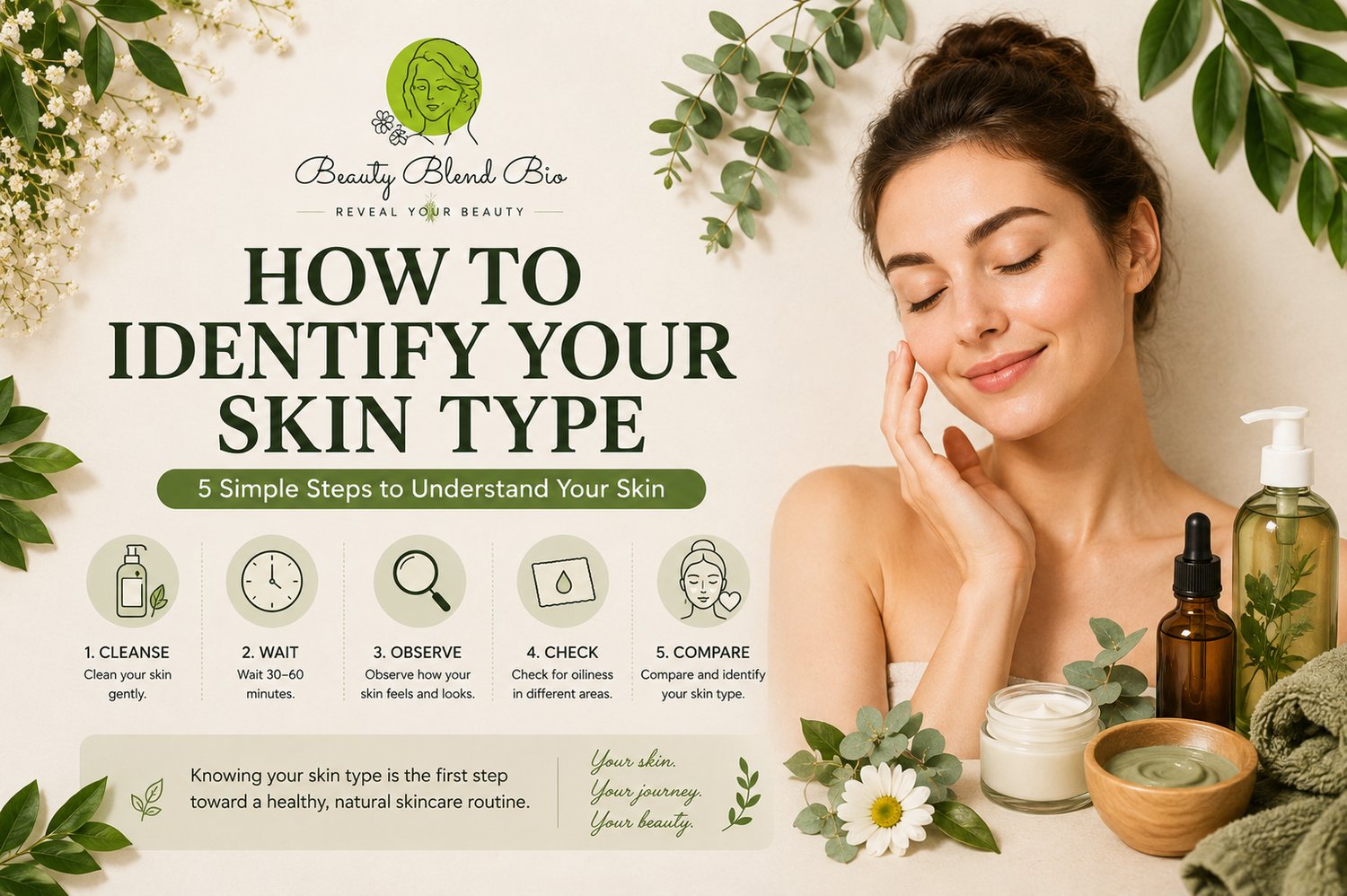
Do you really know your skin type?
Normal, dry, oily, combination, or sensitive?
Understanding your skin type is a simple first step toward making more informed skincare choices. Your skin type depends on how much oil (sebum) your skin produces, how well it retains moisture, and how it responds to different environmental and lifestyle factors.
How to Identify Your Skin Type
You can start with a simple observation test at home.
Step 1: Cleanse Gently
Wash your face with a gentle cleanser to remove dirt, oil, and makeup.
Step 2: Wait 30–60 Minutes
After cleansing, avoid applying skincare products for a short period. Give your skin time to return to its natural state.
Step 3: Observe Your Skin
Look at your skin in natural light.
Notice how it feels and looks. Does it feel comfortable? Tight? Dry? Does it look shiny?
Step 4: Check for Oiliness
If you have blotting paper, gently check different areas of your face, including your forehead, nose, cheeks, and chin.
Notice where oil appears.
Step 5: Compare Your Skin
Now compare your observations with the five main skin types.
NORMAL SKIN
Your skin feels comfortable and balanced.
DRY SKIN
Your skin may feel tight, dry, or flaky and may need more hydration and comfort.
OILY SKIN
Your skin may look shiny all over, with visible pores and occasional breakouts.
COMBINATION SKIN
Your skin may be oily in the T-zone — forehead, nose, and chin — while your cheeks are drier or more normal.
SENSITIVE SKIN
Your skin may become easily irritated, red, or sensitive to certain products or ingredients.
Quick Skin-Type Test
After cleansing and waiting, ask yourself:
A — Comfortable and balanced → Normal Skin
B — Tight, dry, or flaky → Dry Skin
C — Shiny all over, visible pores → Oily Skin
D — Oily in the T-zone but dry or normal on the cheeks → Combination Skin
E — Easily irritated, red, or sensitive → Sensitive Skin
Remember: Your Skin Can Change
Your skin can change with the seasons, hormones, stress, age, diet, and skincare products.
That means your skin type isn't necessarily something you should treat as completely fixed. Reassess your skin periodically and pay attention to how it responds.
Observe your skin. Listen to your skin. Adjust when needed.
🌿 Discover the Complete Guide
Want to understand your skin even better?
Know Your Skin: The Complete Guide to the 5 Skin Types is a 15-page digital guide from Beauty Blend Bio covering skin types, skincare routine basics, key ingredients, natural skincare, DIY skincare, common skincare mistakes, and DIY skincare safety.
Your skin. Your journey. Your beauty.
📖 Discover Know Your Skin today.
This content is provided for general educational and cosmetic-information purposes. Individual skin reactions can vary. If you have persistent or significant skin concerns, consider consulting a qualified healthcare professional.