

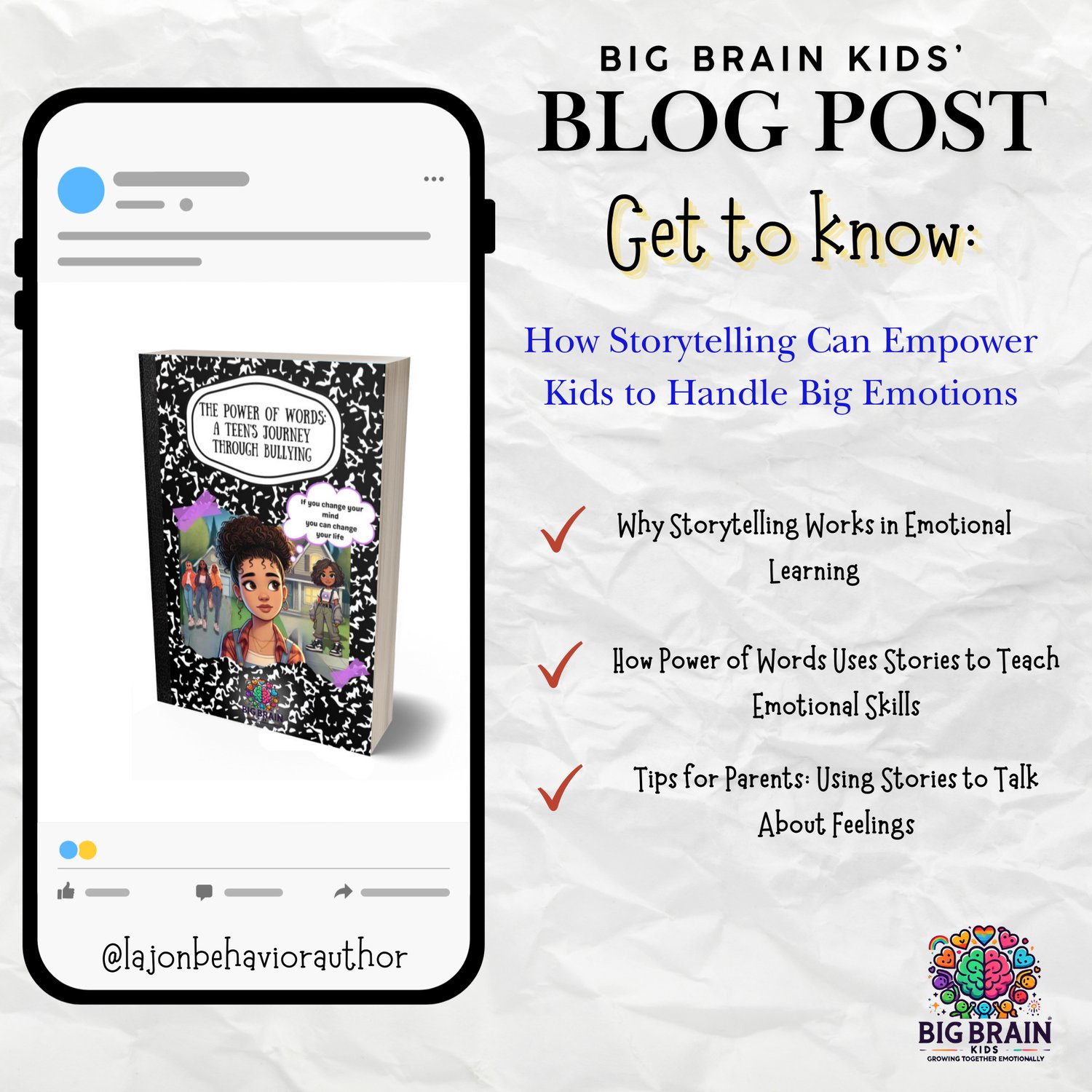
In a world filled with constant change and challenges, emotional resilience is one of the most valuable skills we can teach our kids. As a Registered Behavior Technician (RBT) specializing in behavioral and cognitive techniques, I’ve seen how storytelling serves as a powerful tool in helping kids understand and handle emotions. In my book, Power of Words, I use storytelling as a way to encourage emotional growth, making big feelings more approachable and manageable for young readers.
Why Storytelling Works in Emotional Learning
Storytelling helps kids engage with characters and scenarios that mirror their own feelings. This connection is especially beneficial for kids who may struggle to verbalize their emotions. When kids see characters working through difficult emotions, they recognize that it’s okay to feel sad, frustrated, or overwhelmed.
As an RBT, I use storytelling techniques grounded in Applied Behavior Analysis (ABA). These methods allow kids to identify their own emotions, understand the impact of their behavior, and learn more positive responses—all within a safe, engaging narrative.
How Power of Words Uses Stories to Teach Emotional Skills
In Power of Words, each story introduces relatable characters and situations that illustrate common emotional challenges kids face. Through each story, readers get to experience characters navigating their emotions, making mistakes, and finding solutions. This format shows kids that emotional management is a learning process, not an instant fix.
Tips for Parents: Using Stories to Talk About Feelings
1. Start with a Story: Begin by reading a story with an emotional theme. Ask questions about how the character might feel or what they might do next.
2. Relate to Real Life: After reading, encourage your child to share a similar experience. This helps them build connections between fictional emotions and their own feelings.
3. Discuss Positive Solutions: If the story involves a challenge, talk about how the character handled it. Ask your child what other options the character might have had, fostering critical thinking about emotional responses.
Conclusion
Storytelling is a simple yet impactful way to build emotional intelligence. By combining engaging narratives with practical tools, Power of Words helps kids become more comfortable with their emotions. As a parent, teacher, or caregiver, you can help kids use stories to understand and manage their feelings, setting a strong foundation for emotional resilience.
Comments ()