

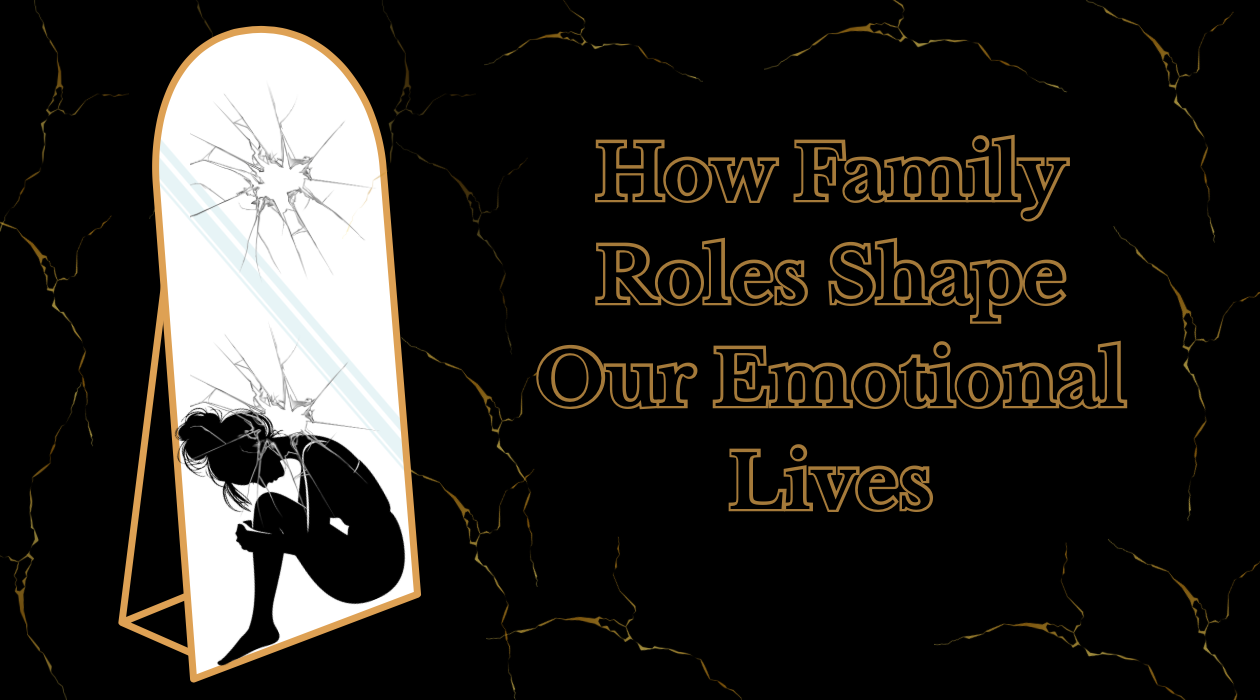
How Family Roles Shape Our Emotional Lives
Growing up, most of us didn’t realize we were being trained for a role not on a stage, but inside our own homes.
Some of us became the strong one, carrying emotional weight we never should’ve held.
Some of us became the scapegoat, blamed for the chaos we didn’t create.
Some of us became the quiet one, shrinking ourselves to stay safe.
And the truth is… these roles don’t disappear when we grow up.They become the lens we see the world through.They dictate our reactions, our relationships, our boundaries, and even the way we mother.
For years, I thought my personality was just “who I was.”But when I finally hit thirty… I started seeing my patterns clearly.I started understanding why I felt responsible for everyone.
Why I stayed silent even when I was hurting.
Why certain people treated me like the problem.
Why I over-explained, over-apologized, over-gave.
I wasn’t “just like that.” I was trained into a role. Let’s break down these roles gently because understanding them is the first step to healing them.
✨ The Strong One
The Strong One is the one who “never breaks.” The one who was praised for being mature, responsible, and selfless. People say things like:
- “You’re so strong.”
- “You always hold it together.”
- “We can always count on you.”
But no one asks if you’re tired. No one checks on the strong one. No one notices when you’re drowning quietly. Being the strong one often means:
- you learned to fix others before yourself
- you minimize your own pain
- you don’t know how to ask for help
- you feel guilty resting
- you carry responsibility that isn’t yours
- you confuse worth with usefulness
My own mother lived this role. It took me years to understand that “strong” wasn’t a personality it was survival mode. Strength wasn’t who we were. It was who we had to become.
✨ The Scapegoat
The scapegoat is the child the family labels as:
- “the problem”
- “the difficult one”
- “too emotional,” “too sensitive,” “too much”
Not because it’s true but because the family needs someone to absorb the dysfunction.
Scapegoats often:
- speak up about what others avoid
- sense emotional tension before anyone else
- call out the truth
- refuse to pretend
- get blamed for reacting to things others caused
- carry shame that isn’t theirs
And let’s be honest: Many Black and brown daughters were scapegoated simply for having boundaries, feelings, or individuality.
What gets labeled as “attitude” is often pain.
What gets called “drama” is often trauma.
What gets dismissed as “overreacting” is often the only honest reaction in the room.
Scapegoats grow into adults who:
- over-explain themselves
- expect rejection
- doubt their intuition
- apologize for existing
- stay in unhealthy relationships because chaos feels familiar
You weren’t the problem. You were the truth-teller in a house full of unspoken wounds.
✨ The Quiet One
The quiet one isn’t naturally silent she learned silence.
She learned:
- to stay small
- to stay out of the way
- to not cause waves
- to hold her emotions
- to make herself invisible when necessary
Quiet ones are often the emotional observers the ones who feel everything deeply but don’t feel safe expressing it. As adults, they may:
- avoid conflict
- struggle to say what they need
- people-please to stay safe
- freeze during emotional conversations
- disappear emotionally in relationships
Quiet wasn’t your personality. Quiet was your protection.
✨ How These Roles Shape Us as Women (and Mothers)
These roles don’t fade when we leave our childhood homes. They follow us into adulthood… and into motherhood.
The Strong One mothers by over-functioning.
The Scapegoat mothers through fear of failing.
The Quiet One mothers by disappearing emotionally.
And yet — beneath all these roles are daughters who didn’t get what they needed.
This is why we love hard but hurt deeply. Why we react fast but calm slowly. Why we feel responsible for everyone but barely cared for ourselves. Why we expect emotional scraps and call it love. Why we struggle to trust our own feelings.
These roles shape:
- how we show up
- how we love
- how we argue
- how we apologize
- how we parent
- how we let people treat us
But here’s the truth: A role is something you were put into. It is not who you are. And you can step out of it.
✨ Healing Begins When You Name the Role
Once you recognize your role, you can break the patterns tied to it.
Here’s where healing starts:
💛The Strong One learns to rest. And asks for help without guilt.
💛 The Scapegoat learns to stop carrying blame. And trusts their voice again.
💛 The Quiet One learns to speak up. And stops shrinking themselves to stay safe.
You don’t heal by being tougher. You heal by being softer with yourself than anyone ever was. You heal by giving yourself what your role required you to give up.
💌 A Note from Lily
Hey love,
I know you’ve carried roles that were never meant for you.
Roles that kept you safe, yes… but also kept you small.
You don’t have to earn love by being strong.
You don’t have to carry shame that isn’t yours.
You don’t have to hide your voice to keep the peace.
You are allowed to change your script.
You are allowed to rewrite your story.
You are allowed to be who you were before the family roles were assigned.
One gentle step at a time.
With love,
Lily
✨ Try This Today
Write down the role you played growing up:
The Strong One? The Scapegoat? The Quiet One? Something else?
Then write:
- What did that role cost me?
- How does it still show up in my relationships?
- What would healing look like for me?
- What do I deserve that my role didn’t allow me to receive?
Awareness is the first shift. Softness is the second. Change begins after that.
If this blog touched something in you if it made you see your childhood, your patterns, or your emotions more clearly you’re not alone. These roles shape so many of us, especially daughters who grew up learning to survive instead of being allowed to simply be.
If you’re ready to continue this healing journey, my journal Blurred Lines Between Us goes deeper with prompts, reflections, and emotional tools to help you break free from the roles you never chose.
✨ You can purchase your copy here: CLICK HERE
And I’d love to hear from you
What role did you play growing up?
Leave a comment and share your experience.
Your story might help another woman feel seen.
Comments ()