


Let me start with this: silence is sneaky.
It looks calm on the surface, but underneath it’s a storm. Too many of us grew up in homes where emotions weren’t just ignored — they were treated like enemies. Crying was weakness. Anger was disrespect. Joy that was “too loud” was embarrassing.
And so we learned early: tuck it in. Stay quiet. Don’t rock the boat.
But here’s the truth no one told us — what we don’t name doesn’t disappear. It just waits. It waits in your chest, in your jaw, in the way you slam cabinets or ghost people when you’re upset. And when it finally does come out? It’s usually sideways — sharp words, cold shoulders, tears you can’t explain.
That’s the emotion we’re all carrying but never naming. And it’s costing us more than we realize.
Growing up as the oldest of ten kids, laundry was my job. Let me tell you, there was always a mountain of socks. And the thing about socks? They didn’t get folded and matched — they just got tossed in a bin. “We’ll get to it later,” was the unspoken rule.
But “later” almost never came. We’d dig through that bin at the last minute, desperate for a match. Half the time you ended up frustrated, mismatched, or walking out the door without what you needed.
Feelings are the same way.
We throw them into the bin — sadness, anger, fear, disappointment — thinking we’ll deal with them later. But later rarely comes. And when it does, it’s at the worst possible time. Suddenly you’re pulling from the bin at the last minute, trying to match words to the weight in your chest, and it comes out wrong. Messy. Bigger than it had to be.
Unsorted socks don’t disappear. And neither do unspoken feelings.
Why Naming Your Feelings Matters
We were taught to see emotions as a problem. Messy. Dramatic. Weak. But here’s the real:
- What you don’t name doesn’t go away — it piles up. Just like that laundry bin, the more you throw in without sorting, the heavier it gets.
- Unspoken feelings create distance. Mothers and daughters can sit in the same room and feel like strangers because everything real is stuck in the bin.
- Naming is freedom. Saying, “I’m hurt,” instead of snapping, or “I feel overlooked,” instead of shutting down, isn’t weakness — it’s strength.
Think about it — you wouldn’t let dirty laundry sit forever. You sort it, wash it, fold it. Emotions need the same kind of care.
The Silence We Inherited
Here’s where it gets generational. A lot of us grew up on phrases like:
- “Stop crying before I give you something to cry about.”
- “You too grown to be acting like that.”
- Or that heavy silence — the look that shut your mouth before you even opened it.
Sound familiar?
I used to hate that “too grown” line. One minute I was “just a child” who didn’t get a say. The next minute I was “too grown” to feel angry, or too grown to be hurt by what an adult said or did to me. Which one was it? Child or grown?
Looking back, I see the truth: it wasn’t about me being “too grown.” It was about the adults around me not knowing how to handle their own emotions — and projecting that confusion onto me. And because I was a child, I didn’t have the power to push back. So I swallowed it. Played my role. Stayed quiet.
But silence doesn’t just sit still. It grows.
The Cost of Staying Quiet
Silence shows up later in ways we don’t even connect back.
- We shut down instead of speaking up.
- We ghost people who hurt us instead of setting boundaries.
- We snap over small things because big things were never named.
- We raise our kids the same way we were raised, even when we swore we wouldn’t.
It’s not strength. It’s survival. And survival might keep you alive, but it won’t teach you how to live.
Being the One Who Said, “This Ends With Me”:
In my family, silence wasn’t just a habit — it was survival. Everybody played their part, pretending nothing happened, sweeping pain under the rug. But me? I was the one who finally put the spotlight on the trauma.
And let me tell you — that is not an easy role to play.
It feels lonely. Risky. Uncomfortable. Because when you break silence, you break the script. You call out what everyone else decided to ignore. And sometimes, they’ll make you feel like you’re the problem just for naming the truth.
But here’s the thing: if somebody doesn’t say, “This ends with me,” the cycle just keeps spinning. And the cost is too high — broken families, unspoken resentment, daughters growing up into women who don’t know how to use their voice.
I refused to pass that down.
The Emotion Wheel: Naming What’s Real
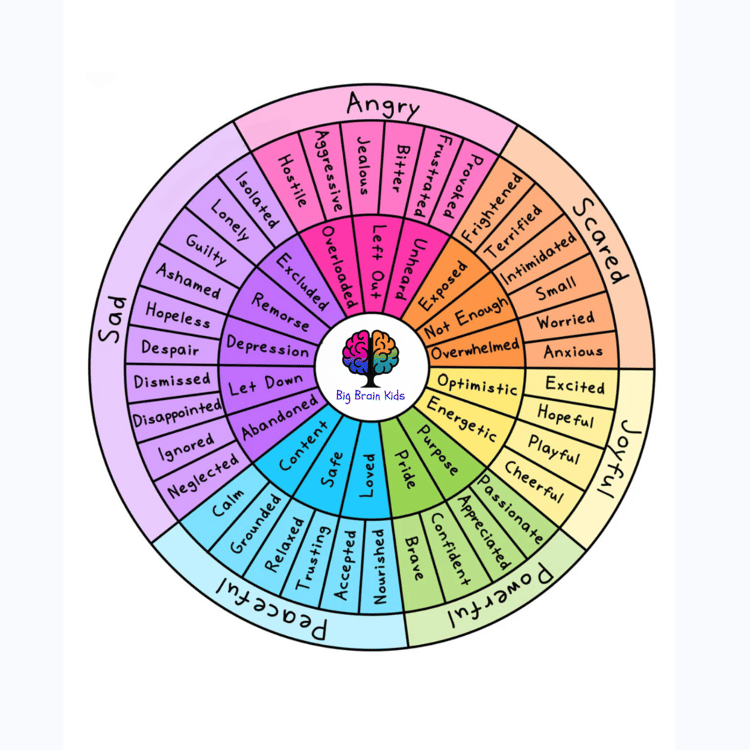
This is why the first step in The Blurred Lines Between Us is all about naming feelings. The Emotion Wheel is a simple but powerful tool that helps you put real words to what you’re carrying.
Here’s a mini-version you can try right now:
- Draw three columns: Often Felt, Wish I Felt More, Hard to Talk About.
- Fill in one emotion under each.
- Often Felt → anxious
- Wish I Felt More → peaceful
- Hard to Talk About → resentful
Look at your answers. Which column feels heavy? Which one feels empty? That’s your starting point.
Naming feelings doesn’t fix everything, but it opens the door. Because the truth is — if you don’t name it, it will name you.
When mothers and daughters start naming feelings, three powerful shifts happen:
- Trust builds. Honesty creates safety.
- Assumptions stop. No more guessing games about silence or moods.
- Healing begins. You can’t fix what you can’t name.
It might feel awkward at first. It might sting. But awkward honesty is better than polished silence every single time.

Hey, love.
I know naming your feelings feels risky. You’ve been trained to believe keeping it in is safer. Like if you tell the truth, it’ll be used against you.
But here’s the reality: silence has already been costing you more than honesty ever will.
So here’s my challenge for you:
- When silence feels easier, speak anyway.
- When pride tells you to shut down, lean in.
- And when you can’t find the words? Write them.
And when it’s your turn to listen — just listen. Don’t fix, don’t defend. Sometimes the most healing words are: “I hear you.”
Naming your feelings might feel messy. But silence? Silence is the mess you’ve already been living in.
With love and truth,
Lily
Try This Today
Take five minutes. Write down one emotion you’ve been carrying but never named out loud. No filter. No pretty words. Just the truth.
If you’re ready, share it with your mom or daughter. If you’re not, keep it for yourself. Naming it is still progress.
Silence is heavy. It’s generational. It’s dangerous.
But the good news? It’s not permanent.
You can stop carrying bins of unspoken feelings. You can stop pretending mismatched emotions don’t matter. You can be the one who says, “This ends with me.”
And when you do, you don’t just change your relationship with your mother or your daughter. You change the blueprint for every relationship that comes after.
Healing begins with one simple act: naming what’s real.
Comments ()