

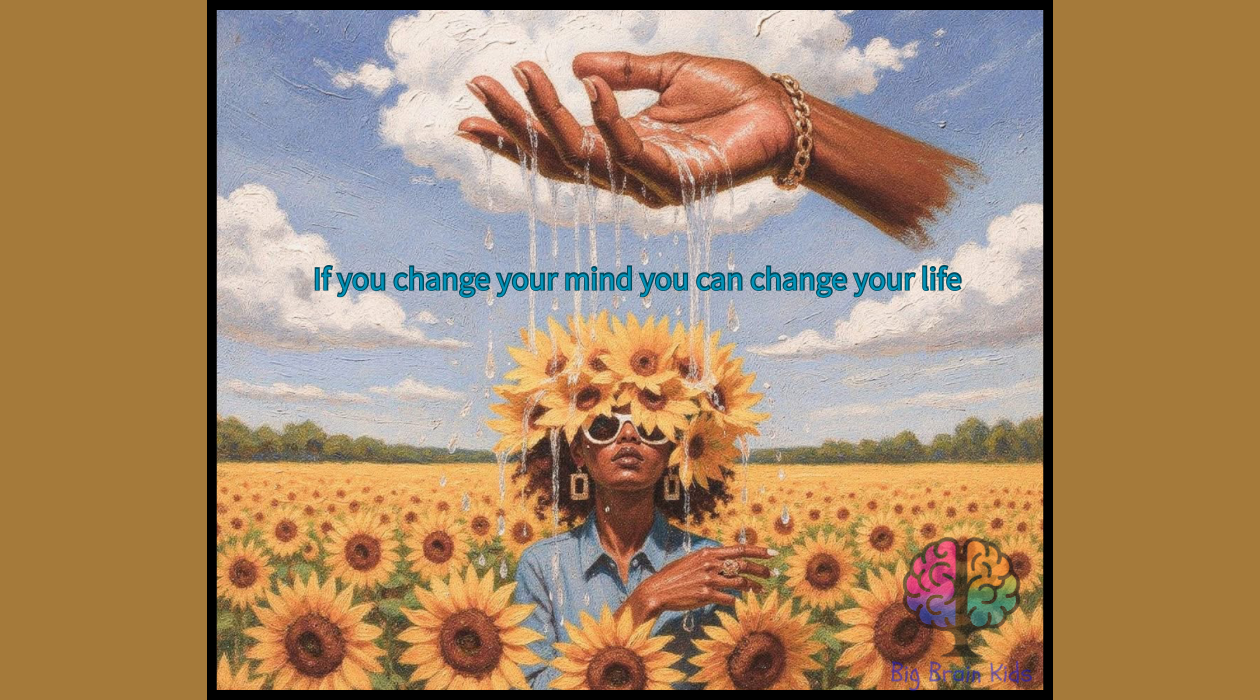
Understanding fight-or-flight, emotional overwhelm, and the underdeveloped “thinking brain” and how things started clicking for me at 29.
There are some things I wish someone would’ve explained to me a long time ago not in a textbook way, but in a “girl, let me tell you what’s really happening inside you” way.
Because the truth is this:
Your brain develops in parts. And if you grew up in chaos, stress, trauma, or emotional neglect some of those parts don’t get the chance to fully develop.
And that affects everything:
- the way you parent
- the way you argue
- the way you love
- the way you pick people
- the way you handle conflict
- the way you respond when triggered
- the way you see yourself
It took me until I was 30 years old to finally understand what was happening around me not just in my relationships, but inside my own brain.
I didn’t grow up with calm. I didn’t grow up learning emotional regulation. I didn’t grow up seeing people stop, breathe, reflect, or think before reacting.
Most people in my life moved from emotion first.
They wrapped survival behaviors in the language of love.
They called chaos family.
They called control protection.
They called fear respect.
And I carried that into adulthood without question because… it was all I knew.
My Final Breaking Point Came at 33
33 was the first time I truly put boundaries in place.
33 was when I said, “Enough. I can’t keep bleeding emotionally and calling it normal.”
33 was when I realized I had to heal myself so I could save myself and protect my daughter’s emotional future.
And let me be honest with you…
I still look around at grown adults and wonder how so many people don’t use critical thinking, self-reflection, or basic emotional skills.
But then I remember:
Most adults are walking around with underdeveloped emotional brains — not because they’re bad people, but because they were taught survival, not safety.
And if you grew up in the church?
Oh, that’s a whole layer by itself.
In my house, the church played a huge role in shaping what “love” and “obedience” meant…
but the actions and the words never aligned.
Scripture was used as a weapon, not a lesson.
Respect was demanded, not taught.
Emotions were minimized, spiritualized, or silenced.
“Pray about it” replaced accountability and healing.
Nobody talked about trauma.
Nobody talked about the brain.
Nobody talked about emotional development.
They talked about behavior…
but never explained the why behind the behavior.
So we grew up learning to suppress, not process.
To perform, not express.
To survive, not feel.
Learning the Science Helped Me Name My Pain
When I finally learned how the brain actually works, the lightbulb went off:
It wasn’t just my childhood.
It was my nervous system.
It was my emotional brain.
It was my underdeveloped thinking brain.
And once I put a name to the pain, I could finally feel it all of it.
The good, the bad, the confusing, the heavy.
Feeling it didn’t break me.
It freed me.
Because you cannot heal what you’re still pretending doesn’t hurt.
The Three Parts of the Brain (And What Happens When They Don’t Fully Develop)
I’m going to explain this the way I wish someone explained it to me.
1. The Survival Brain (Fight–Flight–Freeze)
This part reacts FAST. No thinking, no breathing, no pausing.
Most of us grew up here.
Some of us lived our whole childhood here.
Some of us are still stuck here as adults.
This is the part that makes you:
- yell before you process
- panic
- shut down
- get defensive
- say hurtful things
- feel overwhelmed
If your home growing up was chaotic, unpredictable, abusive, or emotionally unsafe your survival brain became the boss.
2. The Emotional Brain
This is where your big feelings live.
It controls:
- attachment
- connection
- sensitivity
- emotional memory
When this part is overactive and the thinking brain is underdeveloped, you go from 0 to 100 fast.
It’s not drama.
It’s not immaturity.
It’s unregulated emotion without a buffer.
3. The Thinking Brain (Prefrontal Cortex)
This is the part responsible for:
- common sense
- logic
- problem solving
- impulse control
- pausing
- perspective
- empathy
This is the LAST part of the brain to develop and the first part to fall apart when you’ve lived in survival.
If nobody taught you:
- how to breathe
- how to reflect
- how to pause
- how to think
- how to question your reactions
- how to calm your body first
then this part of your brain never got the exercise it needed to grow strong.
Not your fault.
Not your weakness.
Just your wiring.
When These Three Parts Aren’t Connected
Disconnection in the brain shows up like this:
- reacting instead of responding
- emotions overpowering logic
- taking everything personally
- seeing danger in harmless conversations
- explosive arguments
- shutting down
- not being able to calm down
- repeating the same patterns no matter how much you “want to change”
- parenting from fear
- attracting the same type of relationships
- feeling like people are always “coming for you”
This is why mother–daughter relationships feel so intense:
Mom is triggered.
Daughter is triggered.
Neither feels safe.
Neither has the tools.
Both are operating from survival, not connection.
This Is Why I Had to Heal Even If My Mother Wouldn’t Join Me
My mother and I couldn’t heal together.
That’s not the picture-perfect ending people want to hear about.
But it’s the truth.
And the truth is still healing.
It’s not too late for her.
It’s not too late for my siblings.
It’s not too late for our family line.
But I had to accept that I couldn’t wait for her to change before I did.
I had to break the cycle for my daughter.
I had to be the generation that said:
“Our story can end differently.”
And that alone makes the journey worth it.
How to Rewire Your Brain (Yes, You Can Do This)
Here are real tools that helped me:
1. The 10-Second Pause
It forces the thinking brain to wake up before the survival brain reacts.
2. Hand on Chest + Deep Breath
This regulated my body before I tried to think.
3. Labeling the Feeling
Saying “I’m overwhelmed” lifted the shame.
4. Stepping Out of the Room
Space allowed me to choose the version of me I wanted to be.
5. Asking: “Is this from now, or from my past?”
This changed EVERYTHING.
6. Practicing Soft Responses
Even if they felt fake at first.
7. Repairing Later
Not perfection — connection.
Why This Matters
Breaking emotional cycles isn’t just about healing your heart.
It’s about rewiring your brain.
When we heal our brains:
we parent differently,
we love differently,
we communicate differently,
we break patterns that lasted generations.
My healing won’t just affect me.
It will ripple into my daughter.
And her children.
And the next generation after that.
And that’s why this work matters.
💌
A Note from Lily
Hey love,
I know survival mode feels like home.
I know chaos feels familiar.
I know reacting feels automatic.
But familiarity is not destiny.
You are allowed to teach your brain peace.
You are allowed to choose softness.
You are allowed to become the person you needed growing up.
It doesn’t matter how old you are.
It doesn’t matter how late you feel.
It doesn’t matter who won’t join you.
Your healing still counts.
With compassion,
Lily

Try This Today
Write down:
- When do I notice myself reacting before I think?
- What emotions feel the strongest in my body?
- Which part of my brain do I operate from most — survival, emotional, or thinking?
- What is one technique I can use today to create space before I respond?
Small practices.
New wiring.
A calmer nervous system.
A healthier bond.
A rewritten family legacy.
🖍 A Moment of Calm: Color Your Way Back to Yourself
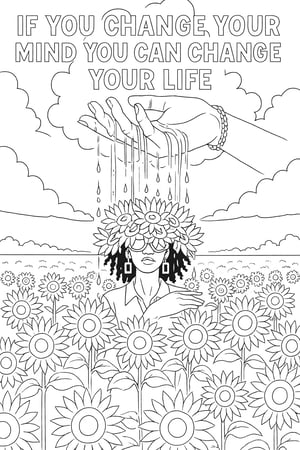
Before you move on, I want to pause with you right here—in this moment and offer you something gentle. This coloring page was created with intention. Every part of it reflects the healing work you’re doing:
🌻 The sunflowers — a reminder that even what grows in darkness still turns toward the light.
💧 The hand pouring water — the nourishment your nervous system has been craving.
✨ The woman receiving softness — you, learning to show yourself what you were never given.
🧠 The words “If you change your mind, you can change your life” — the truth behind healing trauma and survival mode.
Coloring isn’t random.
It’s a regulation tool.
When you take a few minutes to sit down and color:
- your breathing slows
- your thoughts settle
- your nervous system stops preparing for danger
- your brain shifts from survival mode into connection mode
- your emotions soften instead of spilling over
It gives your mind the break it has been begging for.This is why therapists, educators, and trauma specialists use coloring as a grounding technique because it brings your brain back into the present moment, where healing actually happens.
So download it, breathe, and let your hands move slowly.
Let this be a moment for you no guilt, no rush, no “should.”
Just softness.
Just breath.
Just one small step toward rewiring your mind and reclaiming your peace.
🖍 Download your free coloring page here.
✨ Want More Tools Like This?
If this page brought you even a small moment of calm, the Blurred Lines Between Us journal expands on this work with:
- healing prompts
- mother–daughter connection exercises
- emotional regulation tools
- grounding practices
- nervous system resets
- reflection pages
- gentle guidance from Lily
It’s a space where you get to understand your story, release what isn’t yours, and rebuild the way you show up for yourself and your daughter.
✨ You can purchase the Blurred Lines journal here: The Blurred Lines Between Us
You’re doing the work.
One breath.
One pause.
One colored sunflower at a time.
And before you go I would love to hear from you. Your thoughts. Your reflections. Your “this is me” moment.
Drop a comment below and let me know what part of this blog resonated with you the most. Your words might be exactly what someone else needs to read today.
With softness and growth,
La’Jon
Comments ()