
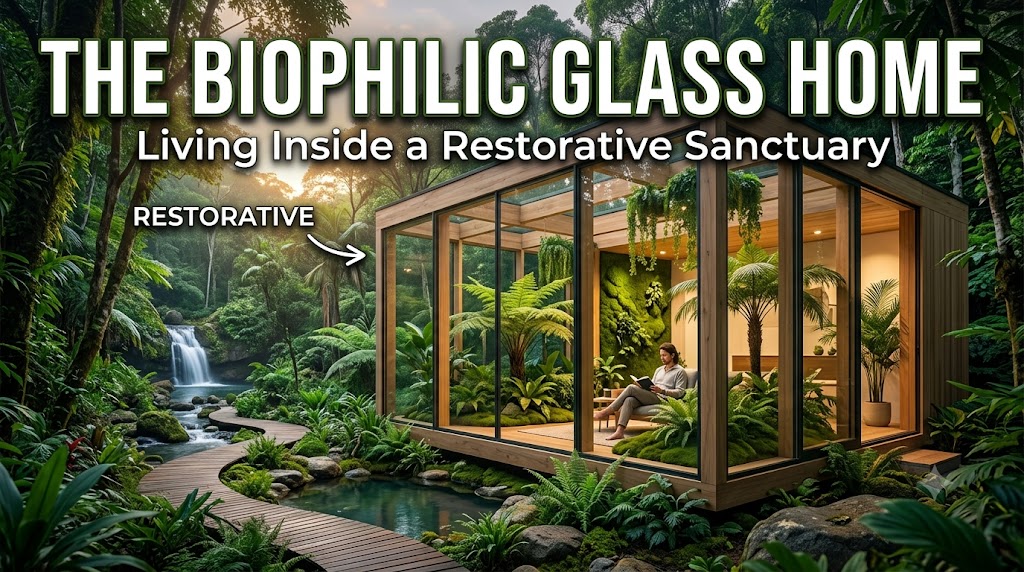
Biophilic homes are designed with a single, powerful purpose: to bring humans closer to Mother Nature while promoting physical, mental, and emotional health.
Studies have consistently shown a direct relationship between exposure to nature and improved wellness outcomes. Research indicates that being surrounded by natural elements can lower cortisol levels and dramatically improve mood—mimicking the restorative feeling of a walk in the forest. In fact, Harvard studies have demonstrated that even in virtual reality settings, biophilic design elements significantly increase physiological stress recovery by lowering blood pressure, heart rate, and overall anxiety.
When we consider that the average person spends approximately 90% of their time indoors, transforming our living spaces into health-supportive environments becomes essential. A biophilic glass home achieves this perfectly through six key design elements:
1. Maximizing Natural Light
Glass homes inherently excel at capturing sunlight, allowing it to filter deep into every room. This abundance of natural light is vital for regulating our internal circadian rhythms, boosting cognitive function, and elevating mood, while simultaneously reducing reliance on artificial lighting and enhancing energy efficiency.
2. Seamless Indoor-Outdoor Transitions
Floor-to-ceiling glass walls and open floor plans erase the boundary between the interior and exterior. This architectural transparency allows residents to experience the changing seasons, shifting weather patterns, and local natural landscapes from the comfort of their couch, fostering a continuous, meaningful engagement with the earth.
3. Incorporating Greenery
While a glass home provides sweeping views of the outdoor landscape, integrating indoor plants takes the biophilic experience to the next level. Plants naturally purify the air, release fresh oxygen, and filter out common indoor pollutants. Even low-maintenance options like snake plants or pothos make a significant aesthetic and physical difference.
4. Natural Materials and Textures
To complement the glass, incorporating organic materials such as raw wood, stone, bamboo, and natural fibers for furniture and flooring creates a warm, tactile connection to nature. These elements bring a sense of grounding authenticity and rich texture to modern spaces.
5. Soothing Water Elements
The calming presence of water can be introduced through minimalist indoor fountains, aquariums, or by strategically orienting the home to overlook an outdoor water feature. The gentle sound of flowing water is universally known to reduce stress and improve mental focus.
6. Earthy Colors and Organic Shapes
Nature rarely presents harsh, rigid lines or artificial neon colors. Biophilic interiors embrace this by utilizing earthy tones—like moss greens, deep browns, and soft clay blues—alongside curved furniture and organic forms that mimic natural shapes to create a serene, harmonious atmosphere.
More Than a Home: A Sustainable Sanctuary
The benefits of living in a biophilic glass home extend far beyond aesthetics. By lowering stress, boosting daily creativity, enhancing focus, and improving sleep quality, this design philosophy fundamentally elevates your quality of life. Furthermore, it inherently promotes sustainability by working with the environment rather than against it.
Ultimately, a biophilic glass home offers a rare opportunity to live in constant, beautiful conversation with nature, turning your everyday living space into a true restorative sanctuary.
Experience the Vision
Want to see this stunning concept in motion? Watch our quick visual breakdown of the biophilic glass home:
👉 Watch the YouTube Short here!
Discover More Nature-Inspired Design
Ready to dive deeper into the world of eco-friendly architecture and sustainable living? Explore home tours, case studies, and practical design tips on the channel:
👉 Explore the Biophilic Architecture YouTube Channel