
There are parts of life after adoption placement that other people can see.
They can see you going back to work, spending time with family, laughing, raising children, celebrating milestones, and continuing to build a life.
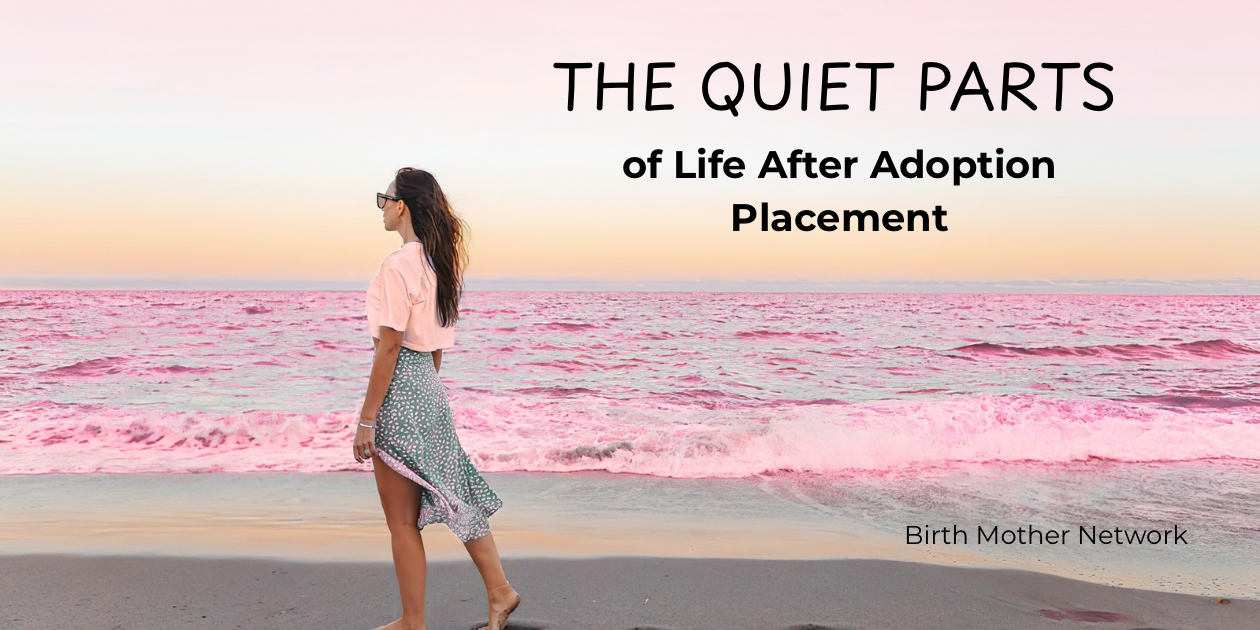
Then there are the quiet parts.
The thoughts that aren’t spoken out loud. The memories that return unexpectedly. The feelings that may become less intense with time but don’t necessarily disappear.
Those parts can be much harder for other people to see.
Moving Forward Doesn’t Mean Forgetting
After I placed my daughter for adoption, I carried regret, worry, and questions that the people around me couldn’t always see.
I worried about what my daughter would someday think of me. I struggled with feelings that I should have been the one there raising and caring for her.
Even some of the people closest to me didn’t know everything I was carrying.
As the years passed, those feelings changed. They weren’t always as intense as they had been in the beginning.
I learned how to move forward.
But moving forward didn’t mean forgetting.
That’s an important distinction.
Someone can build a happy life after placement. She can laugh. She can love the family around her. She can experience wonderful things.
None of that tells you that adoption no longer affects her.
Sometimes the Memories Find You
One thing I wish more people understood is that you don’t always choose when adoption comes back into your thoughts.
Sometimes something big happens.
Sometimes it’s something small.
A new experience, a family change, a milestone, or an ordinary moment can unexpectedly bring old memories and feelings back—even when you weren’t looking for them and didn’t want them to return.
I’ve experienced that throughout my own life.
Later pregnancies and bringing children home from the hospital were some of the experiences that brought emotions connected to my daughter’s placement back to the surface.
Those moments taught me that something can happen years later and suddenly connect you to something you experienced long ago.
That doesn’t mean you haven’t moved forward.
It means some experiences become part of your story.
Time Doesn’t Decide When Something Stops Mattering
I’ve had people in my own life assume that because many years had passed and I was doing okay, adoption shouldn’t still affect me.
But time doesn’t work that way.
The feelings I carry today aren’t as intense as they were in the beginning. I’ve continued living, growing, raising my family, and experiencing new chapters of my life.
But little things and big things can still happen that bring memories back.
And I can’t always control when that happens.
That’s why looking at a birth mother’s life from the outside doesn’t tell you everything about what she carries on the inside.
Silence doesn’t mean she never thinks about it.
Happiness doesn’t mean she never has difficult feelings.
Having difficult feelings doesn’t mean she’s unhappy with her entire life.
And years passing doesn’t mean adoption stopped being part of her story.
Support Doesn’t Have to Be Complicated
When those quiet parts surface, the people around a birth mother don’t necessarily need to have the perfect words.
Sometimes support is much simpler than that.
Listen.
Ask if she needs anything.
And if she asks for space, give her that space.
You don’t have to decide how she should feel or try to make the feelings disappear.
You can simply make room for whatever she’s experiencing in that moment.
Every birth mother’s experience is different. What has been true for me won’t be true for every woman who has placed a child for adoption.
That’s another reason we need more space for birth mothers to tell their own stories—not only immediately after placement, but years and decades later.
Because some of the most important parts of life after adoption are the parts nobody else can see.
No birth mother should have to navigate that lifetime alone.
— Birth Mother Network